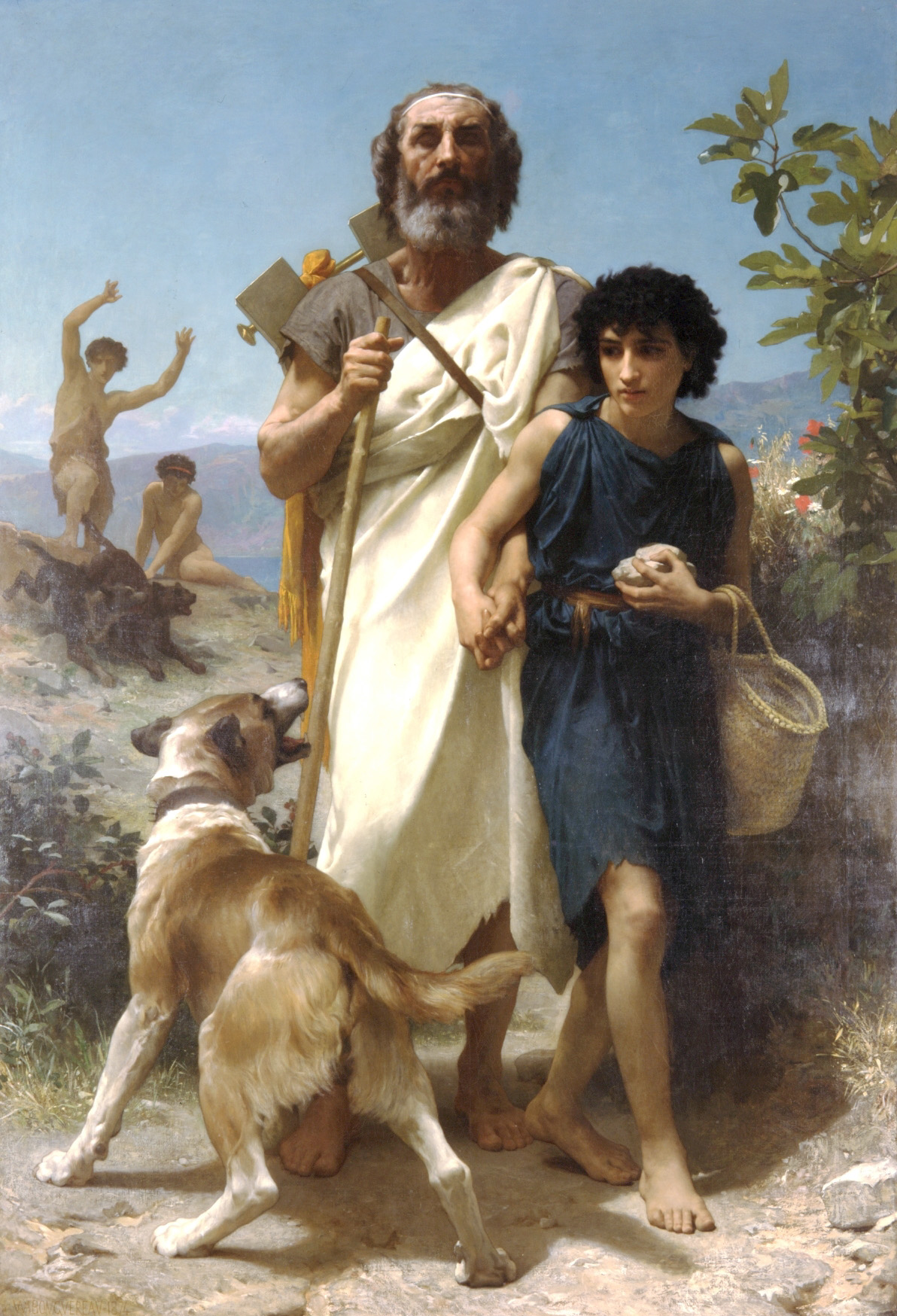
Homer and His Guide
An old blind man grips a walking staff and the shoulder of a barefoot boy who leads him along a rocky path. Dogs snarl at the pair. This is Homer as legend described his life: a poor wandering singer, dependent on strangers' kindness, carrying the greatest stories in the world in his head.
Bouguereau paints the scene with photographic smoothness, every pebble and toenail in focus. The drama is quiet but real — the boy glances back in worry at the dogs while the poet's sightless face stays calm, somewhere else entirely.
Before the stories, there is the storyteller. Homer is the name the Greeks gave to the poet of the Iliad and the Odyssey, the two long poems at the very beginning of Western literature. Nobody knows for certain who he was, when exactly he lived, or whether one person composed both poems. The best guess is that they took shape in the eighth century BC, woven together from centuries of songs that traveling singers performed from memory.
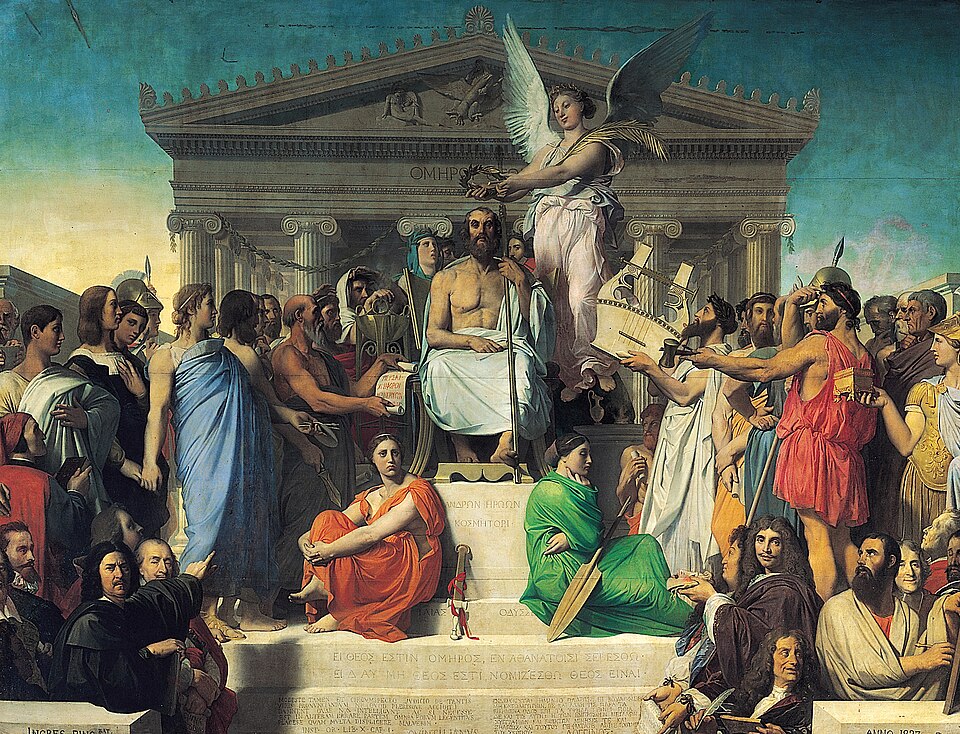
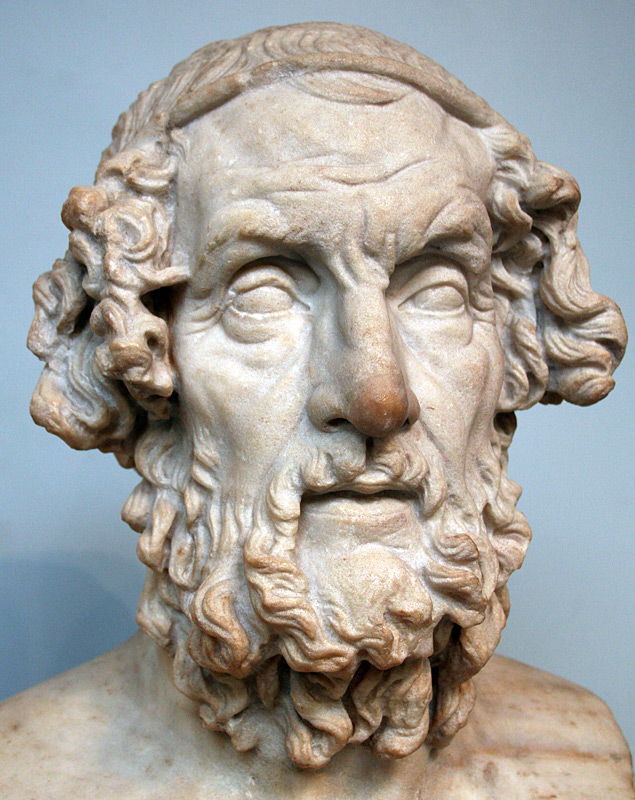
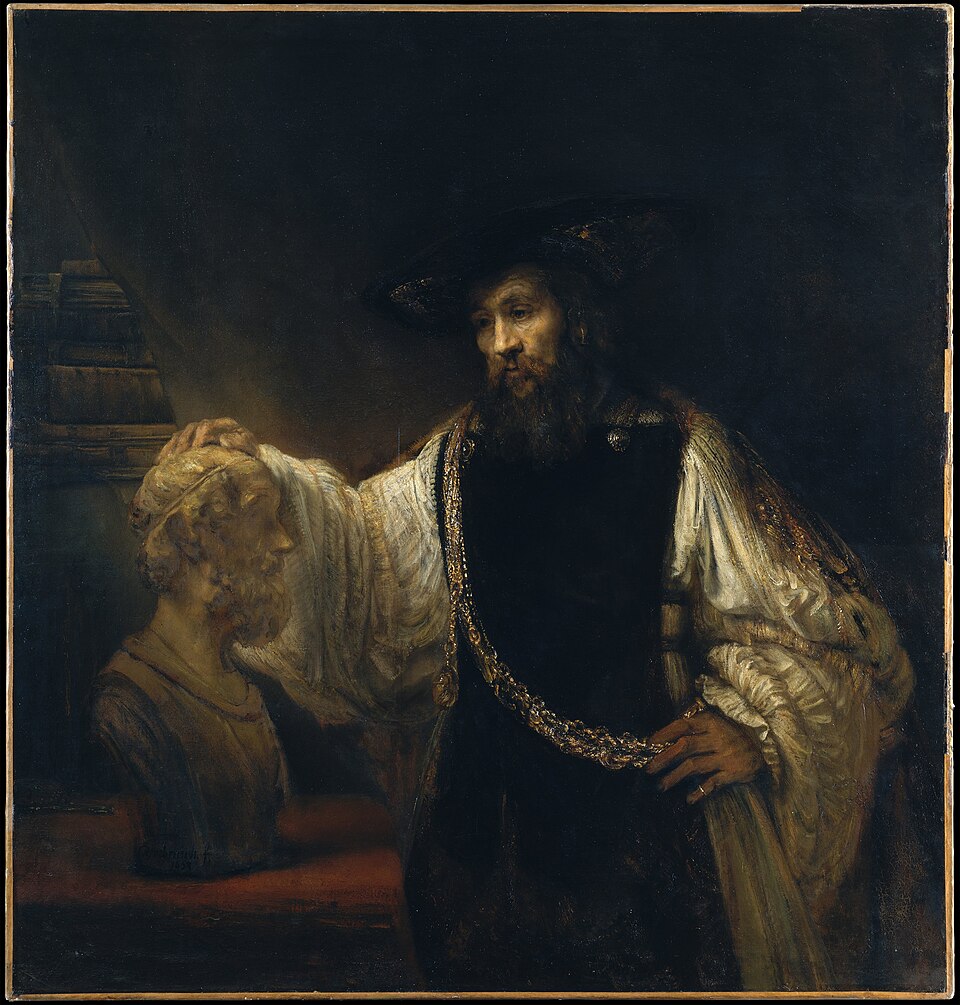
Ancient tradition insisted on one detail: Homer was blind. Every ancient portrait of him is an act of imagination — no one knew what he looked like — yet sculptors settled on a standard face: an old man with a full beard, deep-set sightless eyes, and a band around his hair. Later painters kept imagining him too, as a god among poets or as an old beggar led from town to town. This page begins with those portraits, then follows his two stories scene by scene.
William-Adolphe Bouguereau (1825–1905) was the most celebrated French academic painter of the late nineteenth century, admired for his technically perfect figures. Wildly popular in his lifetime, dismissed by the modernists, he has been rediscovered in recent decades.
_-_Homer_and_his_Guide_(1874).jpg)