Portrait of Homer (the Blind Type)
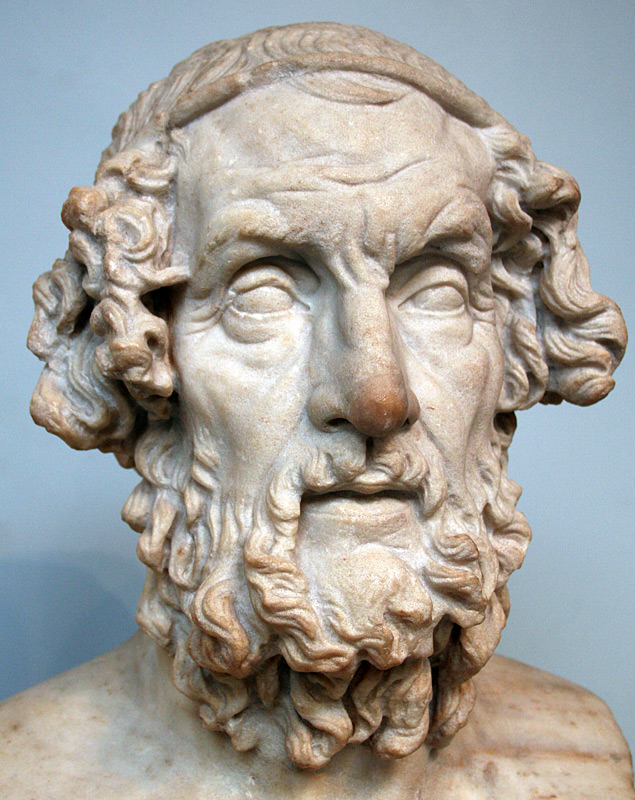
This marble head is the face the ancient world invented for Homer: an old man with a thick beard, hollow cheeks, and unseeing eyes beneath a ribbon that marks him as a poet. Look closely at the eyes — the sculptor carved them sunken and unfocused to show blindness, centuries before anyone knew how to depict it convincingly.
It is a Roman copy of a Greek original of the second century BC, the so-called Blind Type, which became the standard portrait of Homer across the ancient world. Dozens of copies survive; the poet's imagined face was reproduced as often as a real ruler's.
Before the stories, there is the storyteller. Homer is the name the Greeks gave to the poet of the Iliad and the Odyssey, the two long poems at the very beginning of Western literature. Nobody knows for certain who he was, when exactly he lived, or whether one person composed both poems. The best guess is that they took shape in the eighth century BC, woven together from centuries of songs that traveling singers performed from memory.
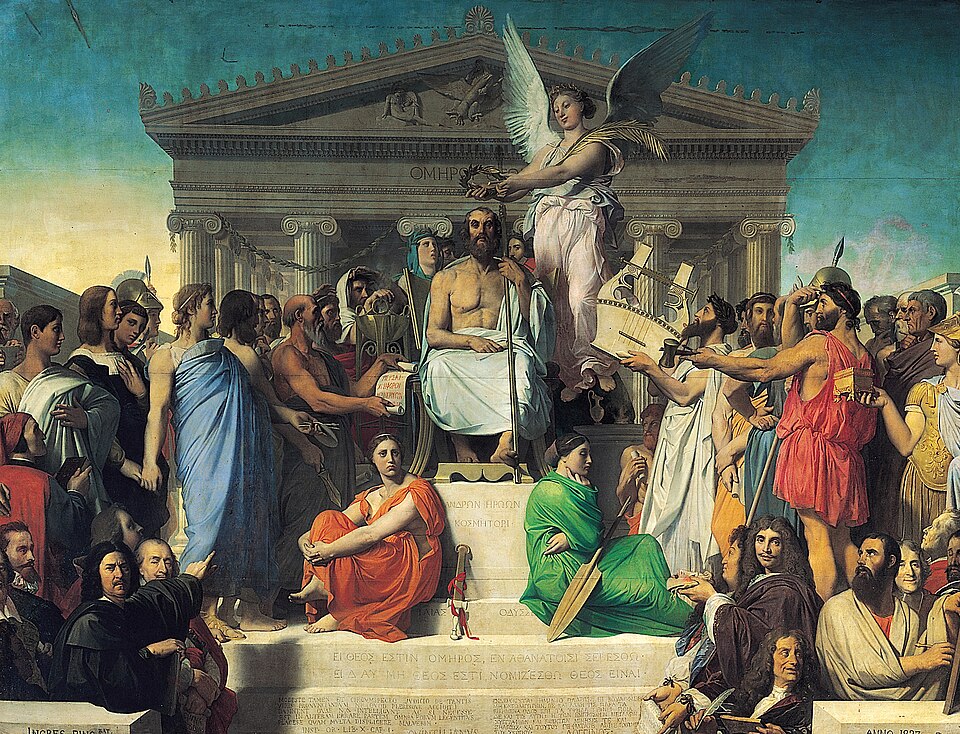
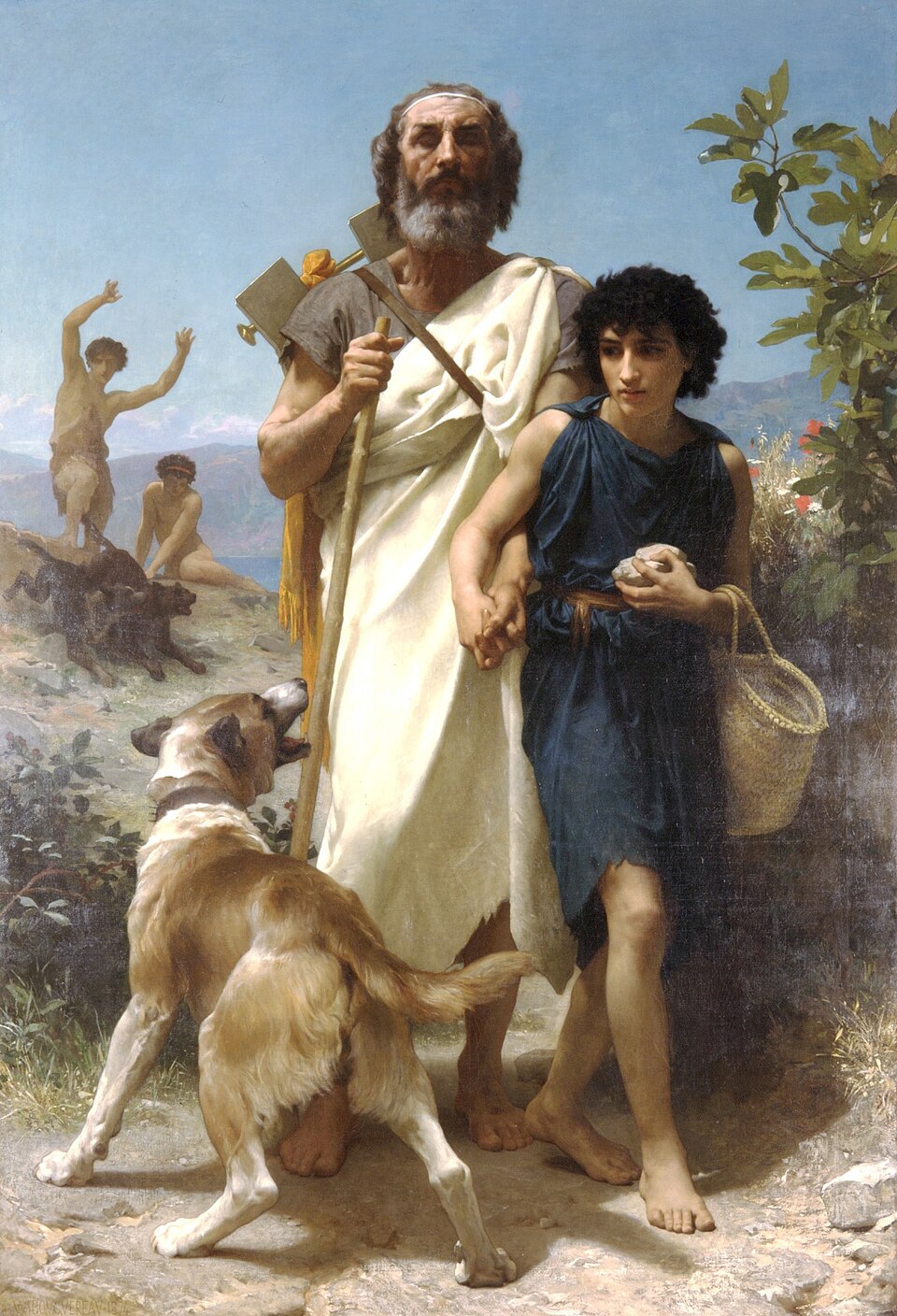
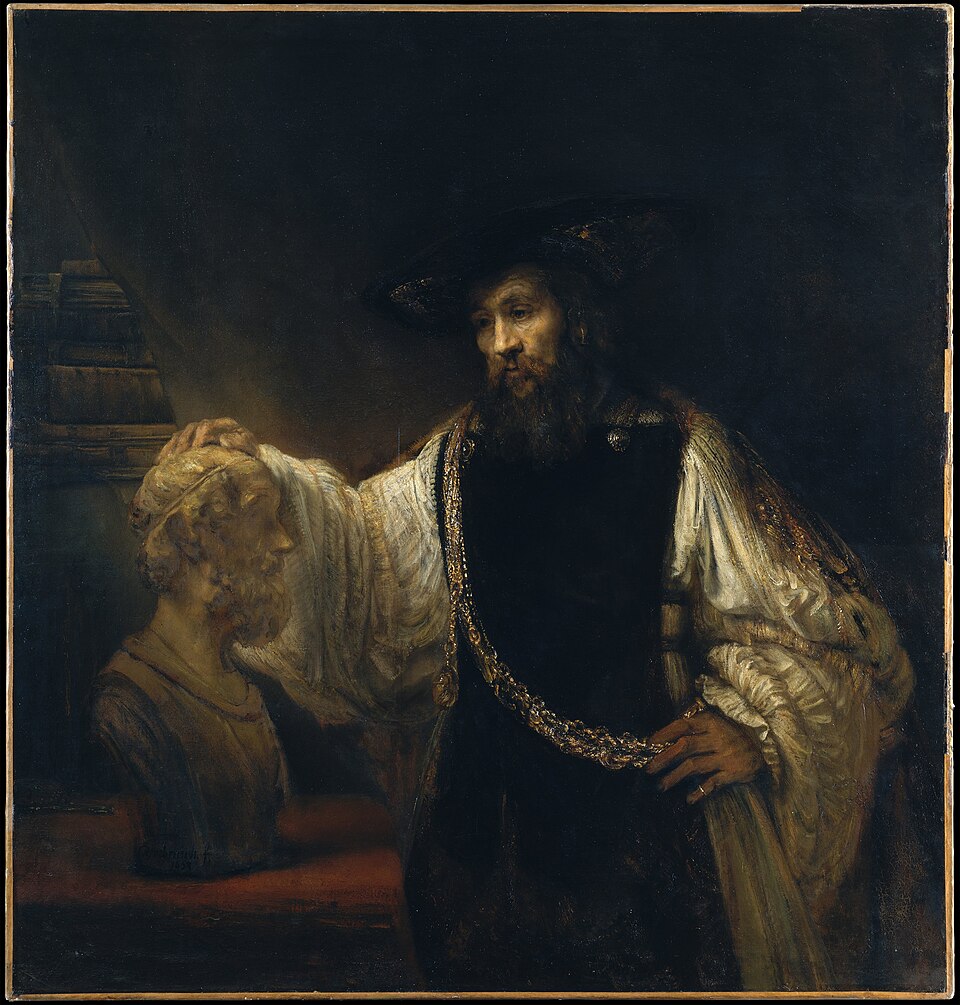
Ancient tradition insisted on one detail: Homer was blind. Every ancient portrait of him is an act of imagination — no one knew what he looked like — yet sculptors settled on a standard face: an old man with a full beard, deep-set sightless eyes, and a band around his hair. Later painters kept imagining him too, as a god among poets or as an old beggar led from town to town. This page begins with those portraits, then follows his two stories scene by scene.
The original was made by an unknown Hellenistic sculptor, probably in Pergamon or Rhodes, four hundred years or more after Homer lived. Roman workshops copied famous Greek portraits in marble for villas and libraries, which is how most Greek sculpture survives today.