The Apotheosis of Homer
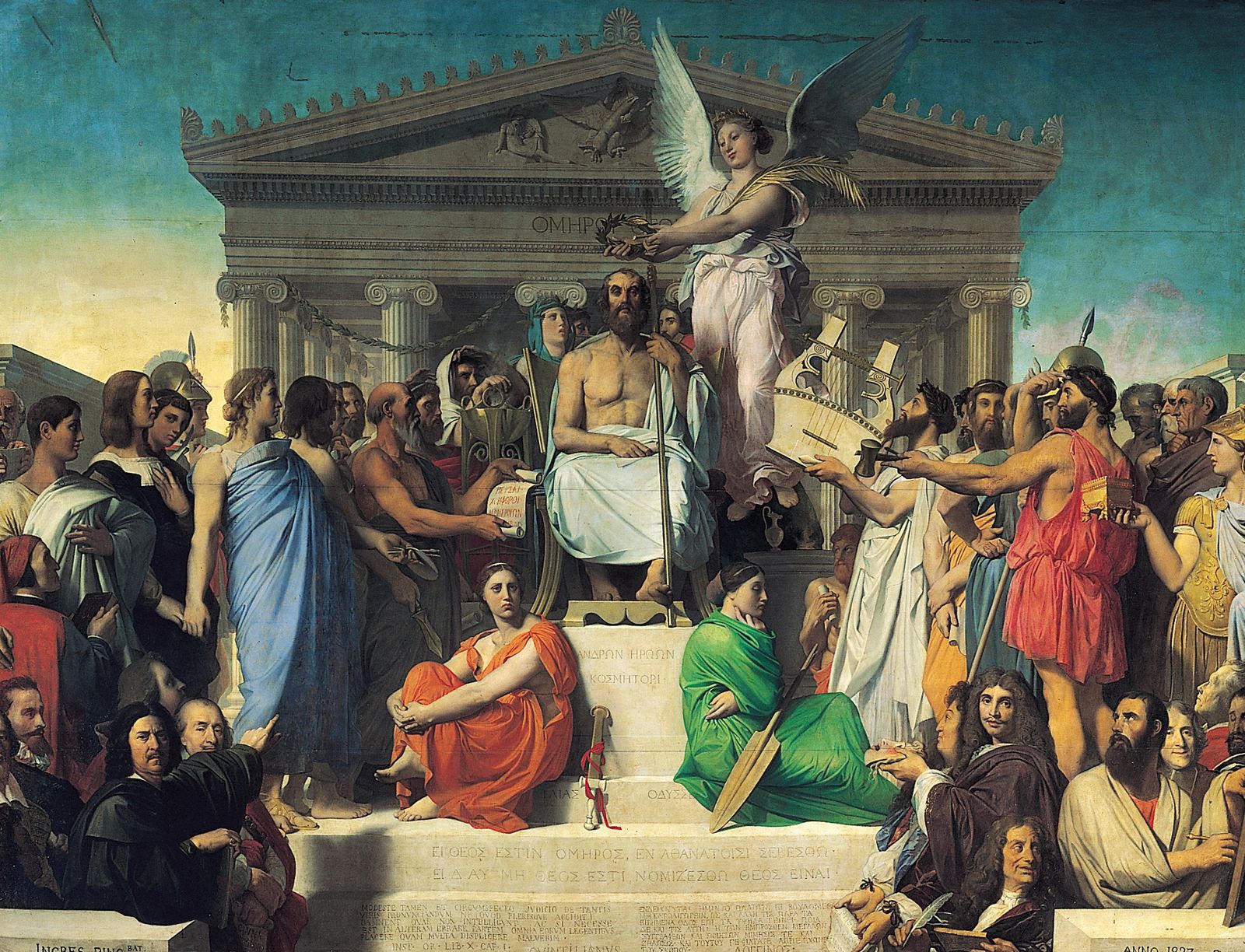
Homer sits enthroned in front of a Greek temple like a god, while a winged figure of Victory crowns him with laurel. At his feet sit two women in profile: one with a sword for the Iliad, one with an oar for the Odyssey. Around him Ingres gathers forty-six of the great figures of Western culture — Dante, Shakespeare, Mozart, Raphael, Poussin — all paying tribute to the poet they descend from.
The painting was commissioned as a ceiling for a room in the Louvre, and Ingres treated it as a manifesto: all of Western art flows from Homer. He arranged the scene with the strict symmetry of a temple facade, deliberately echoing Raphael's fresco The School of Athens.
Before the stories, there is the storyteller. Homer is the name the Greeks gave to the poet of the Iliad and the Odyssey, the two long poems at the very beginning of Western literature. Nobody knows for certain who he was, when exactly he lived, or whether one person composed both poems. The best guess is that they took shape in the eighth century BC, woven together from centuries of songs that traveling singers performed from memory.
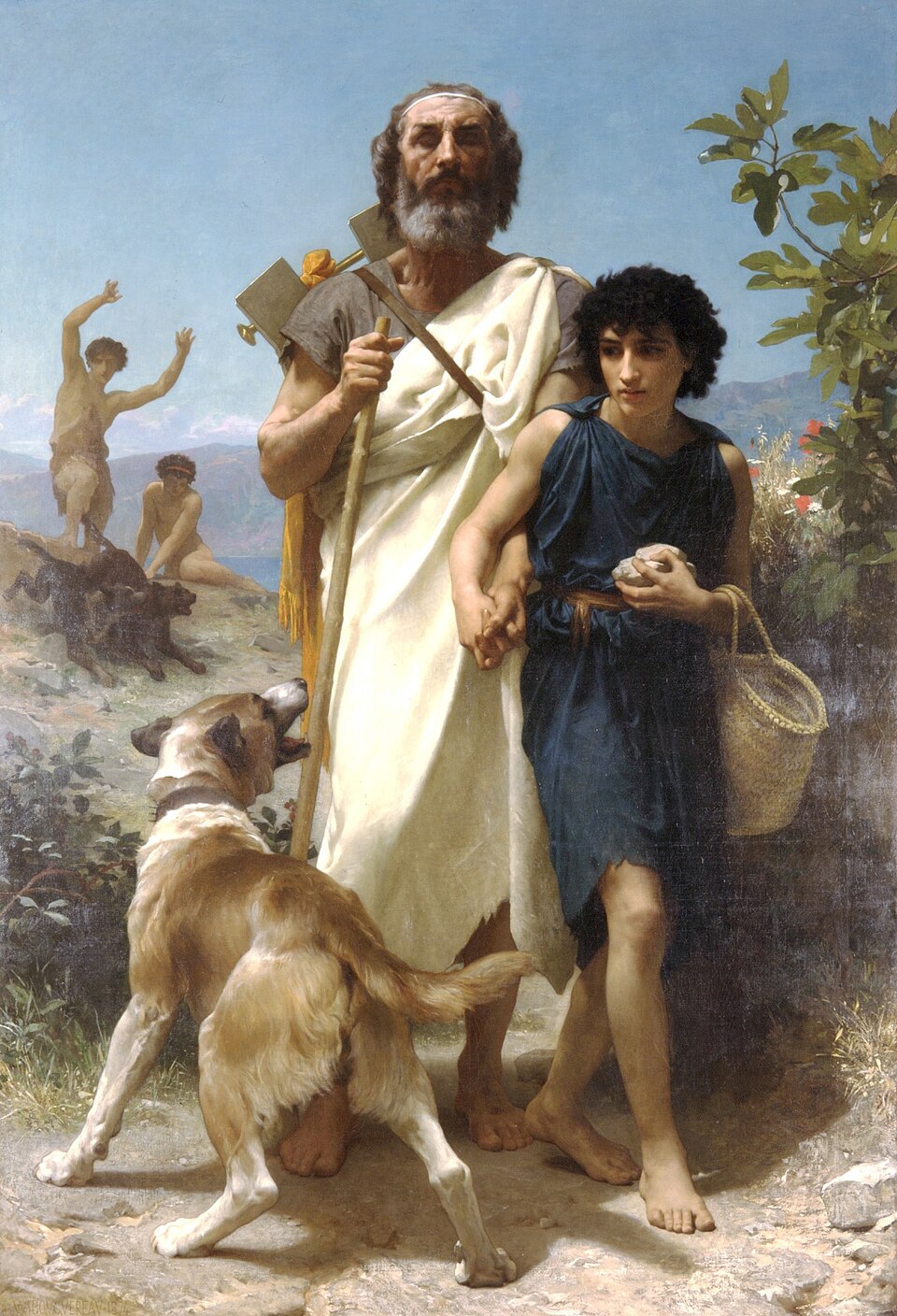
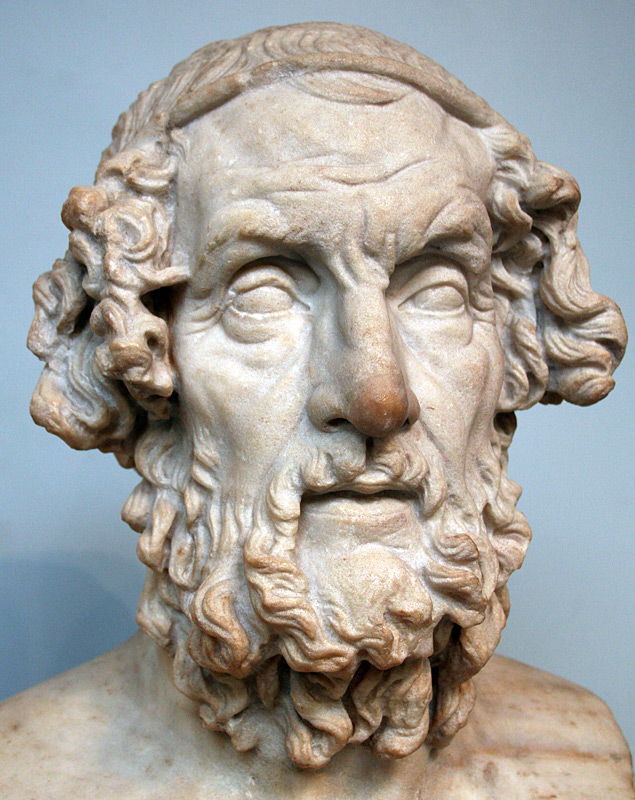
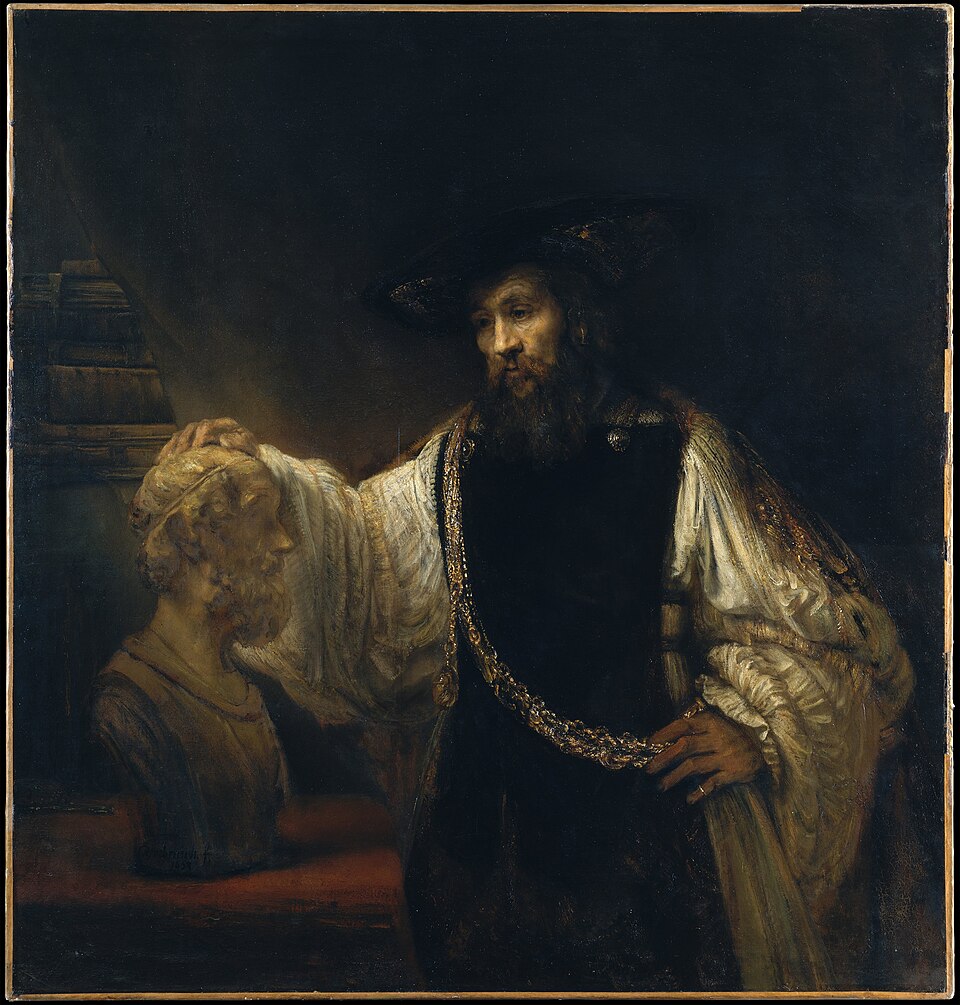
Ancient tradition insisted on one detail: Homer was blind. Every ancient portrait of him is an act of imagination — no one knew what he looked like — yet sculptors settled on a standard face: an old man with a full beard, deep-set sightless eyes, and a band around his hair. Later painters kept imagining him too, as a god among poets or as an old beggar led from town to town. This page begins with those portraits, then follows his two stories scene by scene.
Jean-Auguste-Dominique Ingres (1780–1867) was the leading French Neoclassical painter of his generation, famous for his flawless drawing and cool, polished surfaces. He saw himself as the guardian of the classical tradition against the Romantics.