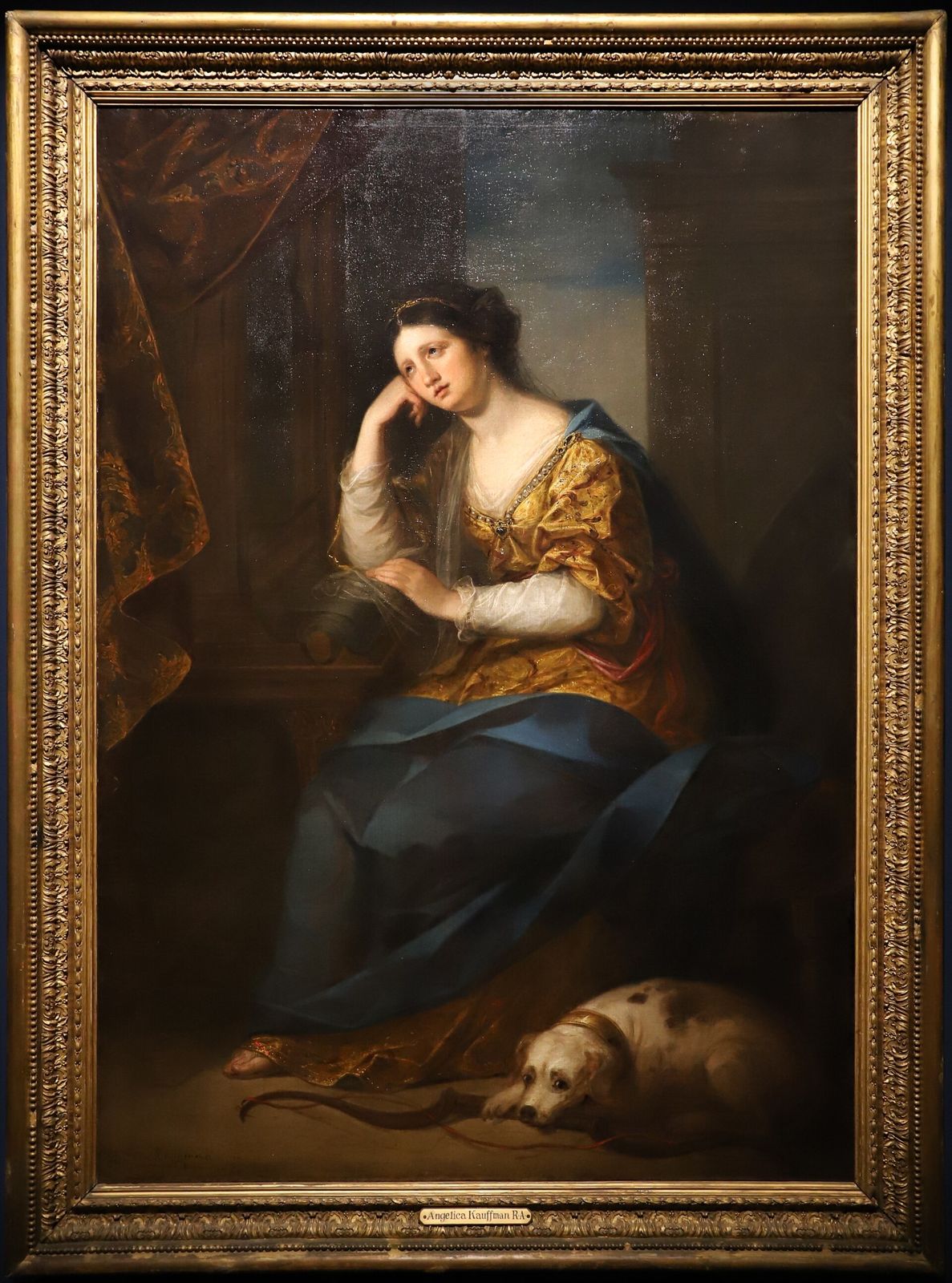
Penelope at Her Loom
Penelope sits at her loom, but she is not weaving. She turns away from the work, eyes lifted, one hand fallen idle — a woman worn down by waiting rather than a heroine performing a clever trick.
Kauffman painted Homer's women throughout her career, and she reads Penelope with sympathy: the loom is duty, the face is grief. The soft color and gentle lighting are typical of her polished Neoclassical style.
The story now turns to what he comes home to. His wife Penelope has held Ithaca together alone for twenty years, with no proof her husband is alive or dead. For years, more than a hundred young nobles have occupied her palace as unwanted suitors, demanding she declare Odysseus dead and marry one of them — and eating and drinking the kingdom's wealth while they wait.
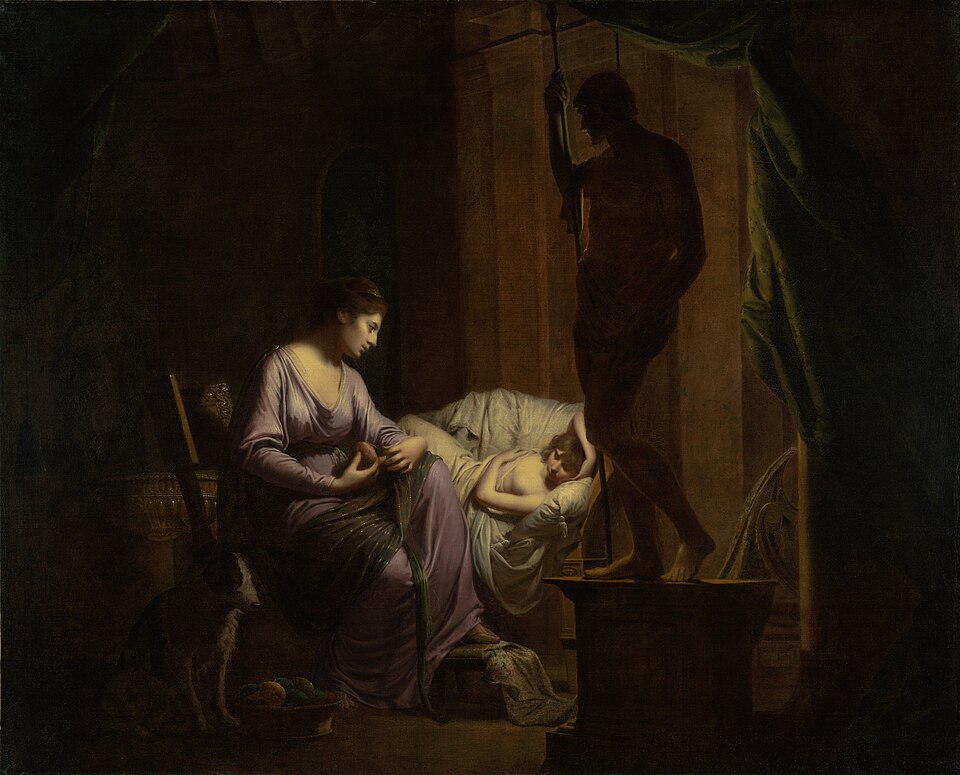
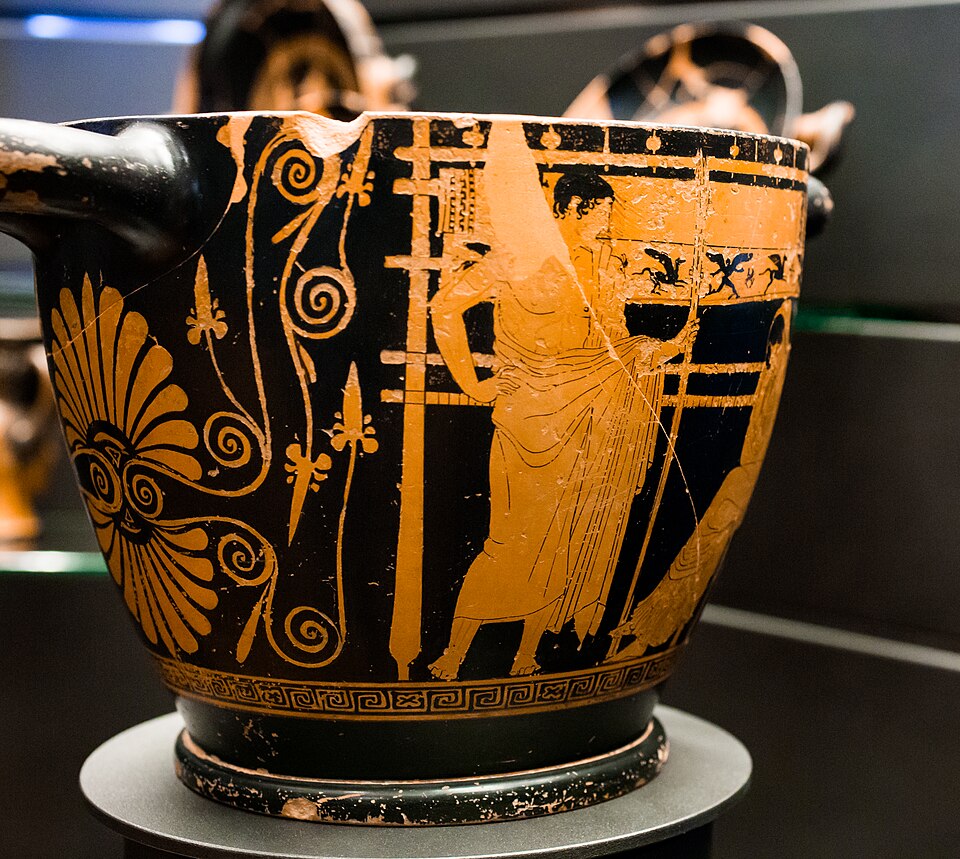
Her famous defense is a loom. She announces she will remarry once she finishes weaving a burial shroud for Laertes, her aging father-in-law. All day she weaves in public view; at night, by torchlight, she secretly unpicks the day's work. The trick holds the suitors off for three years before a maid betrays her. Homer means the marriage of Odysseus and Penelope to be a marriage of equals: he survives abroad by inventing stories, she survives at home by weaving and unweaving one.
Angelica Kauffman (1741–1807) was a Swiss-born painter who became one of the most successful artists in Europe and one of only two women among the founders of London's Royal Academy in 1768. Scenes from Homer were at the heart of her work.
.jpg)