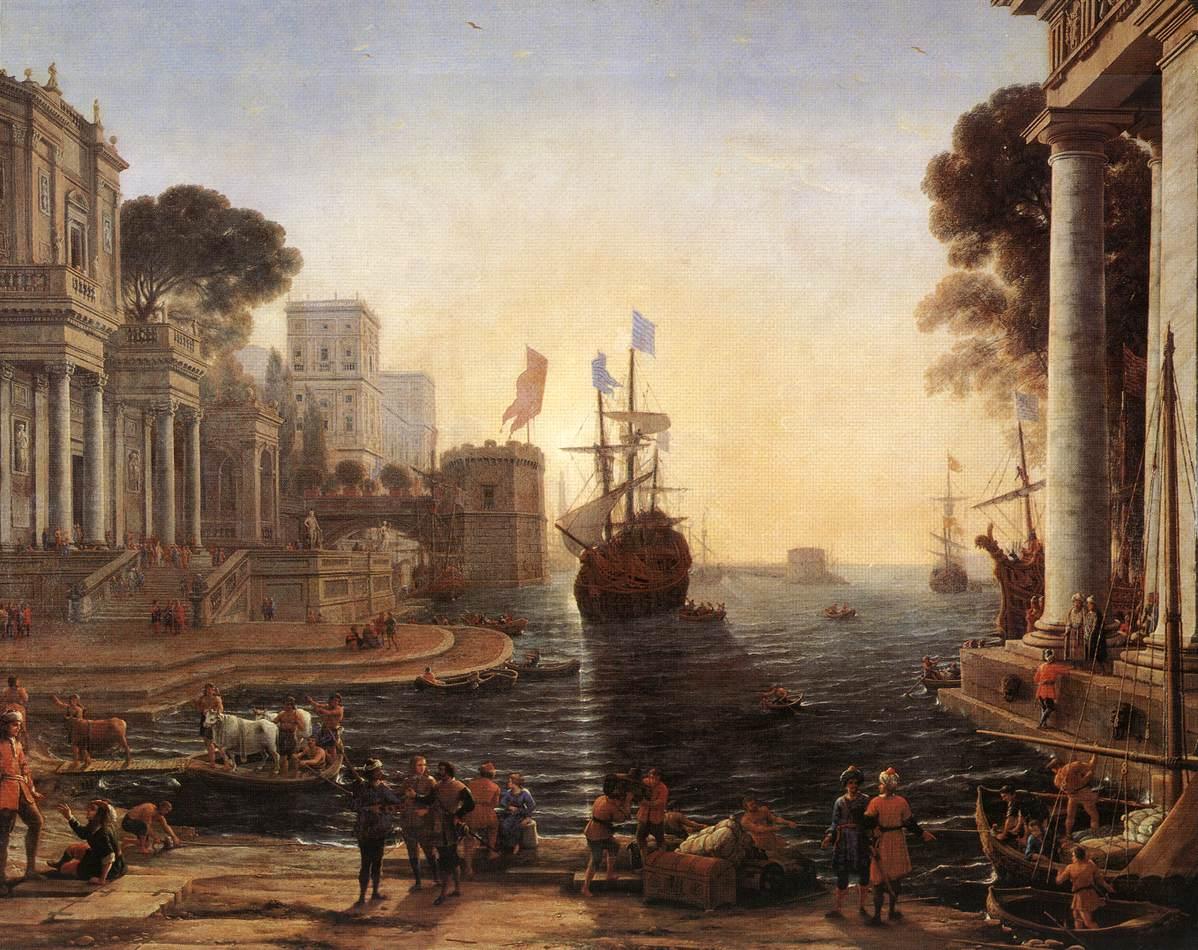
Ulysses Returns Chryseis to Her Father
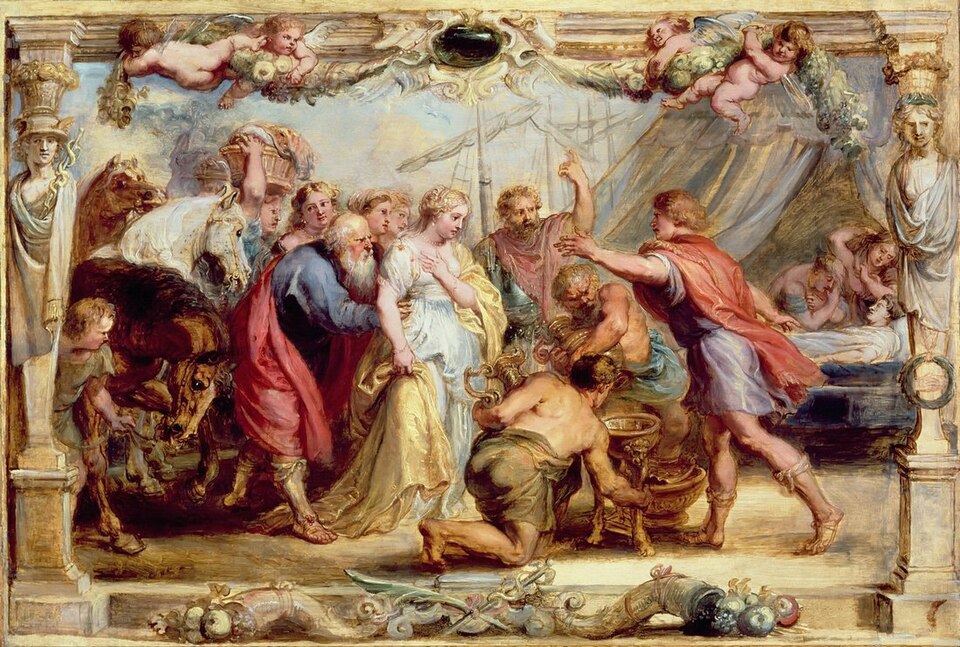
A grand harbor at first light. Ships ride at anchor between palatial classical buildings, and in the foreground a small party escorts a young woman toward the water. She is Chryseis, the priest's daughter whose capture brought a plague on the Greek army, and Ulysses is bringing her home to end it.
Claude barely shows the story at all — the figures are tiny, and everything is really about the sun hanging low over the sea and the light spreading across the water. He painted dozens of these dreamlike seaports, using a familiar tale mostly as a reason to paint dawn. The result turns a tense diplomatic errand into one of the calmest pictures in the whole Trojan cycle.
This is where the Iliad begins. Chryseis's father is a priest of the god Apollo. He comes to ransom his daughter, and Agamemnon insults him and sends him away. Apollo answers the priest's prayer by shooting plague-arrows into the Greek camp. Men and animals die for nine days.
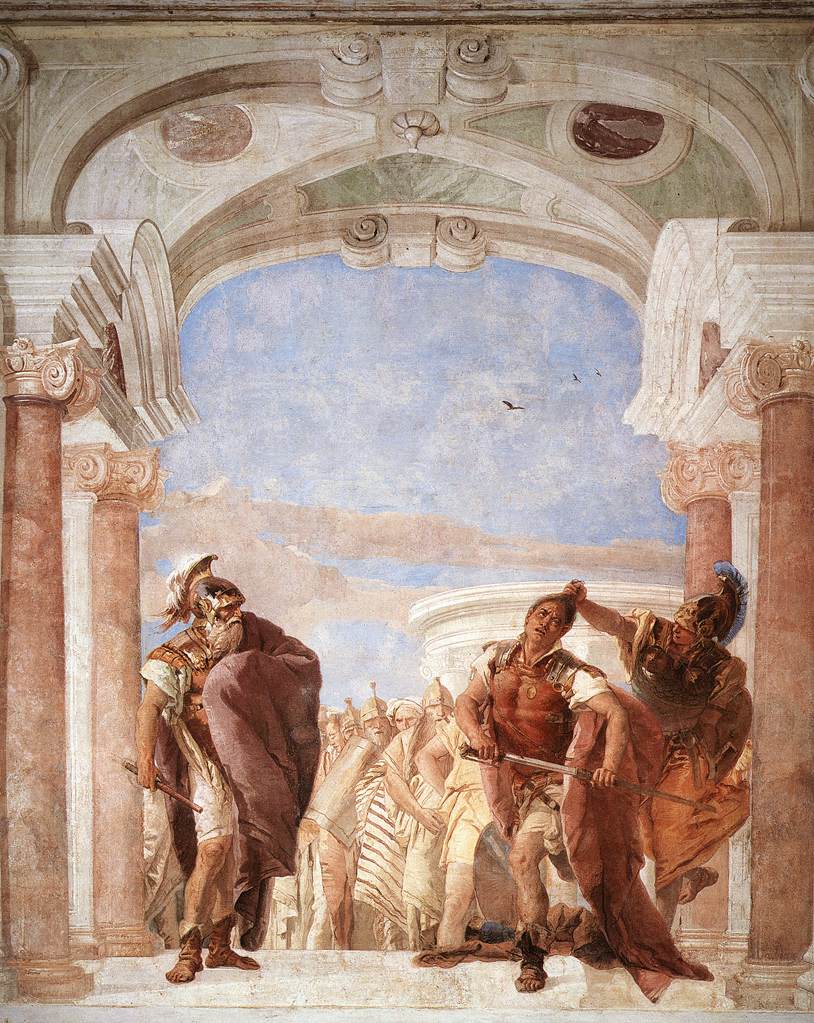
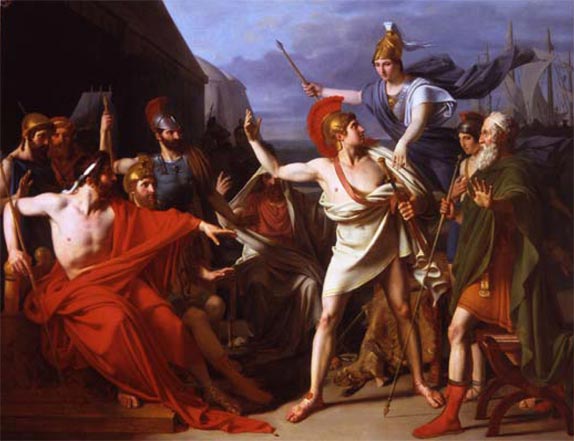
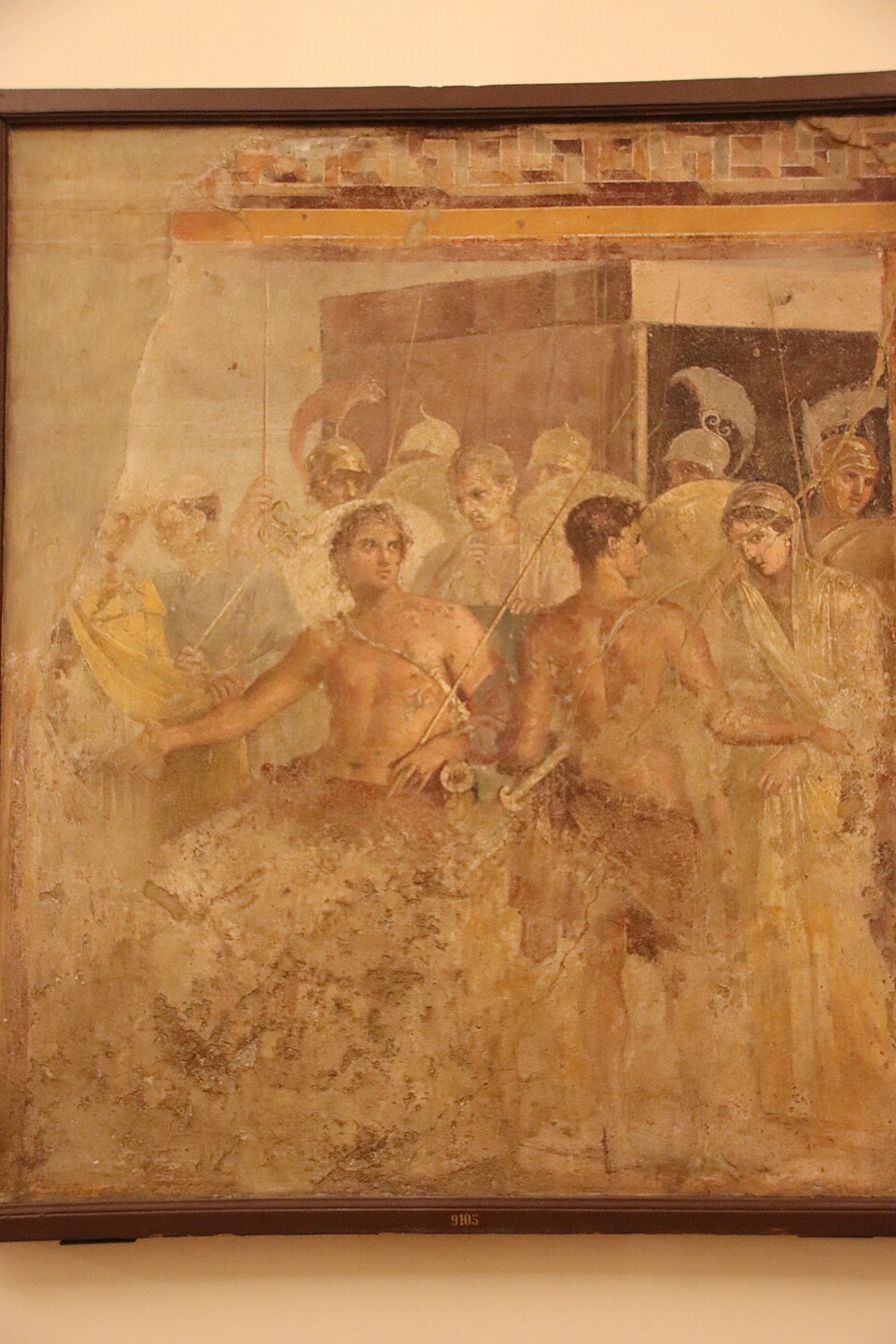
A prophet tells the army the truth: the plague is Agamemnon's fault, and Chryseis must go home. Agamemnon gives her up — and then, to save face, takes Briseis from Achilles instead. Achilles nearly kills him on the spot. The goddess Athena, invisible to everyone else, grabs Achilles by the hair and stops his sword hand.
Achilles obeys the goddess, but he is done. He announces that he and his men will no longer fight, walks to his tent, and stays there. The Greeks have just lost their best warrior over a stolen woman and a wounded ego — the 'wrath of Achilles' that is the poem's whole subject.
Claude Lorrain (1600–1682) was a French painter who spent nearly his whole career in Rome. He all but invented the ideal landscape — real light and weather arranged into perfect imaginary scenery — and his sunlit seaports influenced landscape painting for two centuries, above all J. M. W. Turner.