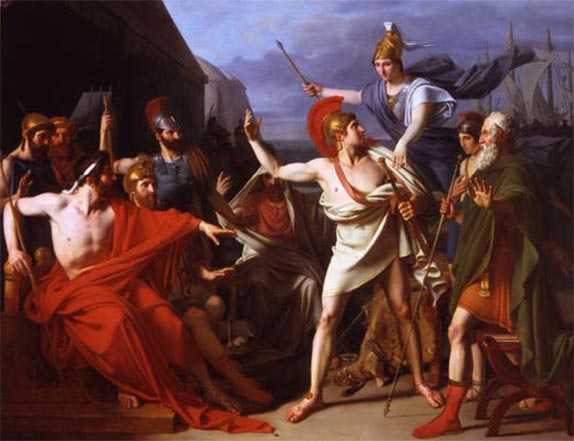
The Wrath of Achilles
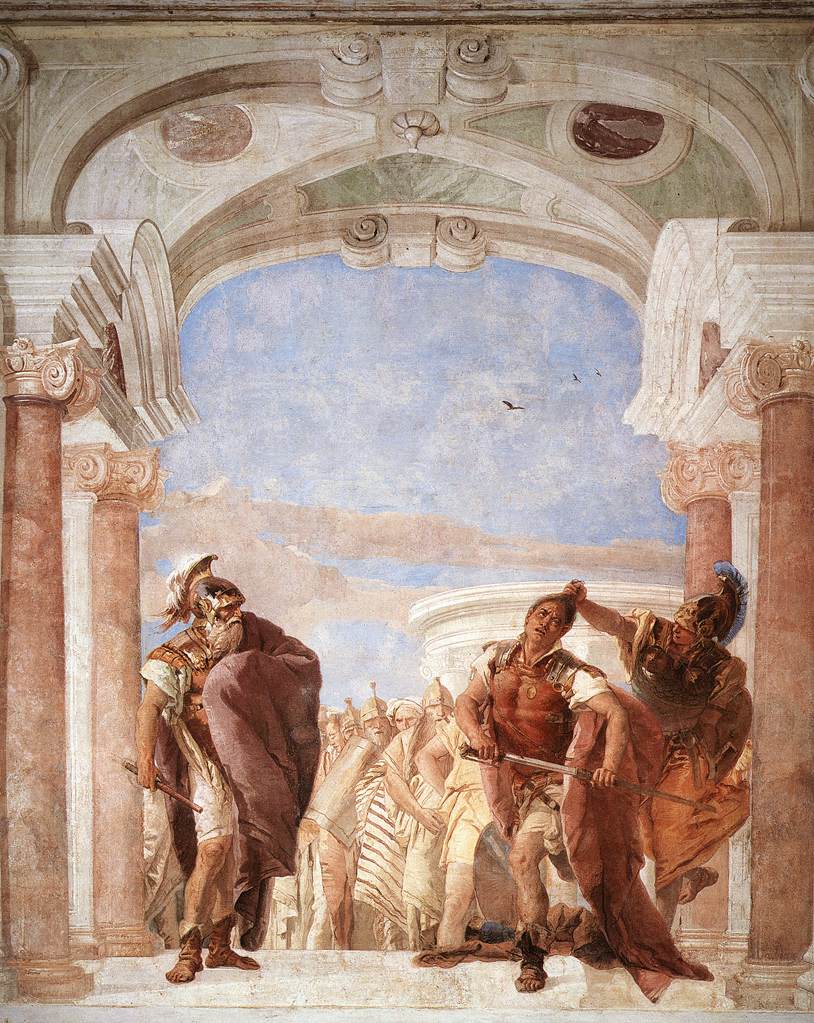
The first crisis of the Iliad, staged like a play. Agamemnon has just declared he will seize Achilles' prize, the captive Briseis. Achilles reaches for his sword — and the goddess Minerva, invisible to everyone else, appears behind him to hold him back.
Drolling painted this as his entry for the Prix de Rome, the top student competition in France, and it won him the prize in 1810. Everything follows the neoclassical playbook: sculptural bodies, clear gestures, the whole quarrel readable at a glance. It is a young painter proving he can handle Homer under exam conditions.
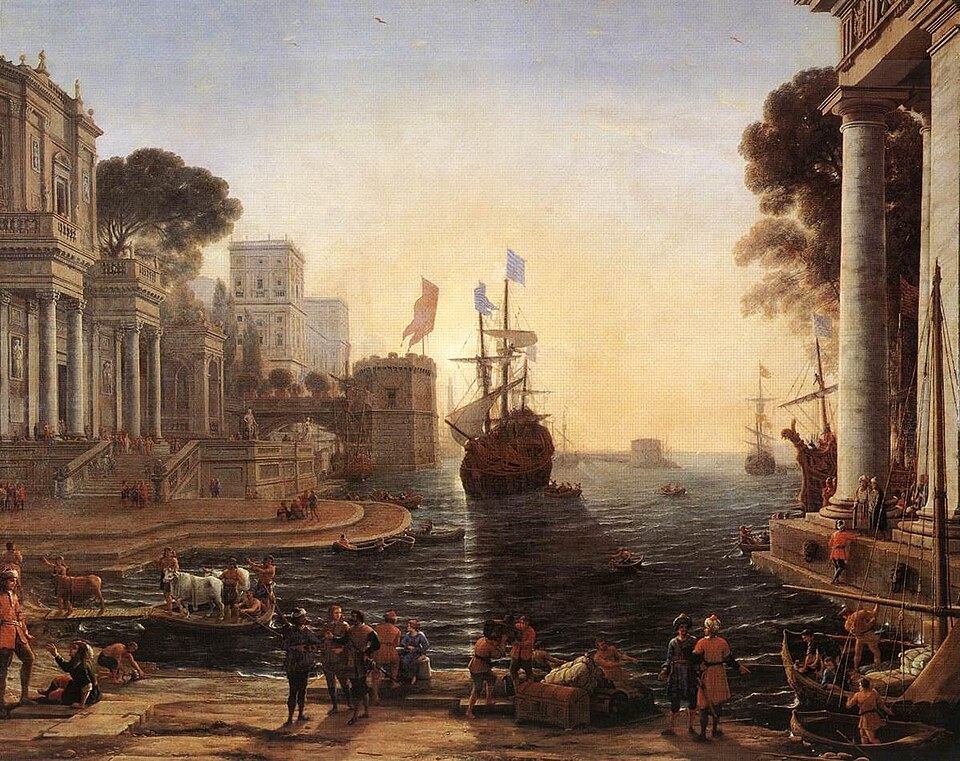
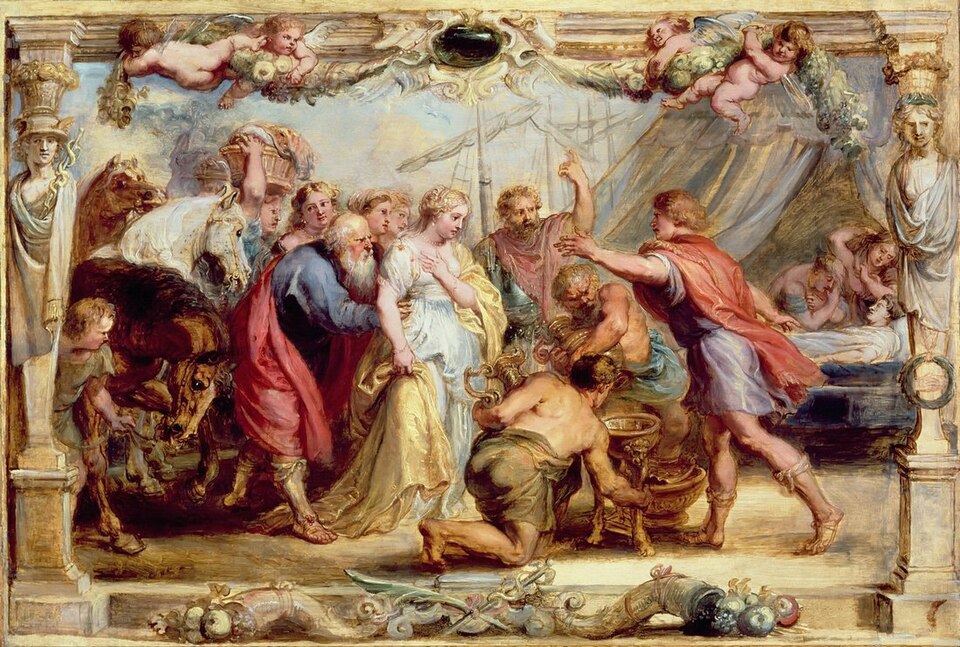
This is where the Iliad begins. Chryseis's father is a priest of the god Apollo. He comes to ransom his daughter, and Agamemnon insults him and sends him away. Apollo answers the priest's prayer by shooting plague-arrows into the Greek camp. Men and animals die for nine days.
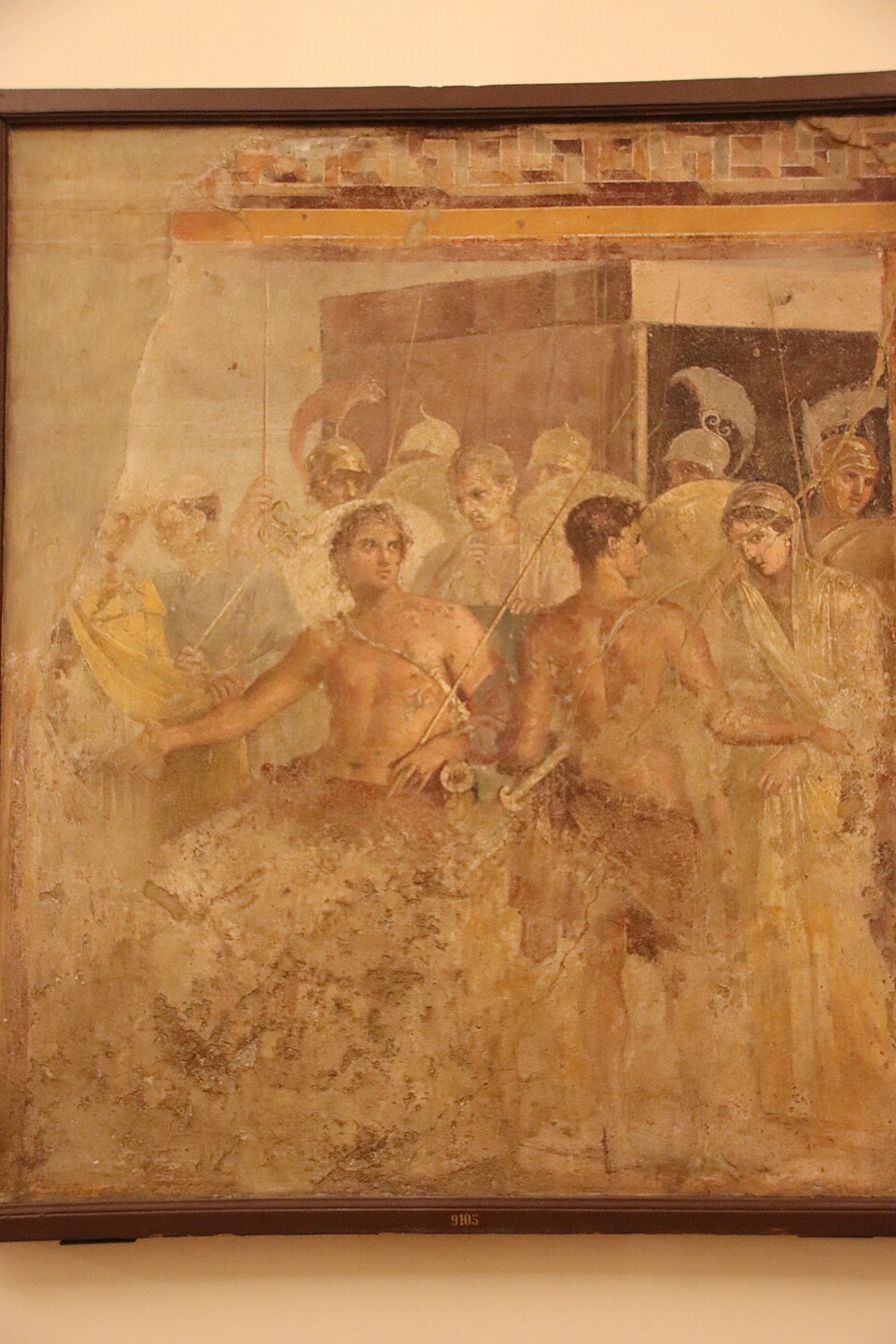
A prophet tells the army the truth: the plague is Agamemnon's fault, and Chryseis must go home. Agamemnon gives her up — and then, to save face, takes Briseis from Achilles instead. Achilles nearly kills him on the spot. The goddess Athena, invisible to everyone else, grabs Achilles by the hair and stops his sword hand.
Achilles obeys the goddess, but he is done. He announces that he and his men will no longer fight, walks to his tent, and stays there. The Greeks have just lost their best warrior over a stolen woman and a wounded ego — the 'wrath of Achilles' that is the poem's whole subject.
Michel-Martin Drolling (1786–1851) was a French history painter and portraitist, the son of a painter of quiet interiors. After winning the Prix de Rome he became a professor at the École des Beaux-Arts, where he trained a generation of French academic painters.