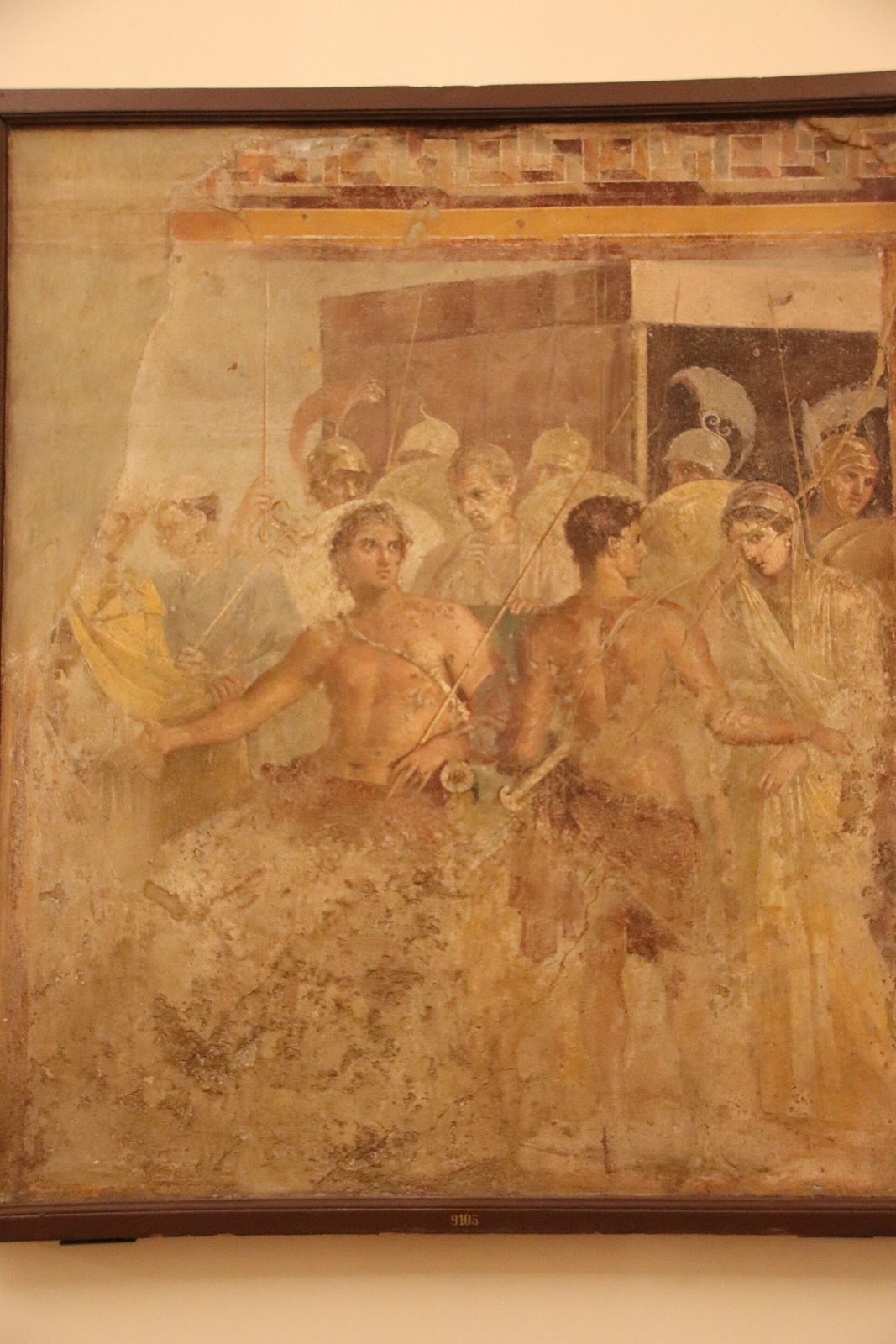
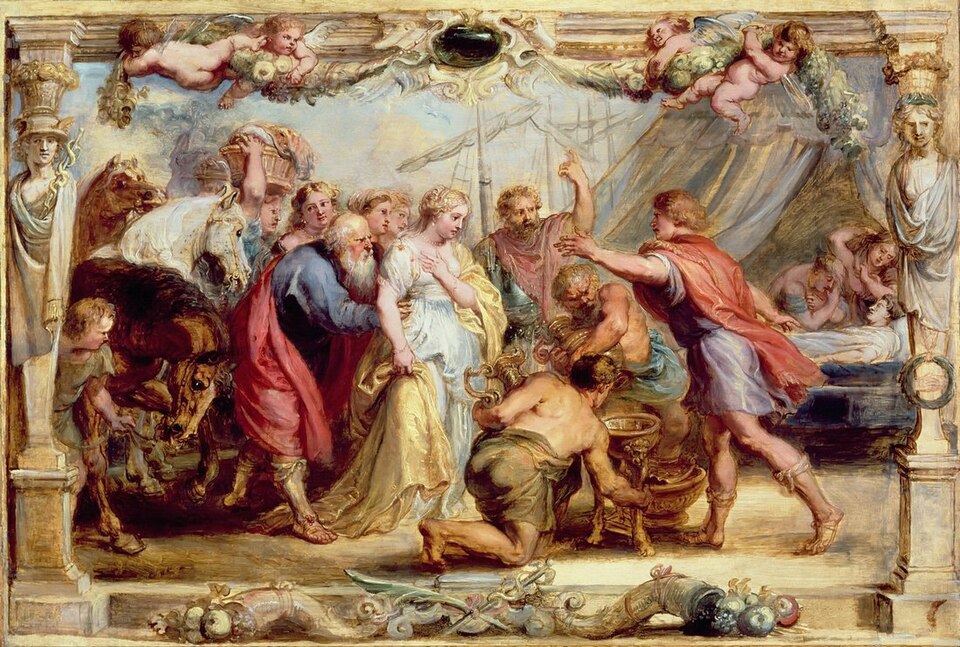
Briseis Led Away from Achilles
Achilles, enthroned at the left, watches as Briseis is led from his tent to be handed over to Agamemnon's heralds. Patroclus, shown from behind, brings her out. Briseis lowers her veiled head — a captive passed between proud men, and the spark for the whole quarrel of the Iliad.
The fresco comes from the House of the Tragic Poet at Pompeii, a modest house with an astonishing picture gallery. The composition, with its quiet gestures and averted eyes, almost certainly copies a famous Greek painting, giving us a glimpse of how the great age of Greek art staged this scene.
This is where the Iliad begins. Chryseis's father is a priest of the god Apollo. He comes to ransom his daughter, and Agamemnon insults him and sends him away. Apollo answers the priest's prayer by shooting plague-arrows into the Greek camp. Men and animals die for nine days.
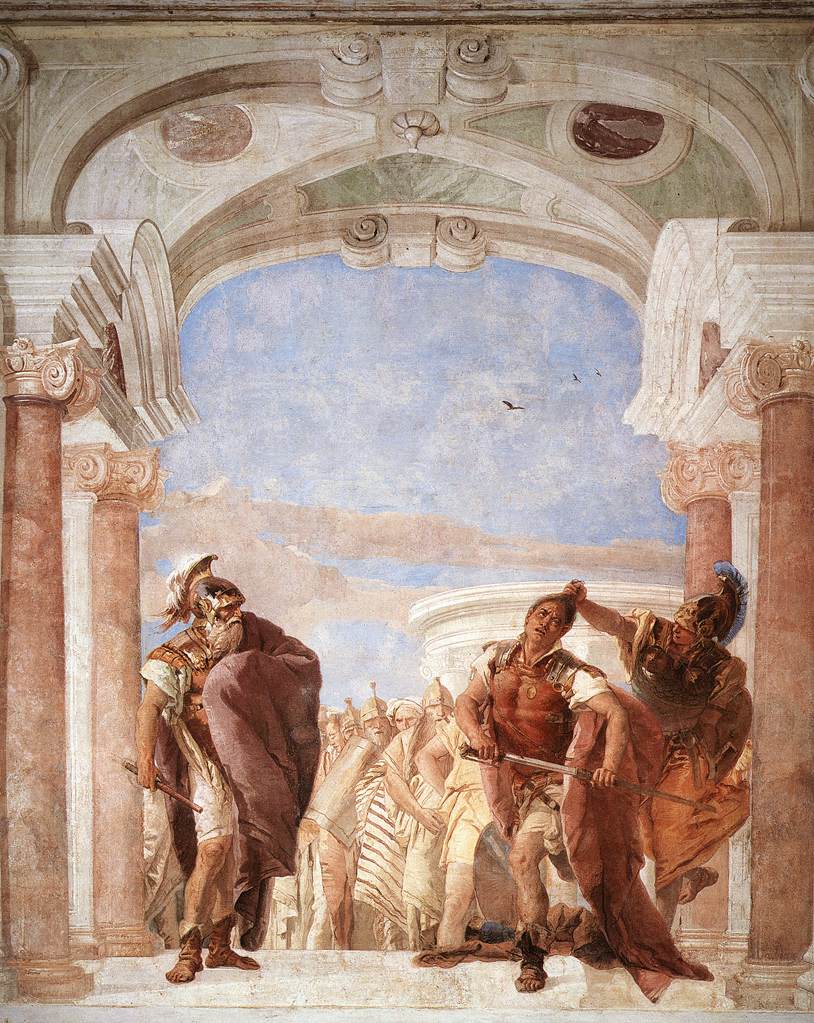
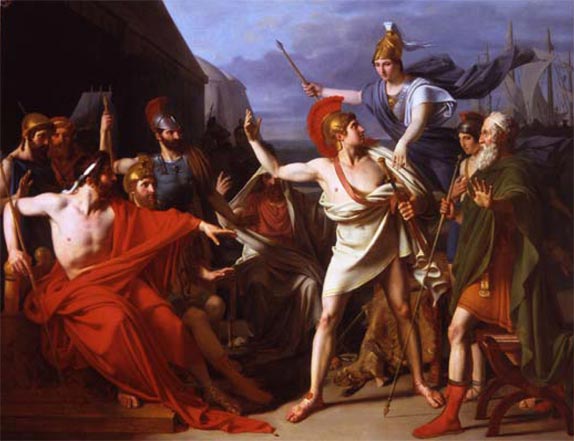
A prophet tells the army the truth: the plague is Agamemnon's fault, and Chryseis must go home. Agamemnon gives her up — and then, to save face, takes Briseis from Achilles instead. Achilles nearly kills him on the spot. The goddess Athena, invisible to everyone else, grabs Achilles by the hair and stops his sword hand.
Achilles obeys the goddess, but he is done. He announces that he and his men will no longer fight, walks to his tent, and stays there. The Greeks have just lost their best warrior over a stolen woman and a wounded ego — the 'wrath of Achilles' that is the poem's whole subject.
The frescoes of Pompeii were painted by anonymous Roman workshops, and the finest of them adapt celebrated Greek paintings that no longer survive. The House of the Tragic Poet, excavated in the 1820s, contained several of the most famous examples.
.jpg)