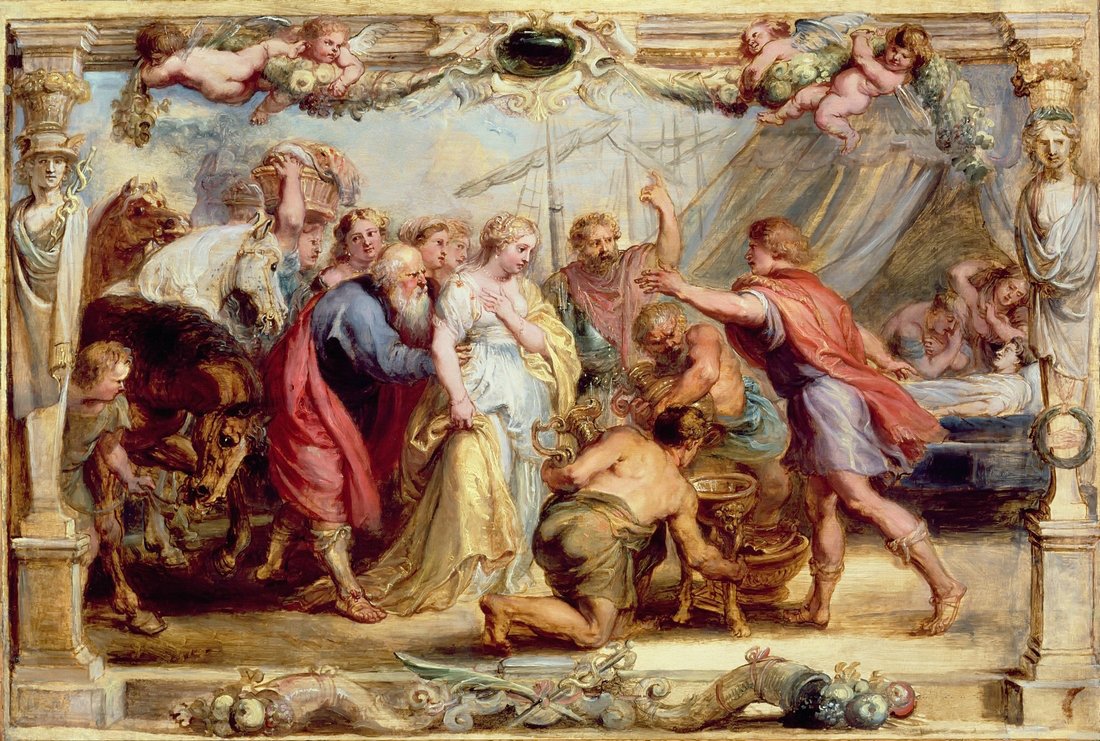
Briseis Restored to Achilles
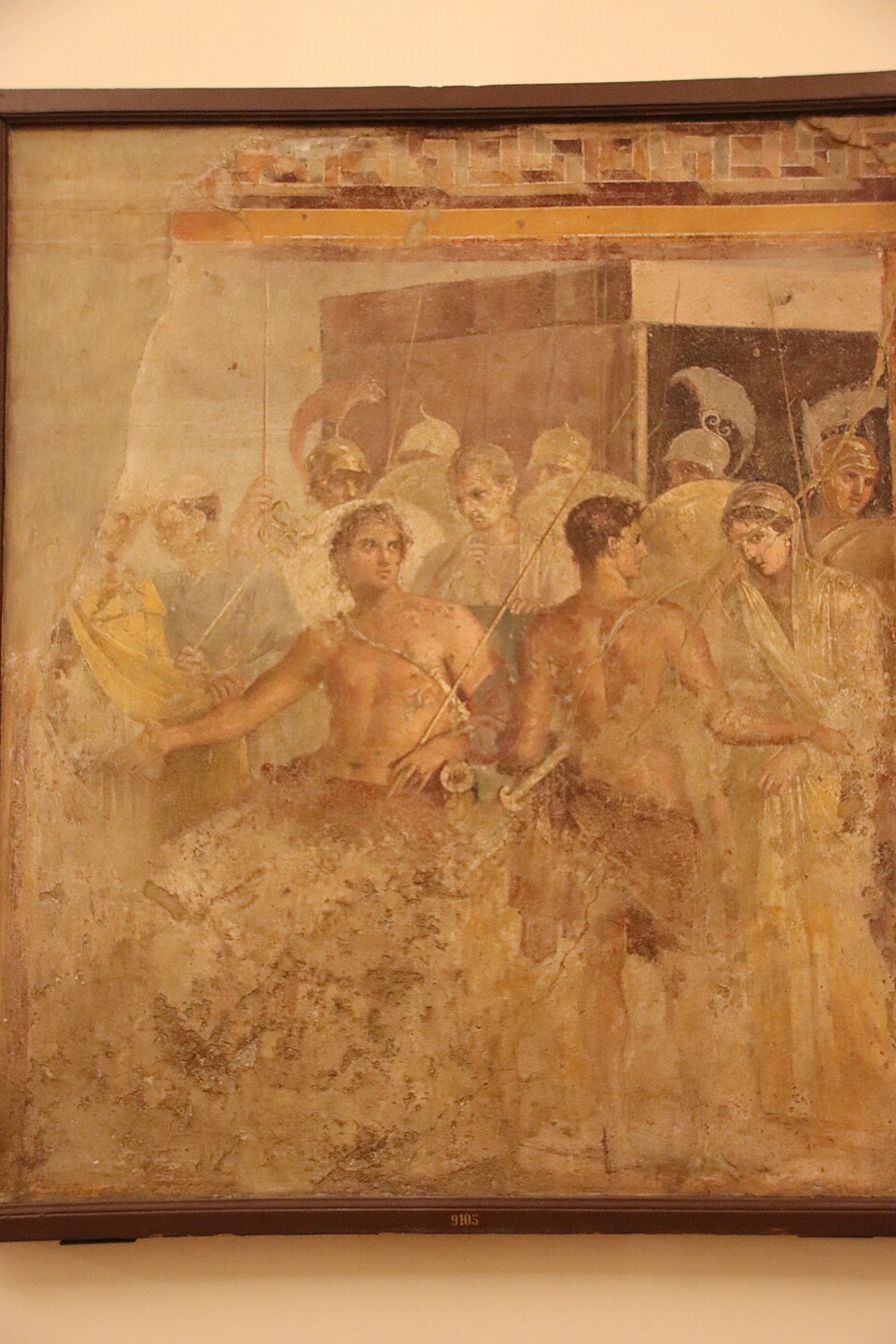
The quarrel ends. Agamemnon's heralds lead Briseis back to Achilles, making good the insult that kept the greatest Greek warrior out of the war. Rubens paints her arriving with gifts, the two camps finally facing each other in reconciliation rather than rage.
This is an oil sketch — a modello — from Rubens' series on the life of Achilles, designed as patterns for a set of tapestries. That is why the scene is framed by painted columns and garlands: they mark the border of the future weaving. The sketches are fast, bright, and entirely by Rubens' own hand, which makes them prized even above some finished works.
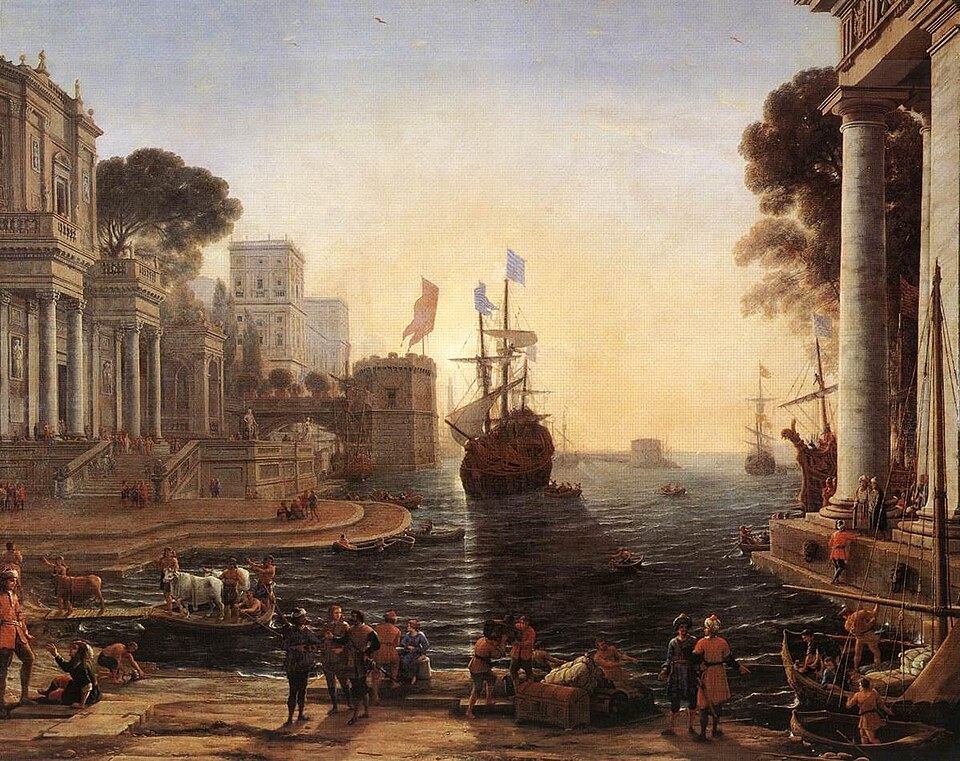
This is where the Iliad begins. Chryseis's father is a priest of the god Apollo. He comes to ransom his daughter, and Agamemnon insults him and sends him away. Apollo answers the priest's prayer by shooting plague-arrows into the Greek camp. Men and animals die for nine days.
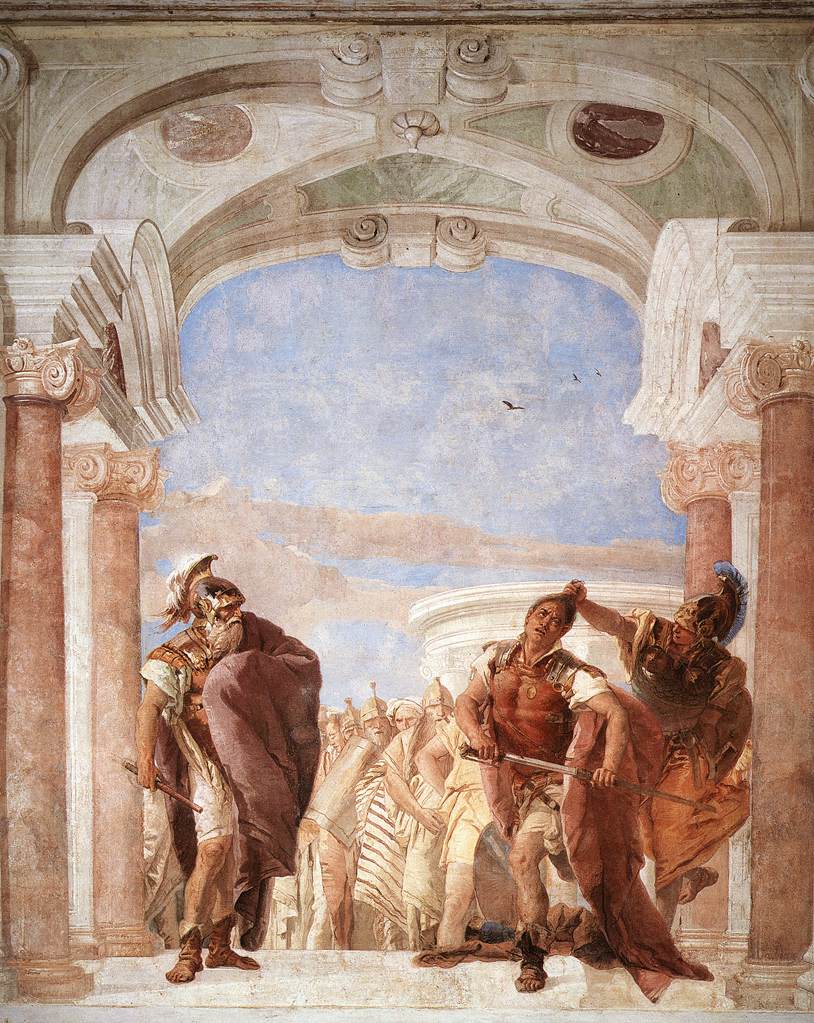
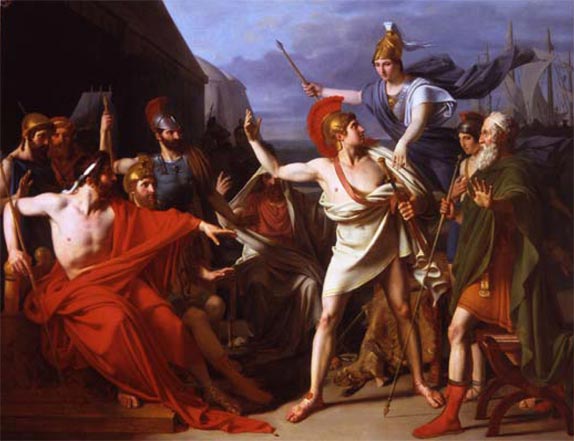
A prophet tells the army the truth: the plague is Agamemnon's fault, and Chryseis must go home. Agamemnon gives her up — and then, to save face, takes Briseis from Achilles instead. Achilles nearly kills him on the spot. The goddess Athena, invisible to everyone else, grabs Achilles by the hair and stops his sword hand.
Achilles obeys the goddess, but he is done. He announces that he and his men will no longer fight, walks to his tent, and stays there. The Greeks have just lost their best warrior over a stolen woman and a wounded ego — the 'wrath of Achilles' that is the poem's whole subject.
Peter Paul Rubens (1577–1640) ran the largest and busiest painting workshop in Europe from Antwerp, while also serving as a trusted diplomat between the courts of Spain, England, and the Netherlands. Steeped in classical literature, he returned to Homer's stories throughout his life.