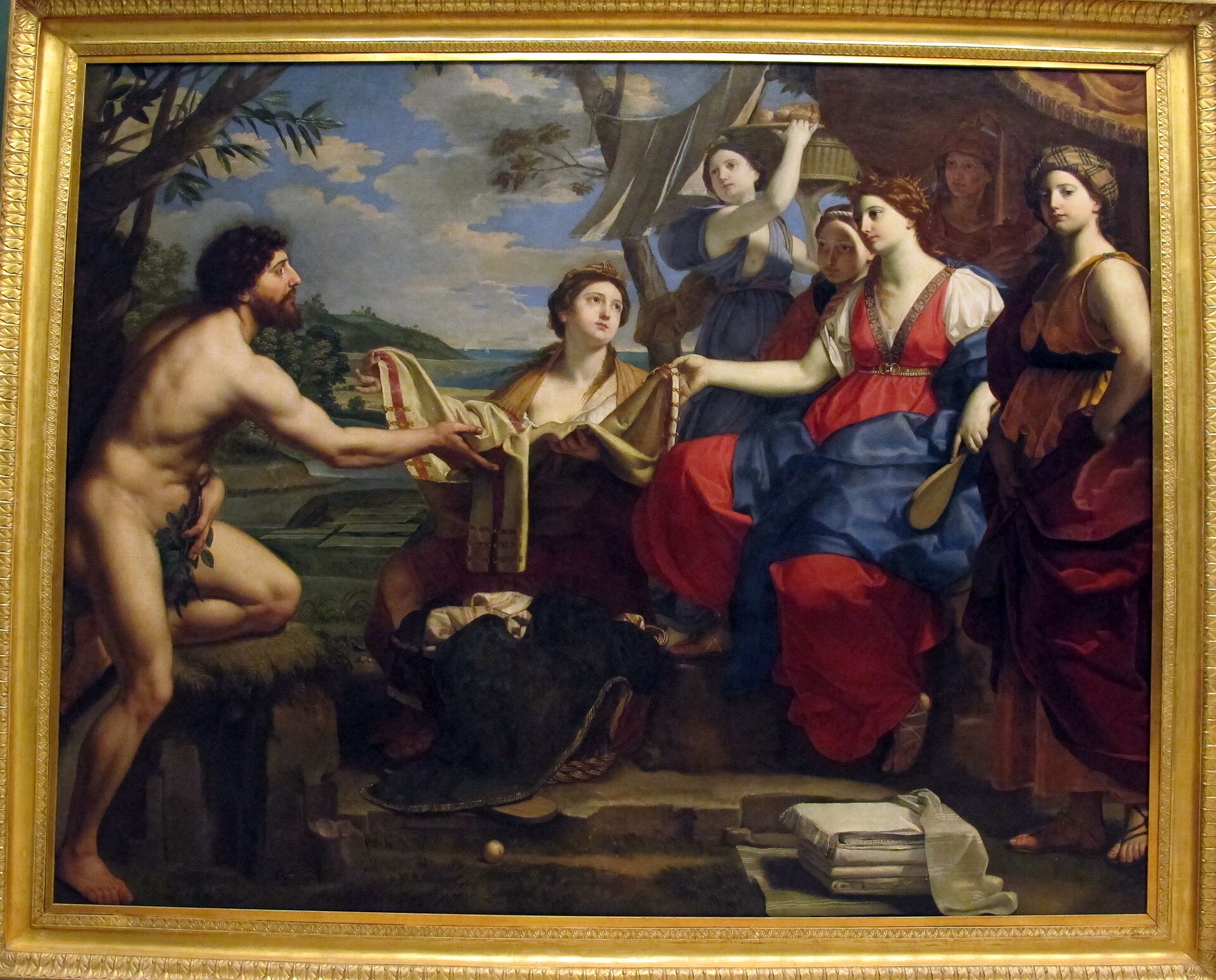
Ulysses and Nausicaä
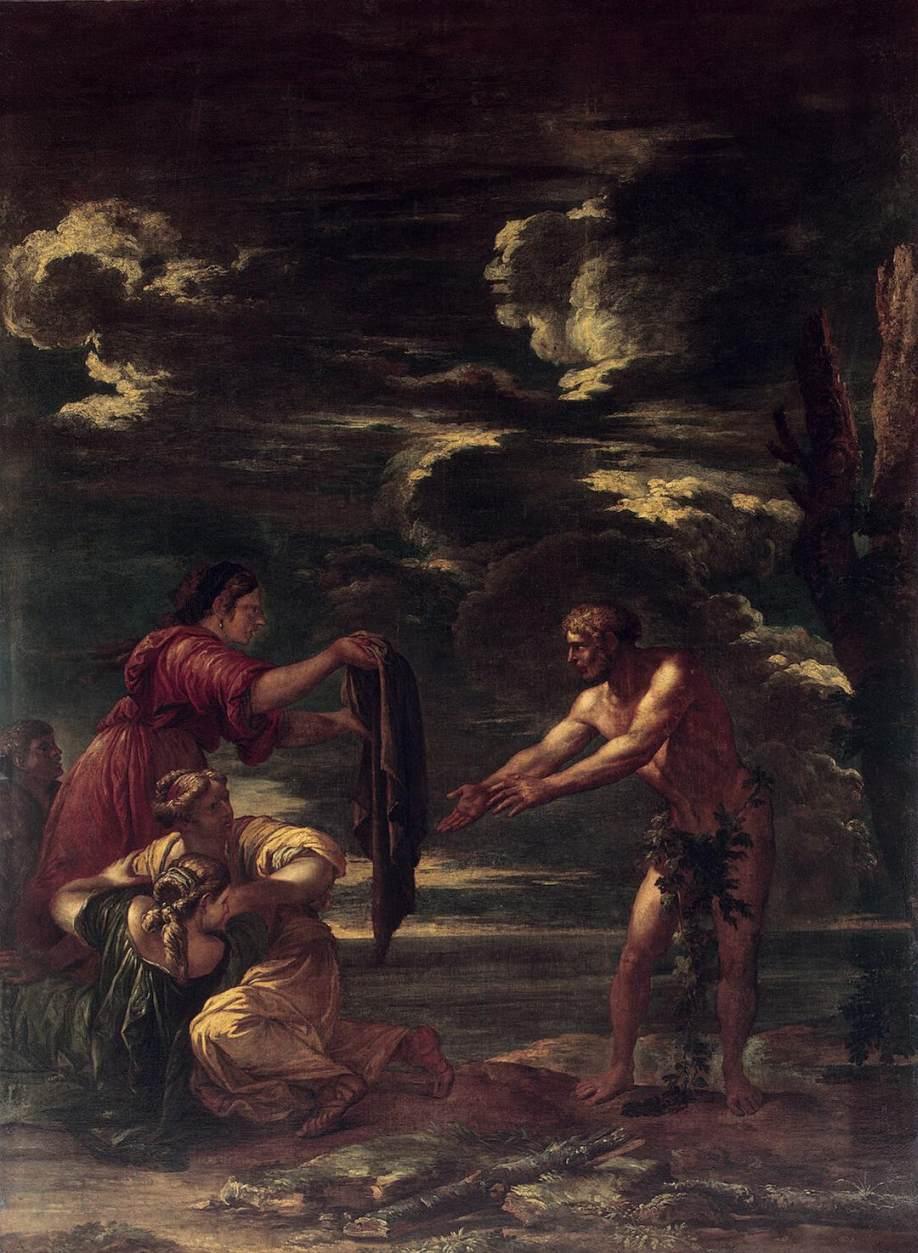
Nausicaä hands clothing to the shipwrecked Odysseus, who kneels half-draped at the edge of the group. Her maids hang back, caught between curiosity and alarm, their laundry still in their arms.
Desubleo gives the encounter the calm grace of the Bologna school: clear gestures, silvery light, beautiful fabrics. The drama is in the exchange of looks — a princess showing royal composure before a naked stranger who talks like a king.
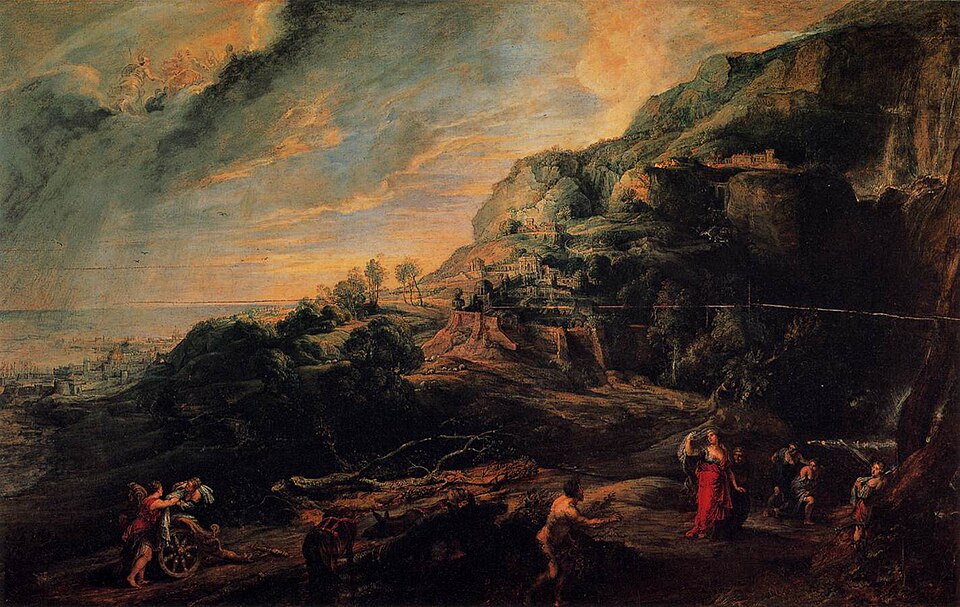
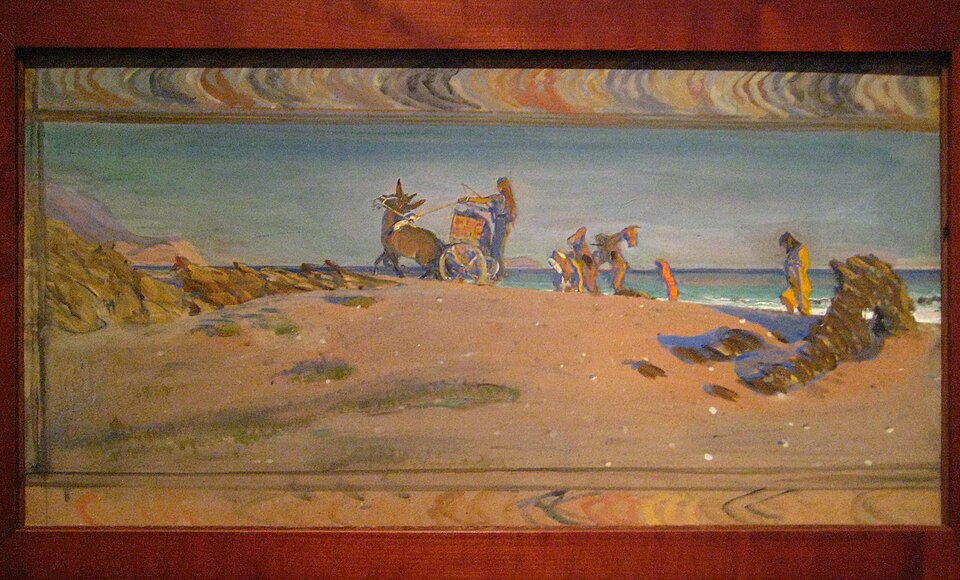
Scheria belongs to the Phaeacians, the best sailors in the world, and its princess is Nausicaa, daughter of King Alcinous. Nudged by a dream Athena sends her, she has driven the palace laundry down to the river mouth with her maids. Washing done, the girls play ball on the beach — and a stray throw and the shouting wake the salt-crusted stranger sleeping in the bushes.
He rises, naked, holding an olive branch in front of himself, and every maid runs — except Nausicaa, who stands her ground and hears him out. Odysseus delivers perhaps the most tactful speech in Greek literature: are you a goddess or a mortal, I have suffered, I ask only for a rag and the way to town. She gives him clothes, food, and shrewd advice — enter the palace and appeal first to her mother, the queen. Then she walks the stranger toward her father's city.
Michele Desubleo (1602–1676) was a Flemish-born painter who spent his career in Italy, working in the circle of Guido Reni in Bologna. His elegant, cool-toned history paintings found patrons in Bologna, Venice and Naples.