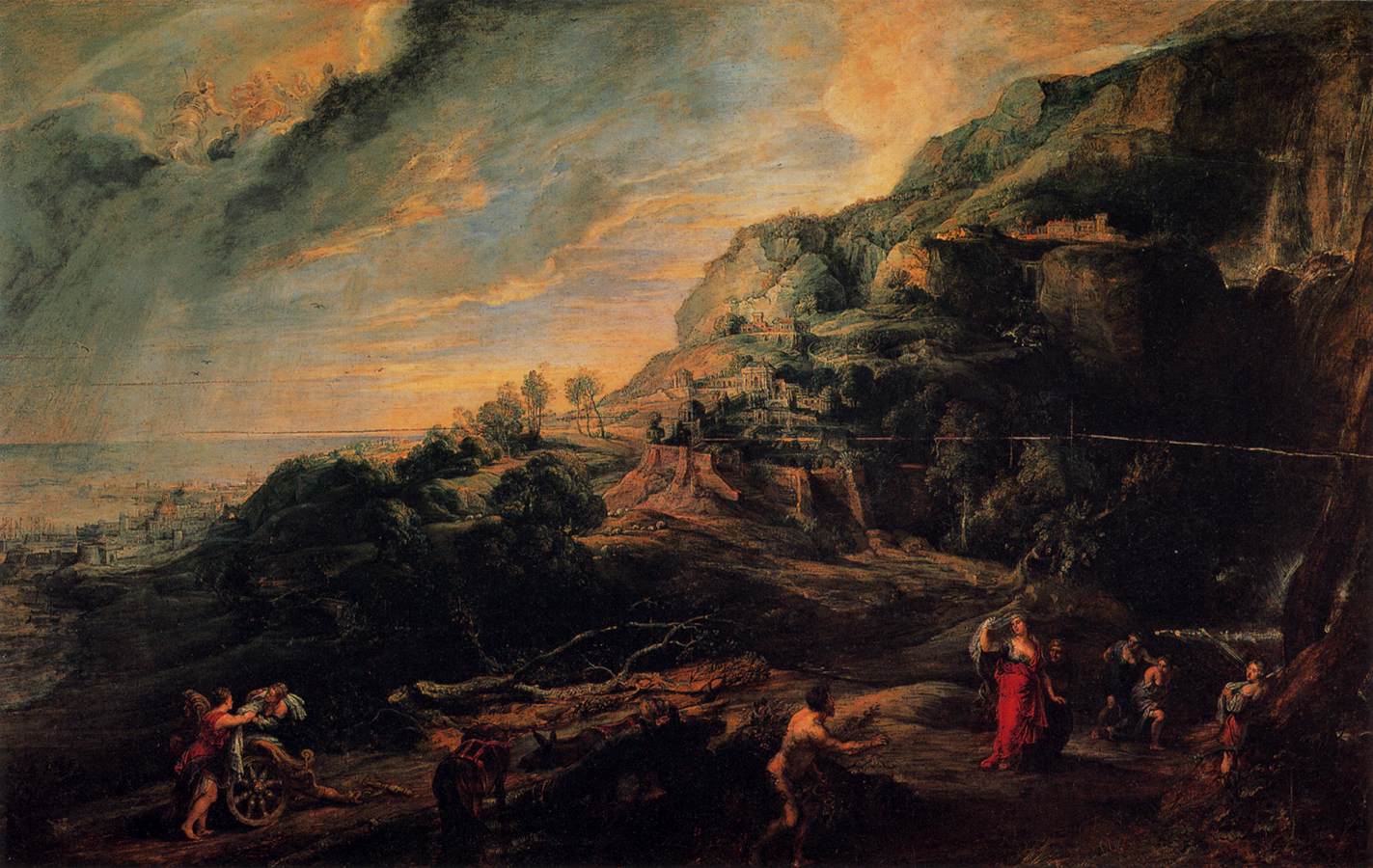
Landscape with Ulysses and Nausicaä
This is a landscape first and a story second. Under a rocky arch and a warming morning sky, the small figure of Odysseus greets Nausicaä and her companions; the drama is a detail in a countryside of hills, water and working peasants.
Rubens painted it near the end of his life, when he made landscapes for his own pleasure at his country estate. The shipwrecked wanderer meeting kindness at dawn becomes an image of the world itself as generous and wide.
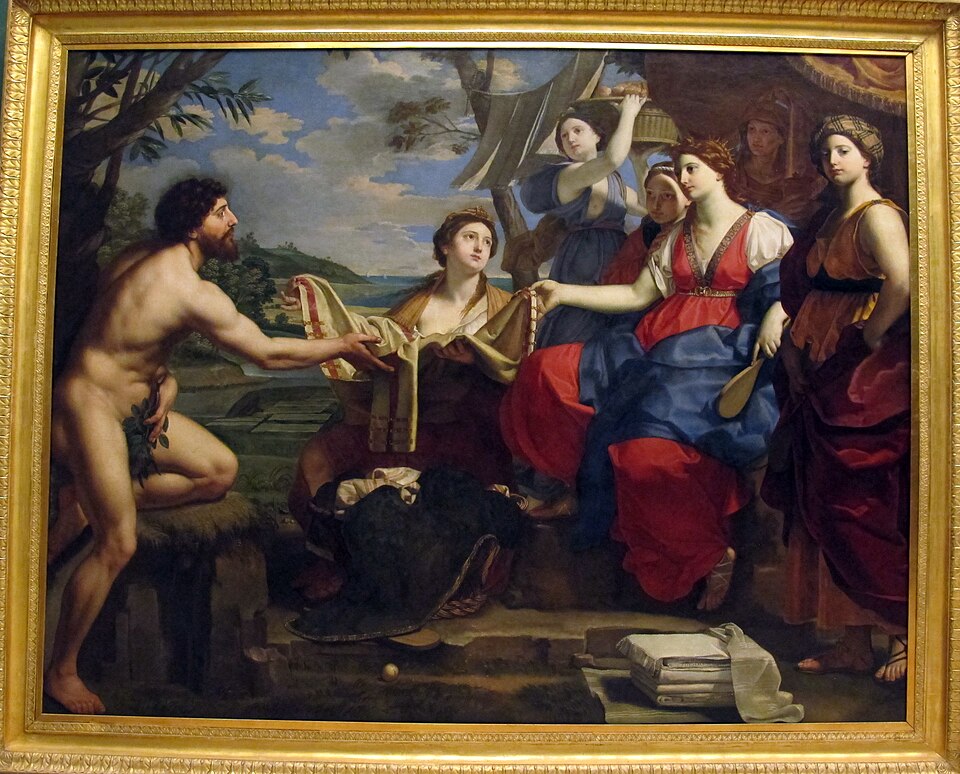
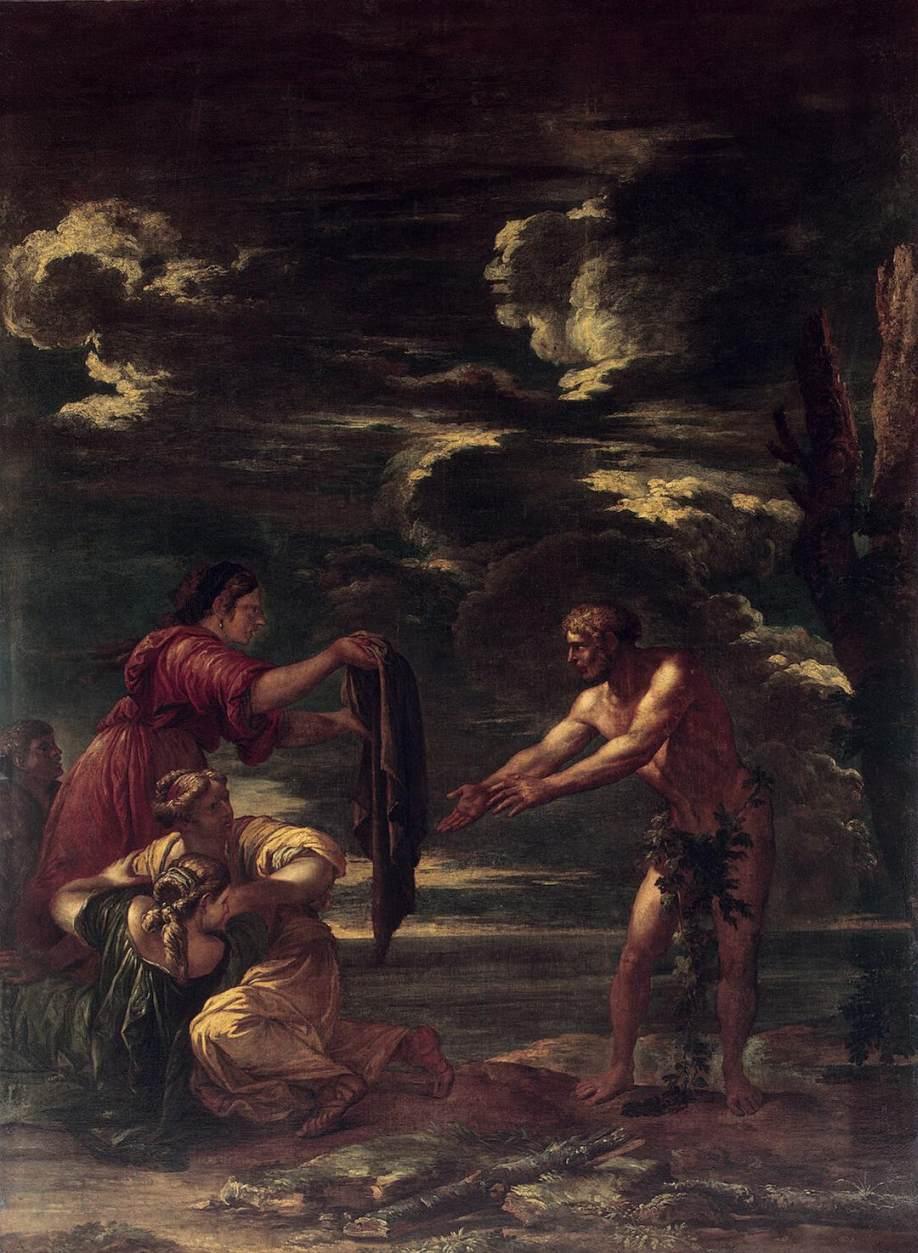
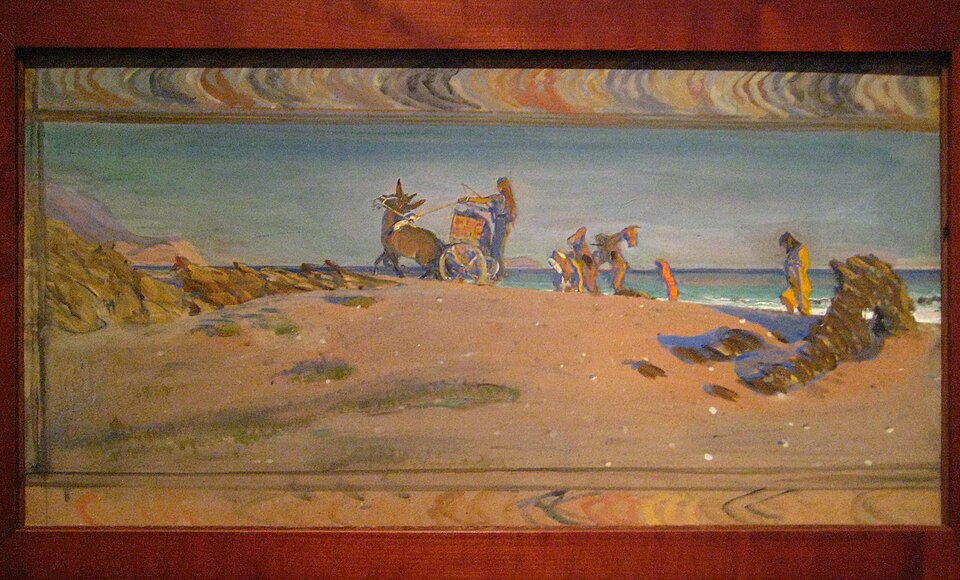
Scheria belongs to the Phaeacians, the best sailors in the world, and its princess is Nausicaa, daughter of King Alcinous. Nudged by a dream Athena sends her, she has driven the palace laundry down to the river mouth with her maids. Washing done, the girls play ball on the beach — and a stray throw and the shouting wake the salt-crusted stranger sleeping in the bushes.
He rises, naked, holding an olive branch in front of himself, and every maid runs — except Nausicaa, who stands her ground and hears him out. Odysseus delivers perhaps the most tactful speech in Greek literature: are you a goddess or a mortal, I have suffered, I ask only for a rag and the way to town. She gives him clothes, food, and shrewd advice — enter the palace and appeal first to her mother, the queen. Then she walks the stranger toward her father's city.
Peter Paul Rubens (1577–1640) was the dominant painter of the Flemish Baroque, running a vast studio in Antwerp while serving as a trusted diplomat. In his last years he retired to a castle in the countryside and painted landscapes for himself.