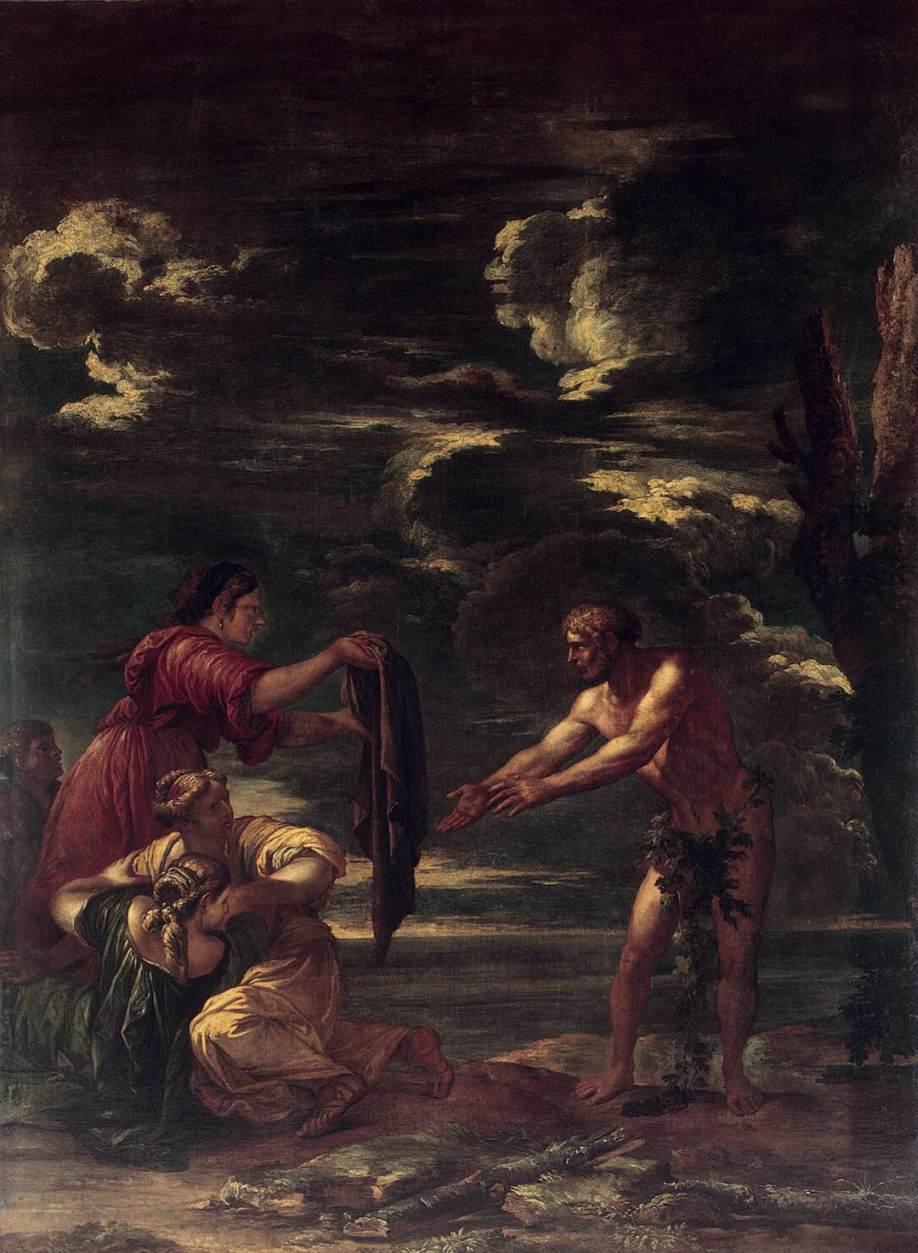
Ulysses and Nausicaä
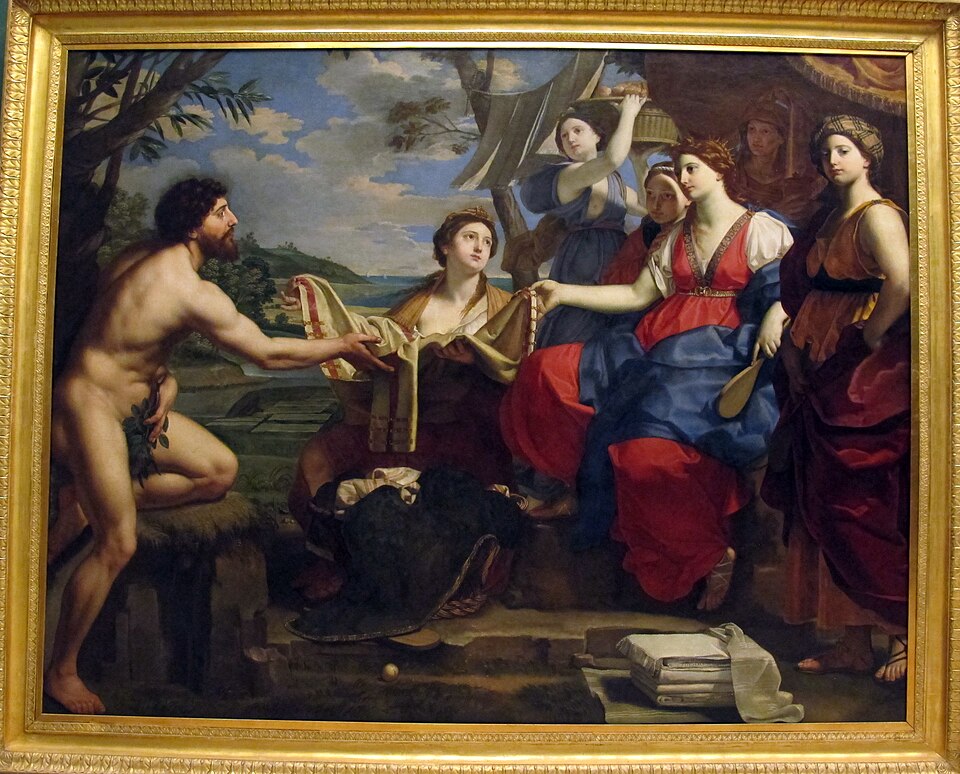
Odysseus wades ashore naked, screening himself with a leafy branch, and appeals to the princess doing laundry with her maids. Rosa paints the awkwardness of the moment head-on: a battered, imploring man and the young women deciding whether to run.
Rosa loved wild nature and rough edges, and his Odysseus is no polished hero — he is a survivor, all sinew and desperation. The dramatic rocks and dark foliage are as much his signature as the figures.
Scheria belongs to the Phaeacians, the best sailors in the world, and its princess is Nausicaa, daughter of King Alcinous. Nudged by a dream Athena sends her, she has driven the palace laundry down to the river mouth with her maids. Washing done, the girls play ball on the beach — and a stray throw and the shouting wake the salt-crusted stranger sleeping in the bushes.
He rises, naked, holding an olive branch in front of himself, and every maid runs — except Nausicaa, who stands her ground and hears him out. Odysseus delivers perhaps the most tactful speech in Greek literature: are you a goddess or a mortal, I have suffered, I ask only for a rag and the way to town. She gives him clothes, food, and shrewd advice — enter the palace and appeal first to her mother, the queen. Then she walks the stranger toward her father's city.
Salvator Rosa (1615–1673) was a Neapolitan painter, poet and actor with a taste for the wild and the strange — bandits, storms, witches, rocky coasts. His stormy landscapes made him a hero to the Romantics a century later.