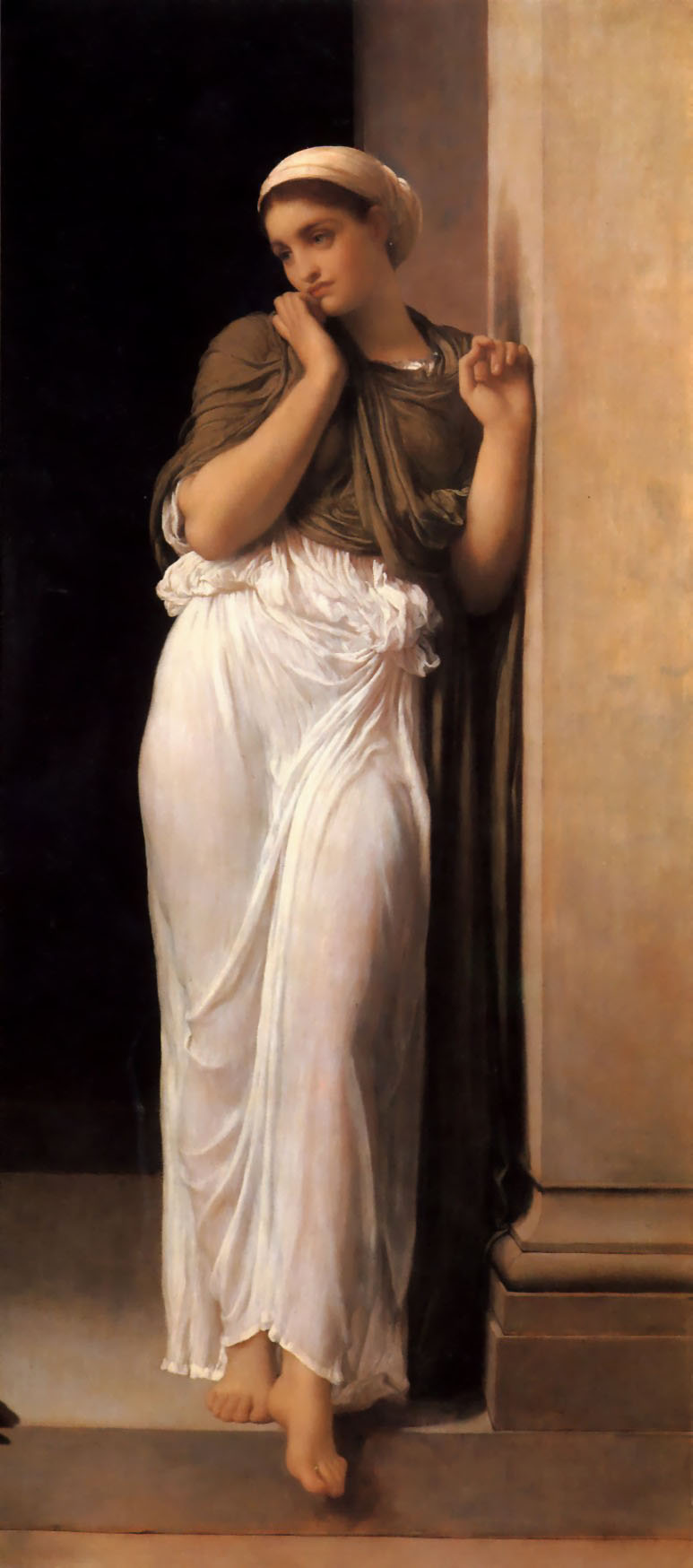
Nausicaä
A young woman leans in a doorway, one arm raised against the frame, lost in thought. This is Nausicaä, the island princess who found the shipwrecked Odysseus on the beach and led him home to her father's palace.
Leighton skips the famous beach scene entirely. He paints her alone and quiet, at the age between girl and woman, perhaps thinking of the stranger she cannot marry. It is a story picture with the story left out, told through posture alone.
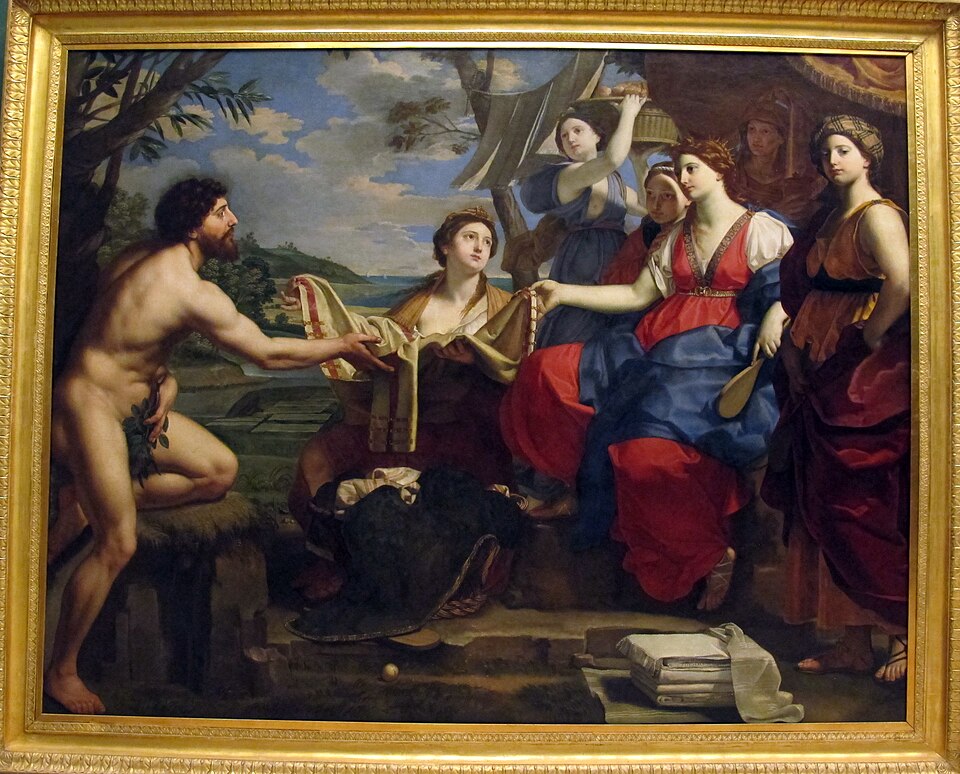
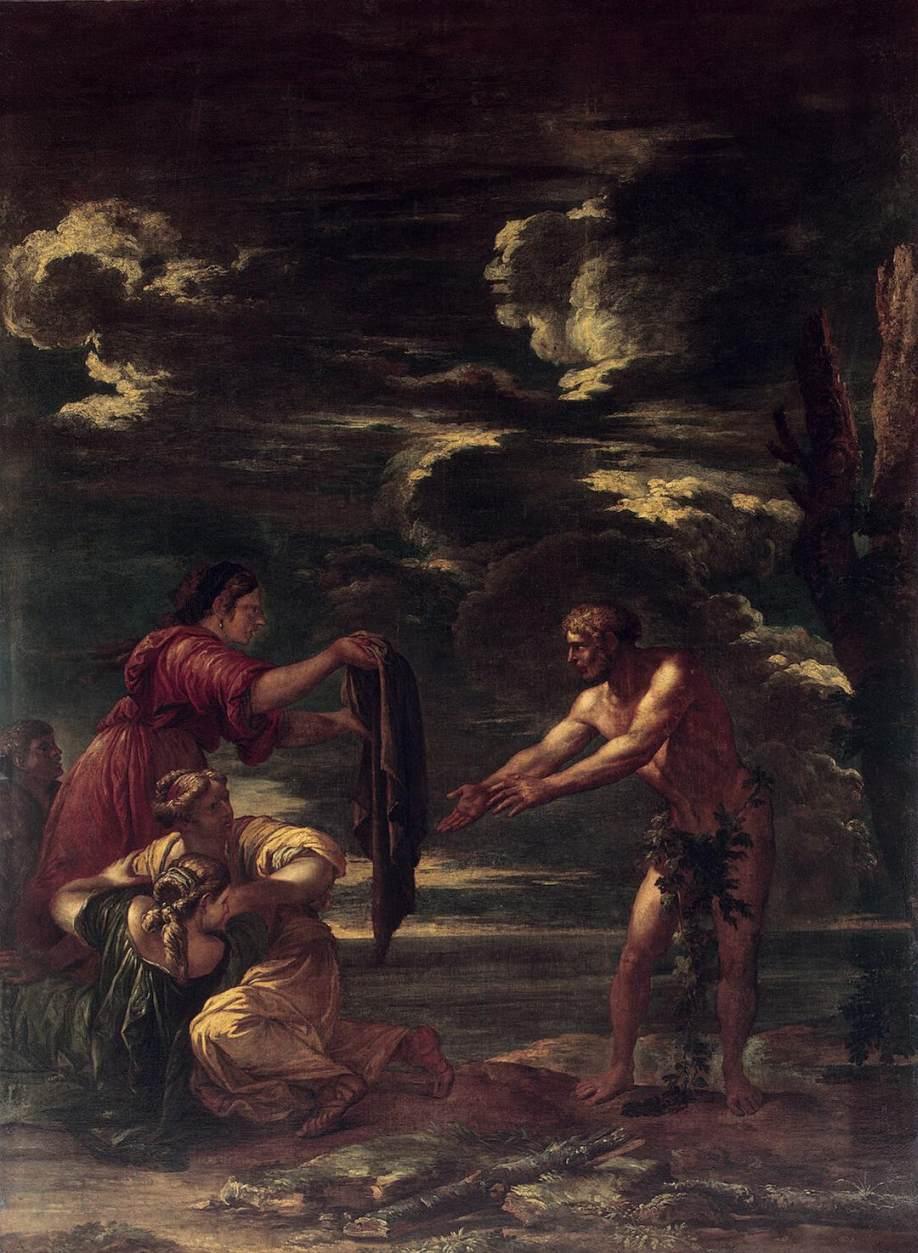
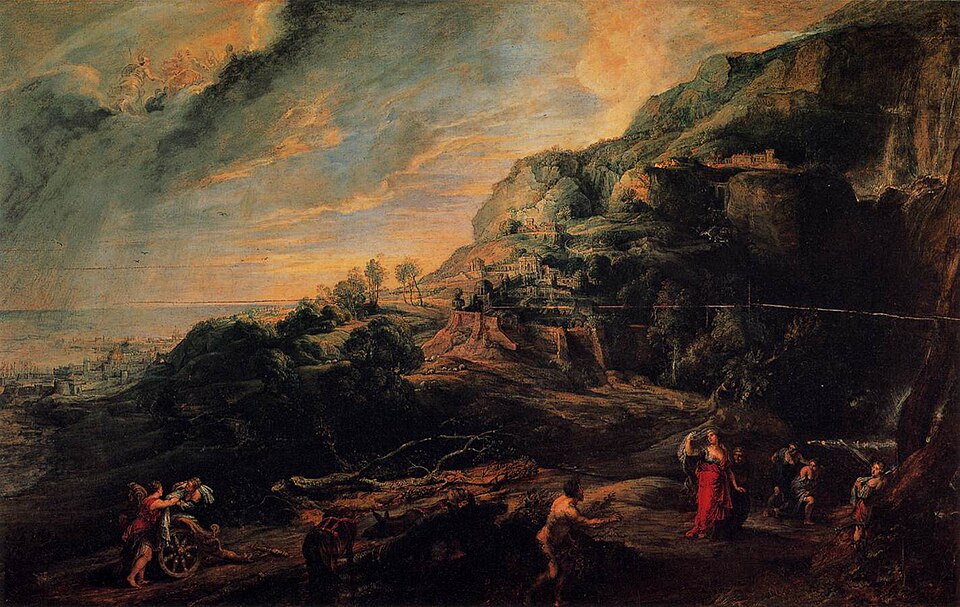
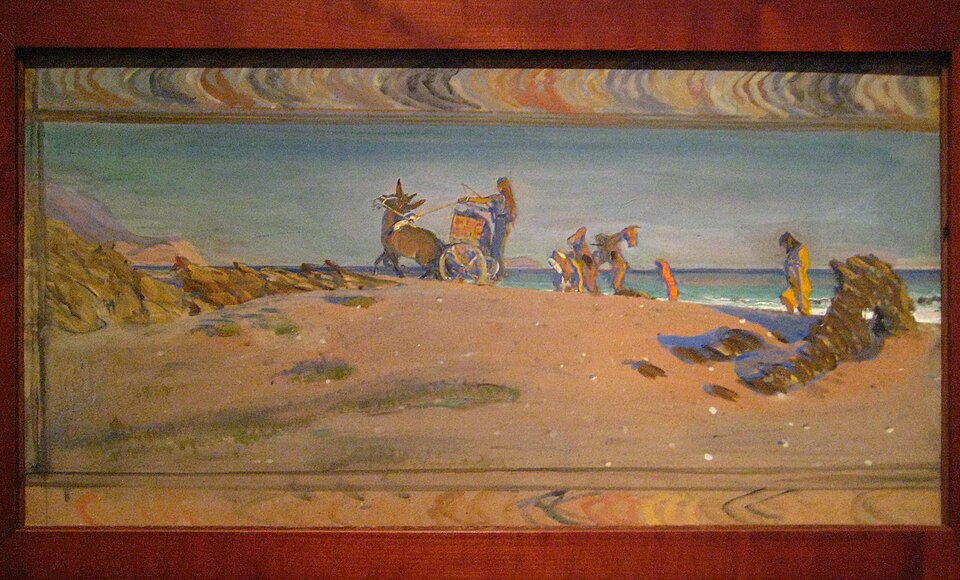
Scheria belongs to the Phaeacians, the best sailors in the world, and its princess is Nausicaa, daughter of King Alcinous. Nudged by a dream Athena sends her, she has driven the palace laundry down to the river mouth with her maids. Washing done, the girls play ball on the beach — and a stray throw and the shouting wake the salt-crusted stranger sleeping in the bushes.
He rises, naked, holding an olive branch in front of himself, and every maid runs — except Nausicaa, who stands her ground and hears him out. Odysseus delivers perhaps the most tactful speech in Greek literature: are you a goddess or a mortal, I have suffered, I ask only for a rag and the way to town. She gives him clothes, food, and shrewd advice — enter the palace and appeal first to her mother, the queen. Then she walks the stranger toward her father's city.
Frederic Leighton (1830–1896) was the most honored English painter of his day, president of the Royal Academy for nearly two decades. He specialized in polished scenes from classical life and was the first English artist ever raised to the peerage.