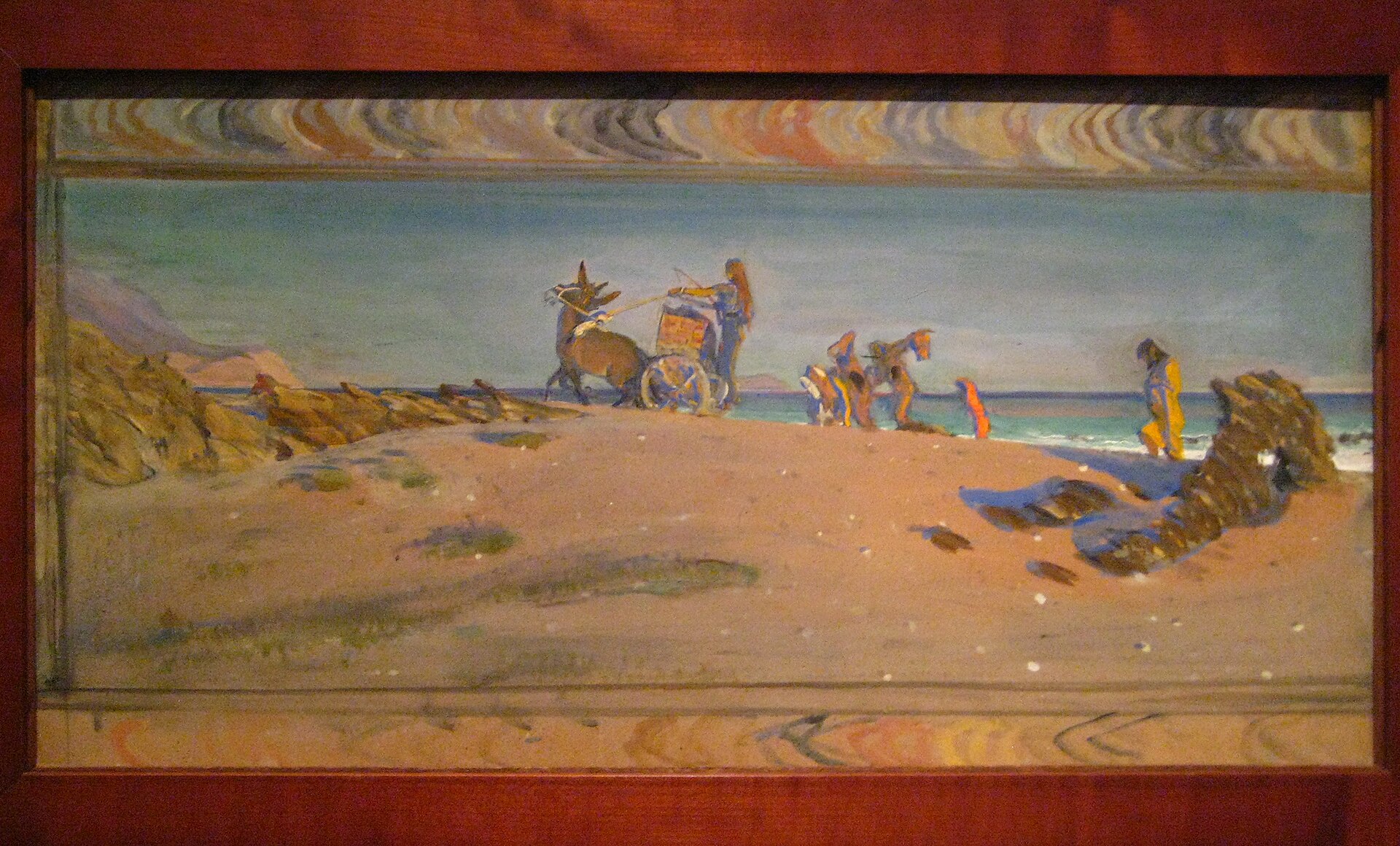
Odysseus and Nausicaä
Nausicaä drives her mule cart home along the shore, and Odysseus — rescued, clothed, still a stranger — walks behind at a respectful distance. Serov strips the scene to a few bands: pale sky, gray sea, wet sand, the small procession moving along the water's edge.
Serov had sailed the Greek islands in 1907, and this is myth painted from memory of real light and real coastline. The empty spaces and muted colors make the scene feel both ancient and startlingly modern.
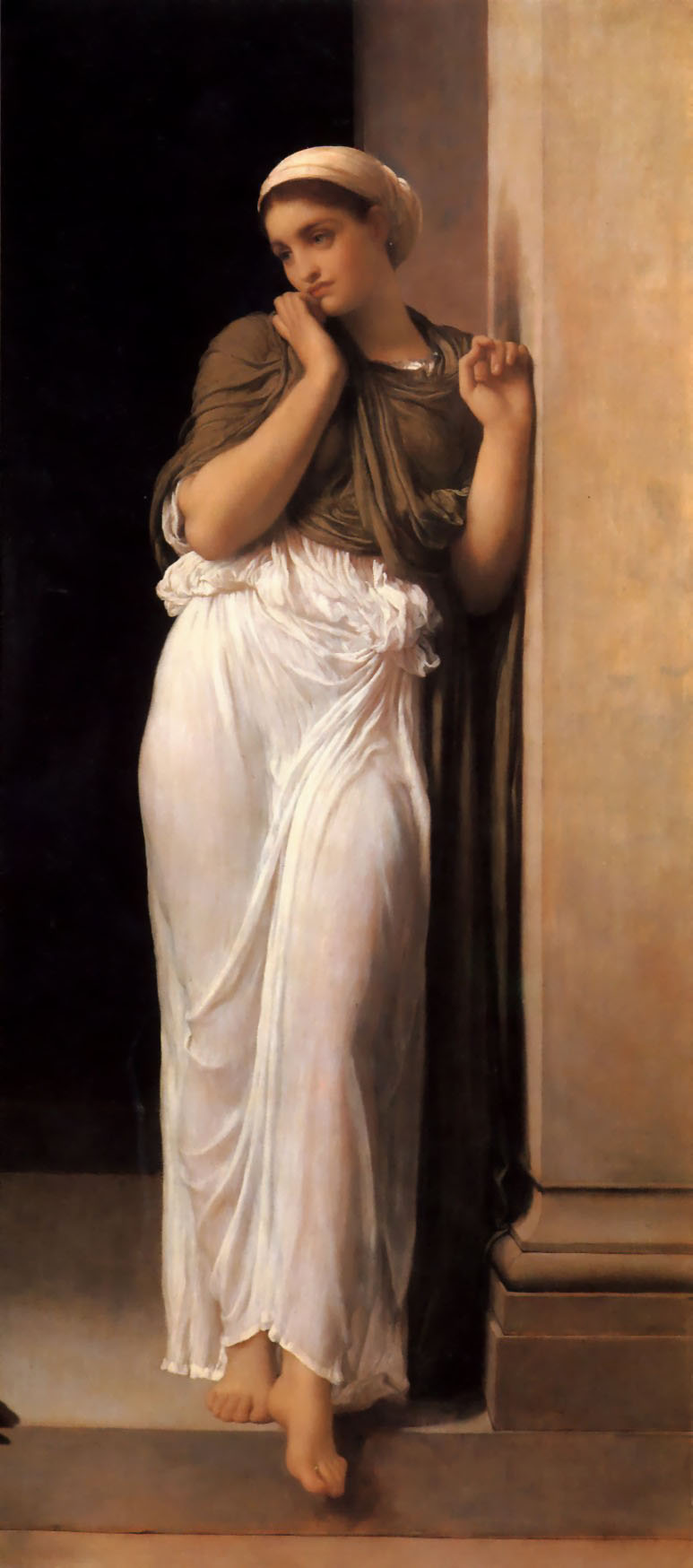
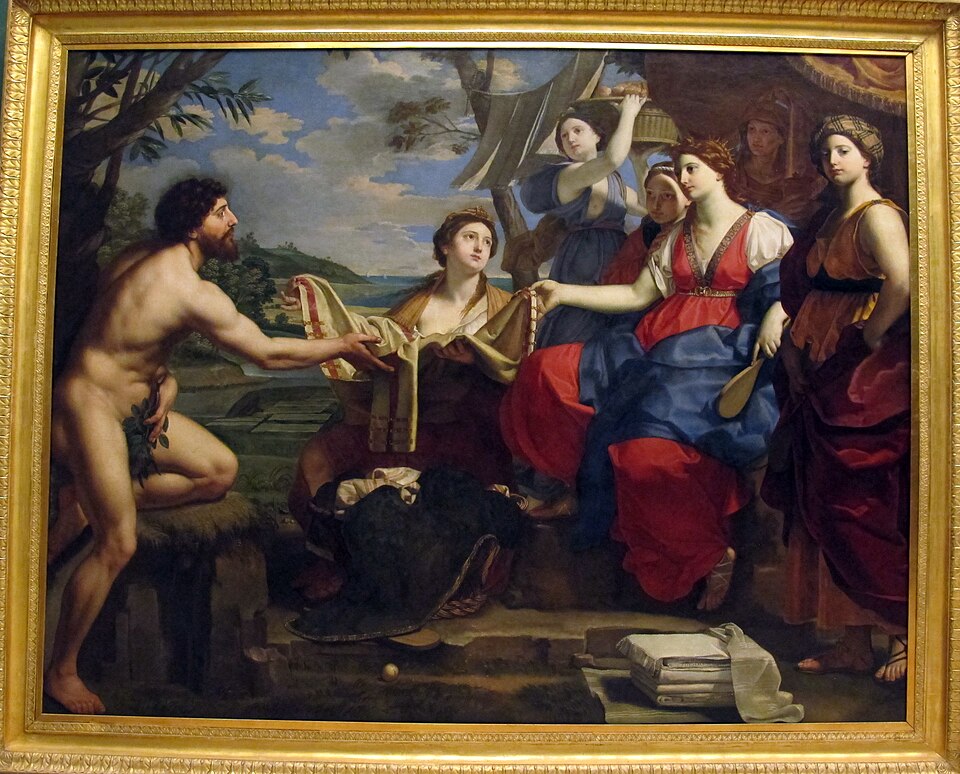
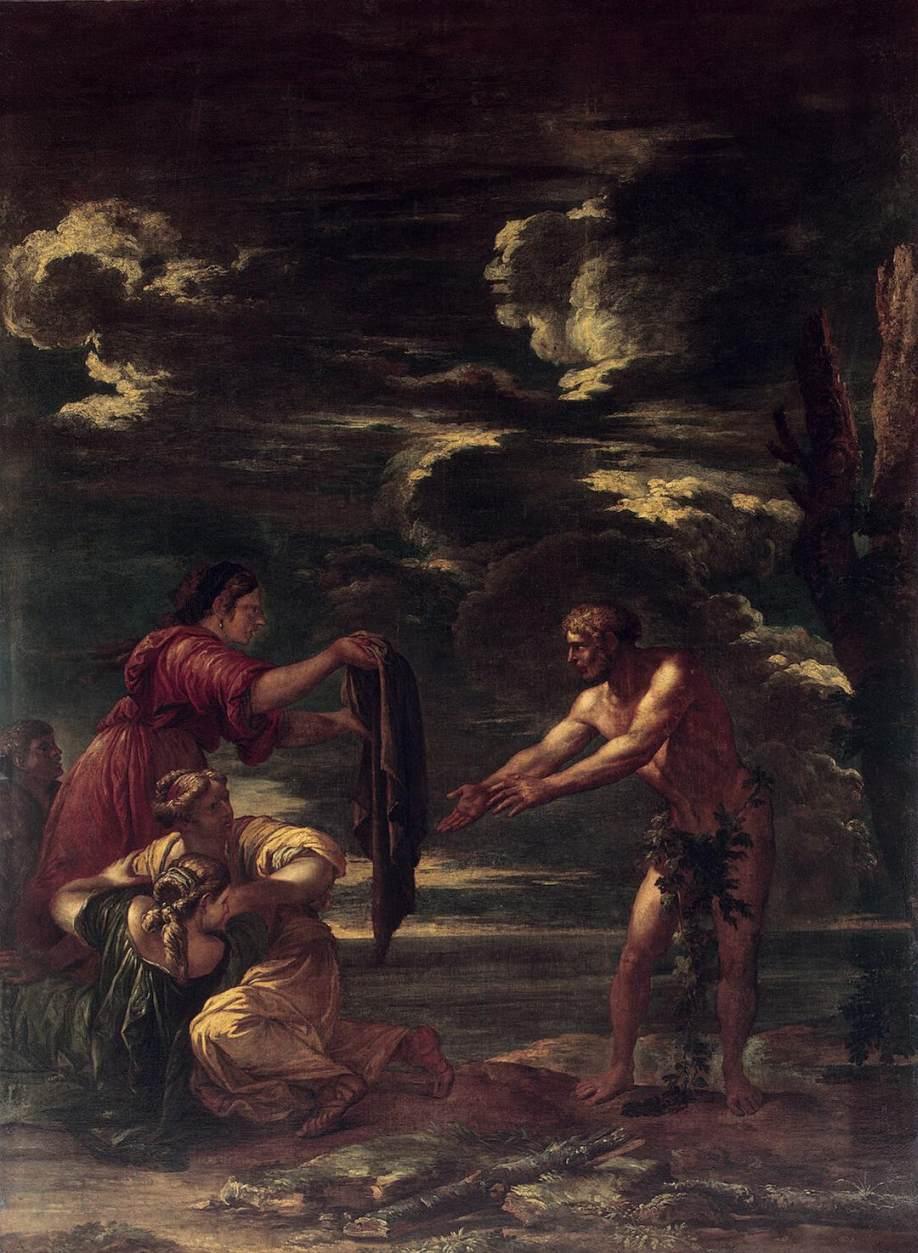
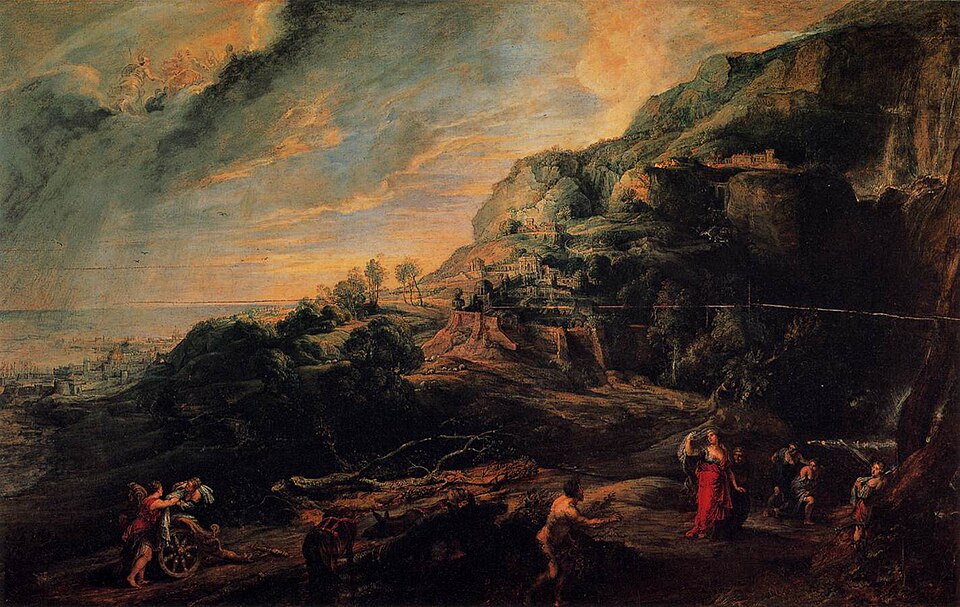
Scheria belongs to the Phaeacians, the best sailors in the world, and its princess is Nausicaa, daughter of King Alcinous. Nudged by a dream Athena sends her, she has driven the palace laundry down to the river mouth with her maids. Washing done, the girls play ball on the beach — and a stray throw and the shouting wake the salt-crusted stranger sleeping in the bushes.
He rises, naked, holding an olive branch in front of himself, and every maid runs — except Nausicaa, who stands her ground and hears him out. Odysseus delivers perhaps the most tactful speech in Greek literature: are you a goddess or a mortal, I have suffered, I ask only for a rag and the way to town. She gives him clothes, food, and shrewd advice — enter the palace and appeal first to her mother, the queen. Then she walks the stranger toward her father's city.
Valentin Serov (1865–1911) was Russia's finest portrait painter at the turn of the century. Late in life, after a voyage to Greece, he turned to classical myth, producing spare, modern retellings like this one shortly before his early death.
_FRAME.jpg)