Circe
.jpg)
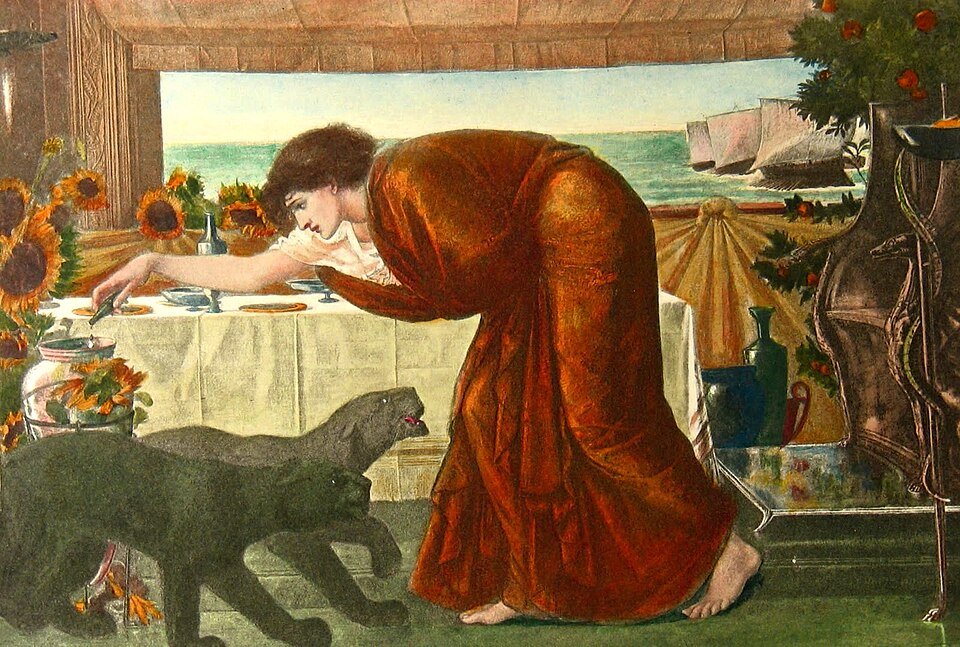
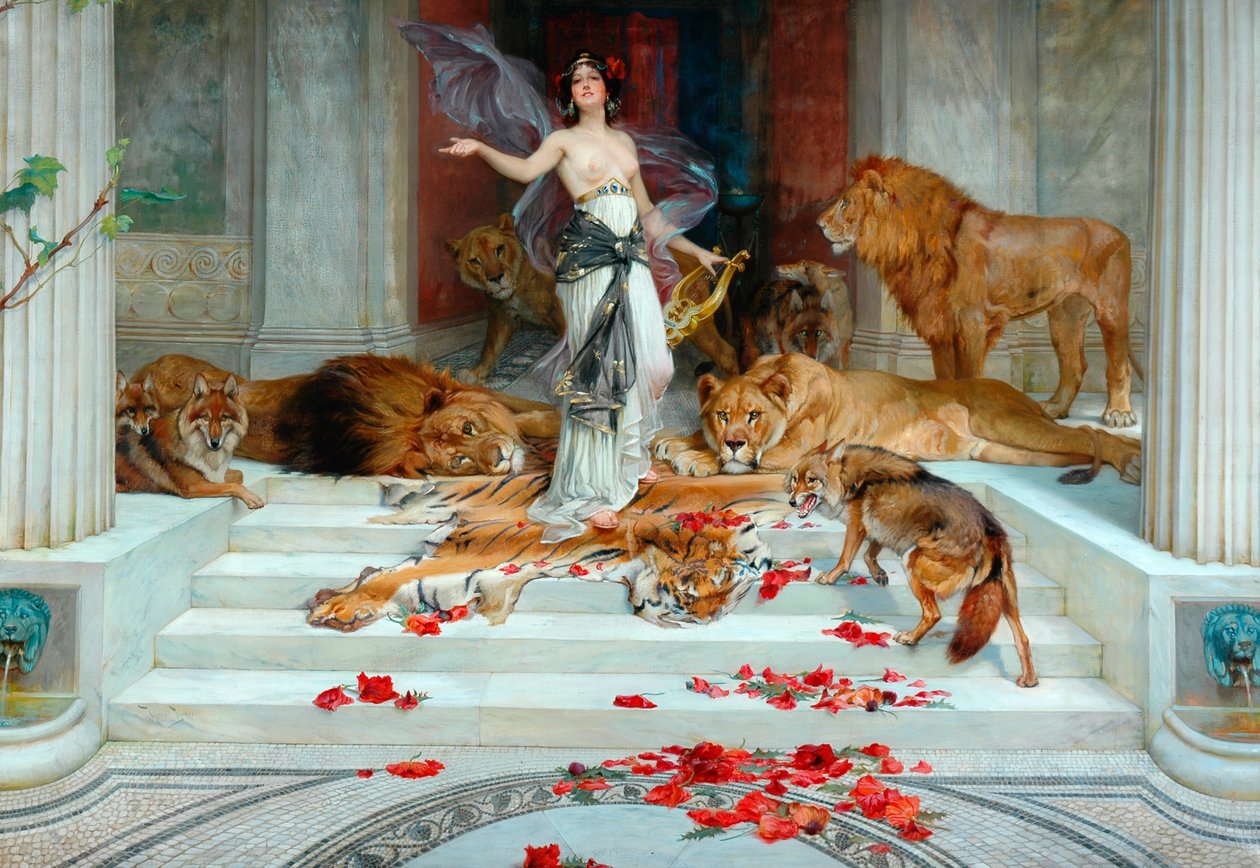
Circe stands in a grand marble hall, surrounded by a pack of wolves and big cats that crowd around her like hounds around a huntress. They are, of course, not animals at all — each one was once a man who accepted her hospitality.
Barker was above all an animal painter, and this picture plays to that strength: the menace comes from how tame the beasts are. Their obedience is the spell made visible.
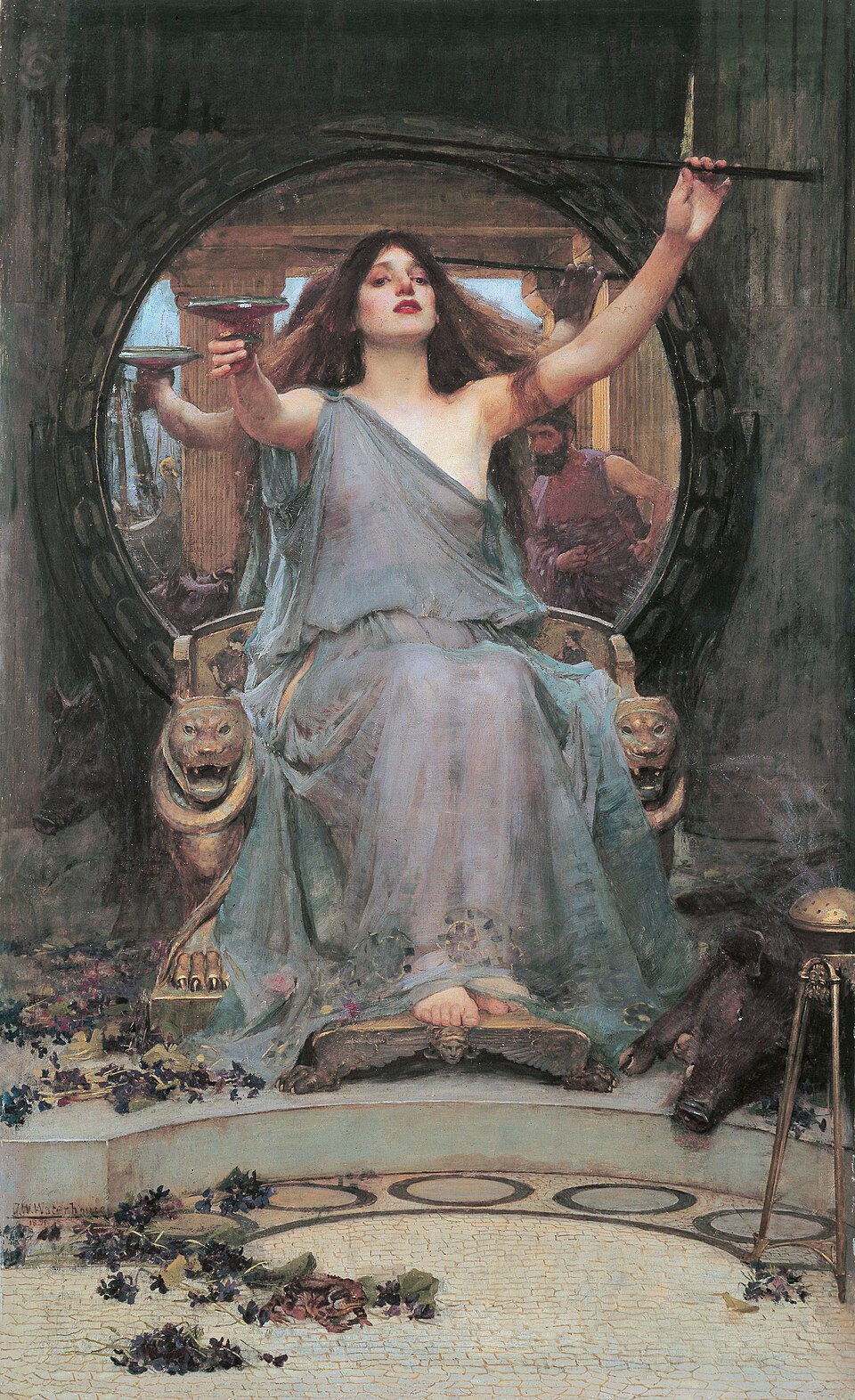
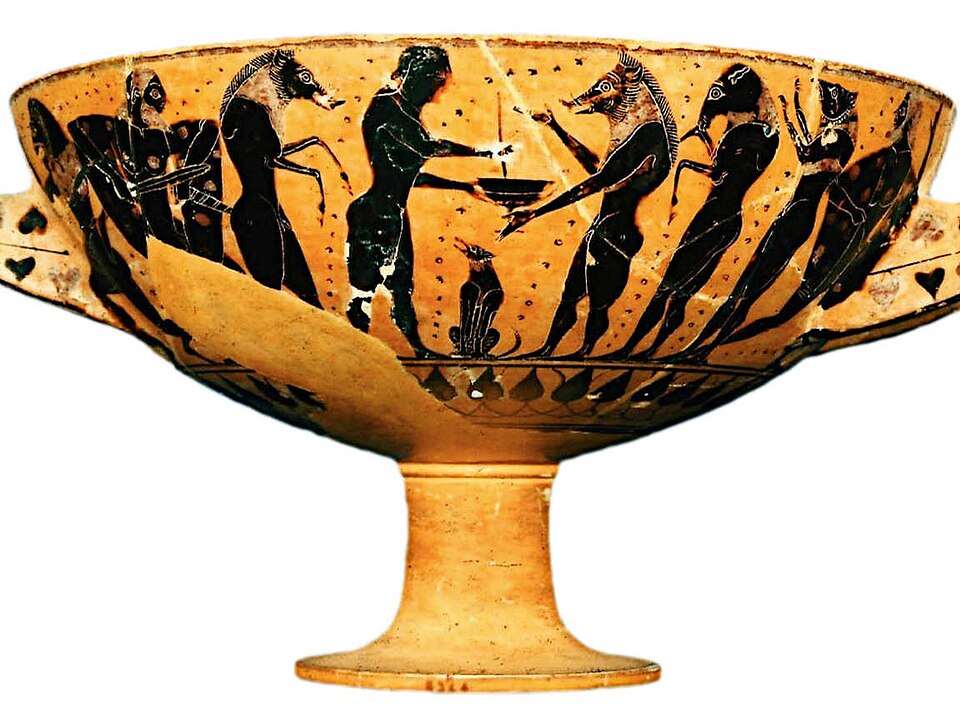
The single surviving ship reaches Aeaea, the island of Circe, a goddess and an enchantress. A scouting party finds her stone house in a clearing, guarded by wolves and mountain lions that fawn like dogs — men she has already transformed. She invites the sailors in, feeds them drugged cheese and wine, touches them with a wand, and turns them into pigs: pig bodies, human minds.
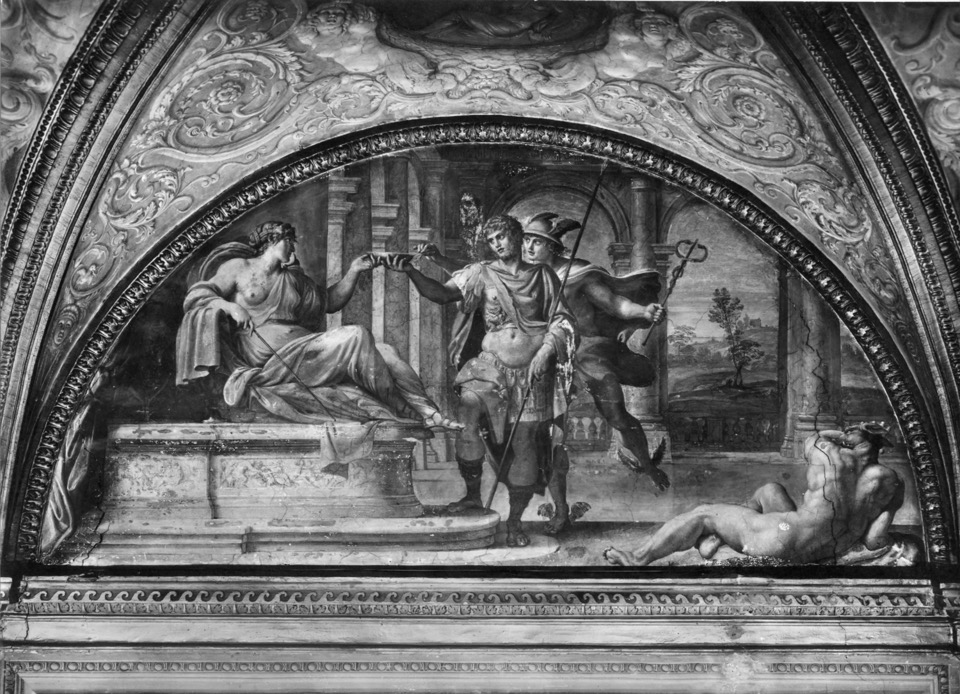
One man escapes to warn Odysseus, who goes back alone. On the way the god Hermes stops him, gives him a protective herb called moly, and tells him exactly what to do. Circe's drug fails; when she raises her wand, Odysseus draws his sword. Recognizing the man a prophecy warned her about, she restores his crew and takes him as her lover.
They stay a year, resting and feasting, until the crew reminds their captain that home still exists. Circe does not try to keep him. But she tells him the road home runs through a place no living man visits: he must sail to the edge of the world and question the dead.
Wright Barker (1864–1941) was an English painter best known for portraits of animals — hunting dogs, cattle, and horses. Circe is his most famous work, combining his animal painting with a rare venture into myth.