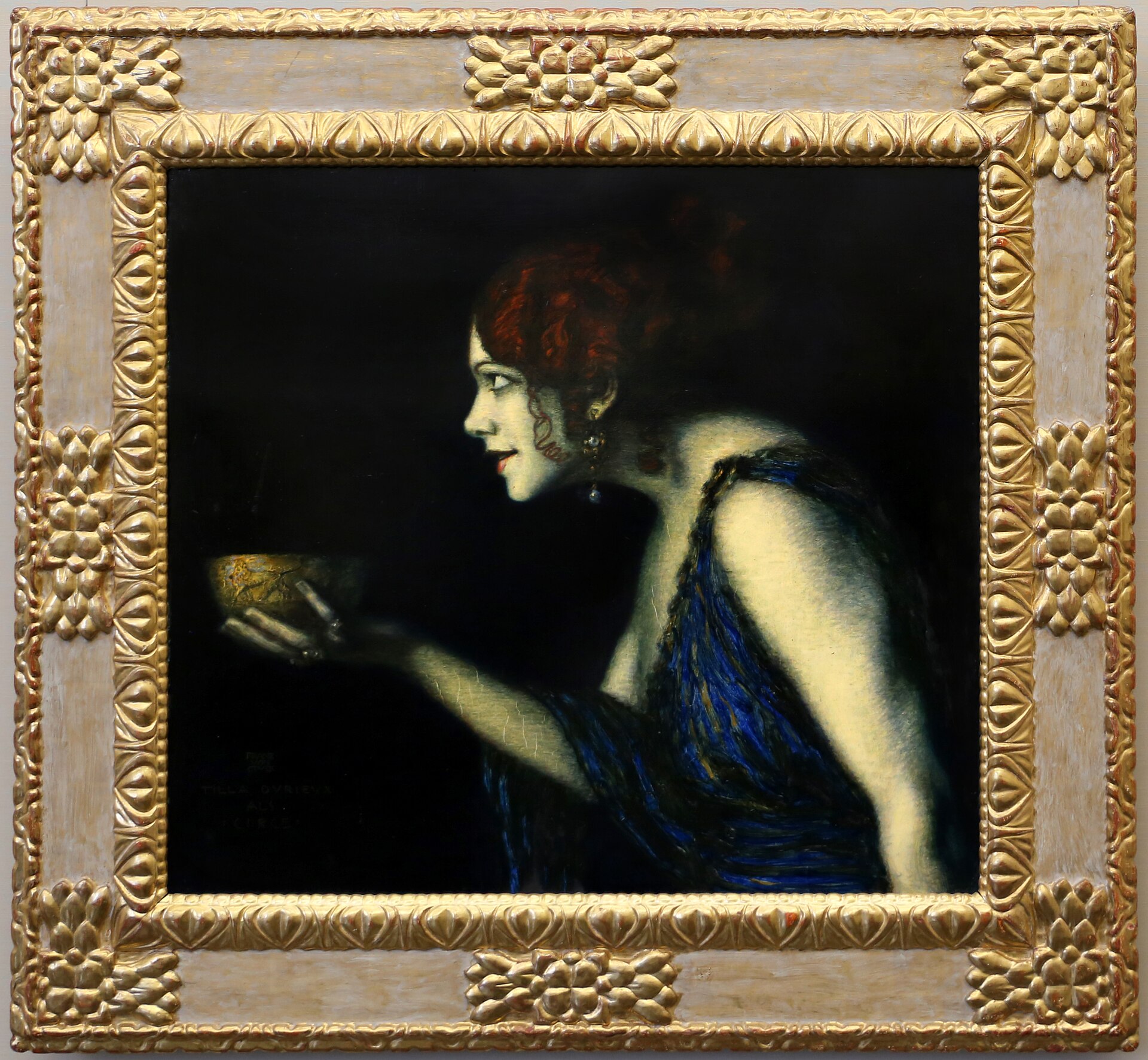
Tilla Durieux as Circe

The famous Berlin actress Tilla Durieux leans forward out of the dark, offering the drugged cup with a sideways smile. This is a portrait of a real performer in one of her stage roles, painted as if the viewer were Ulysses deciding whether to drink.
Stuck lights only her face, shoulder, and the shining bowl, so the whole painting becomes the offer and the look that comes with it. Few images compress the Circe story into so little: no island, no pigs, just persuasion.
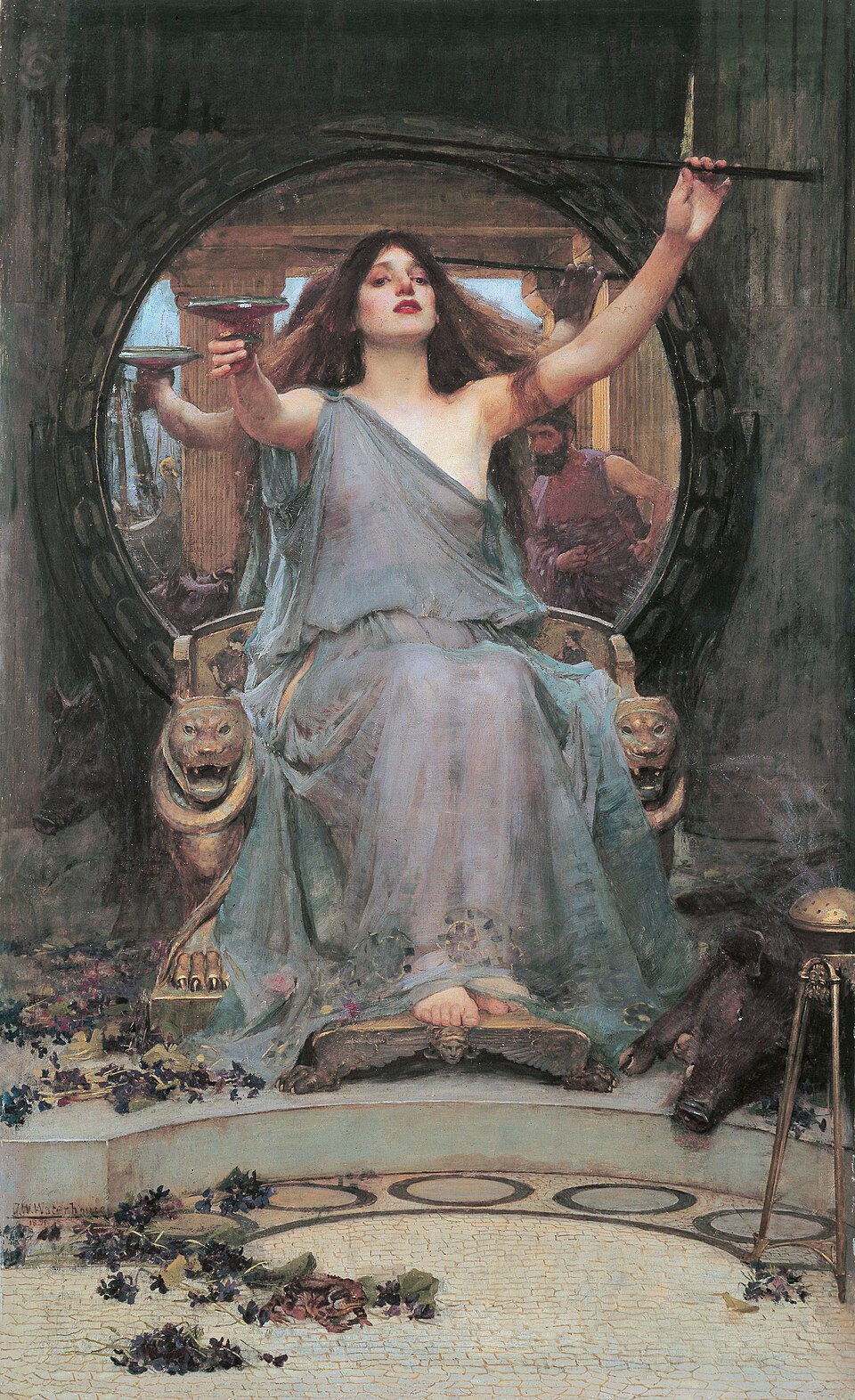
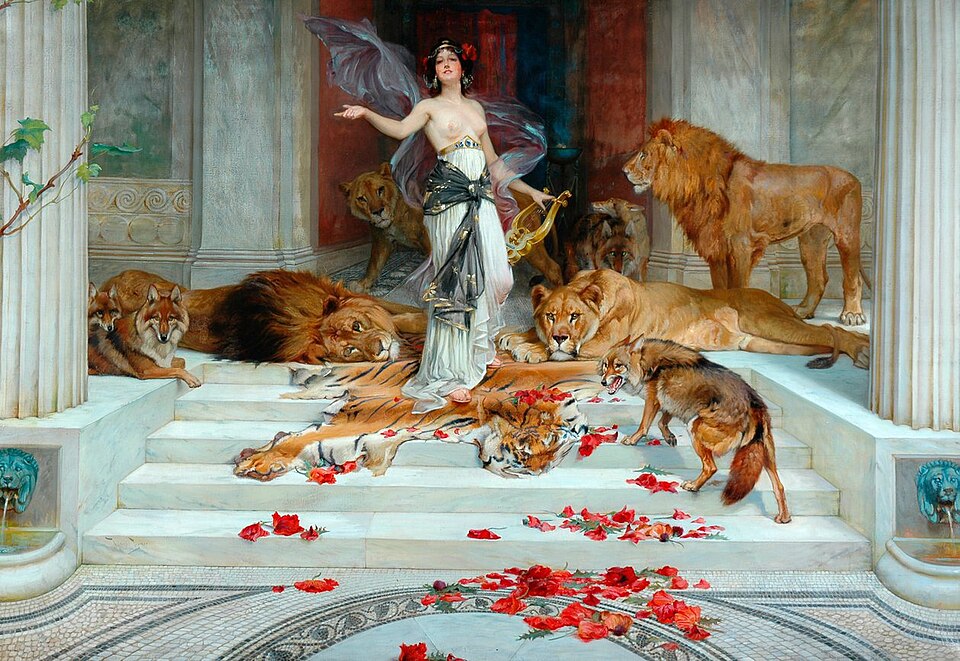
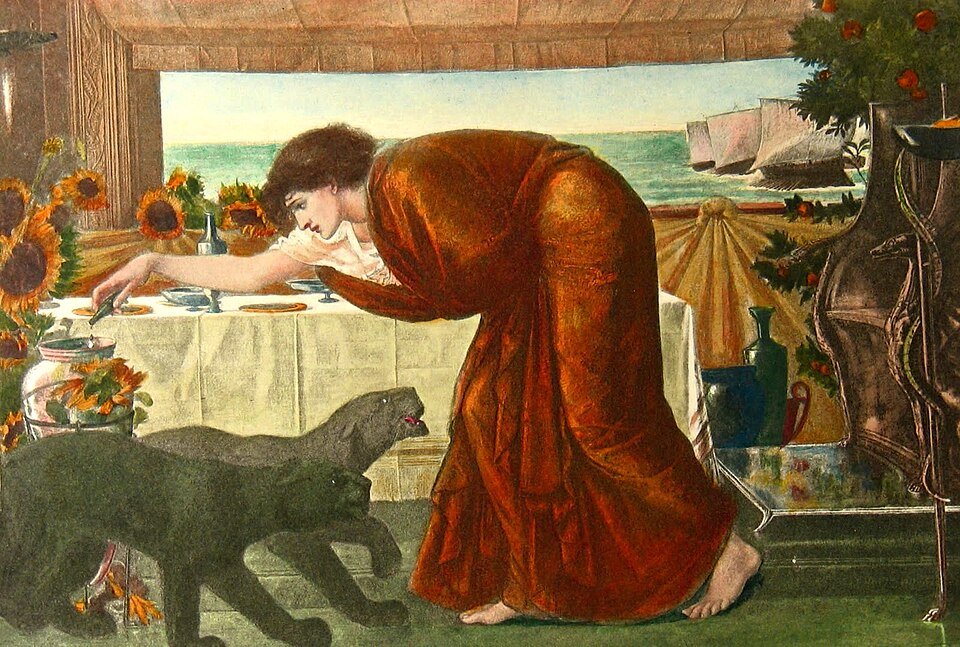
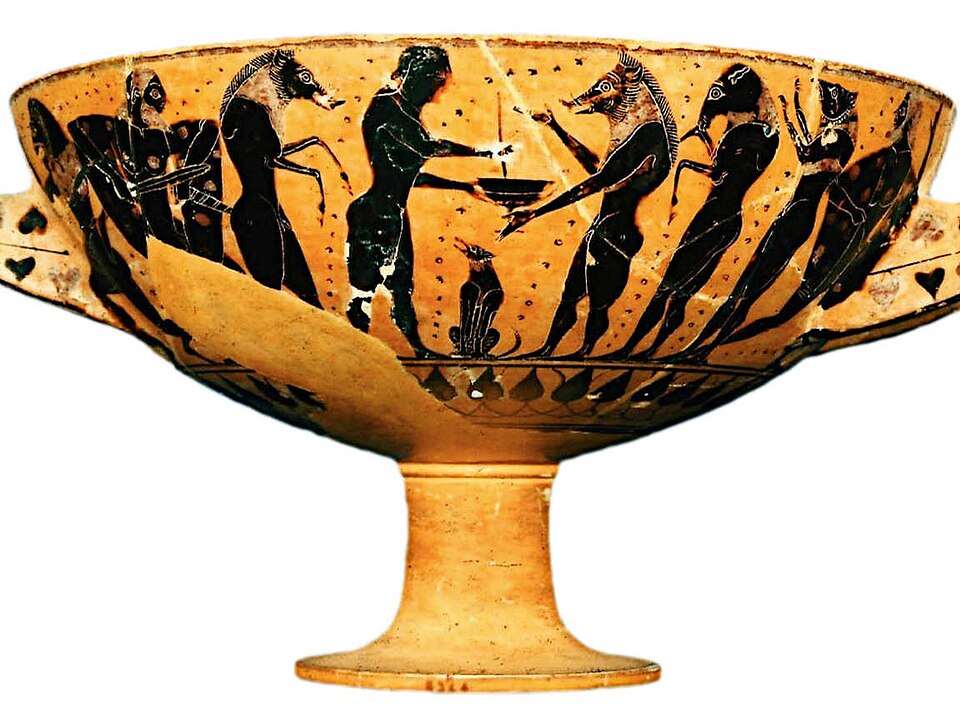
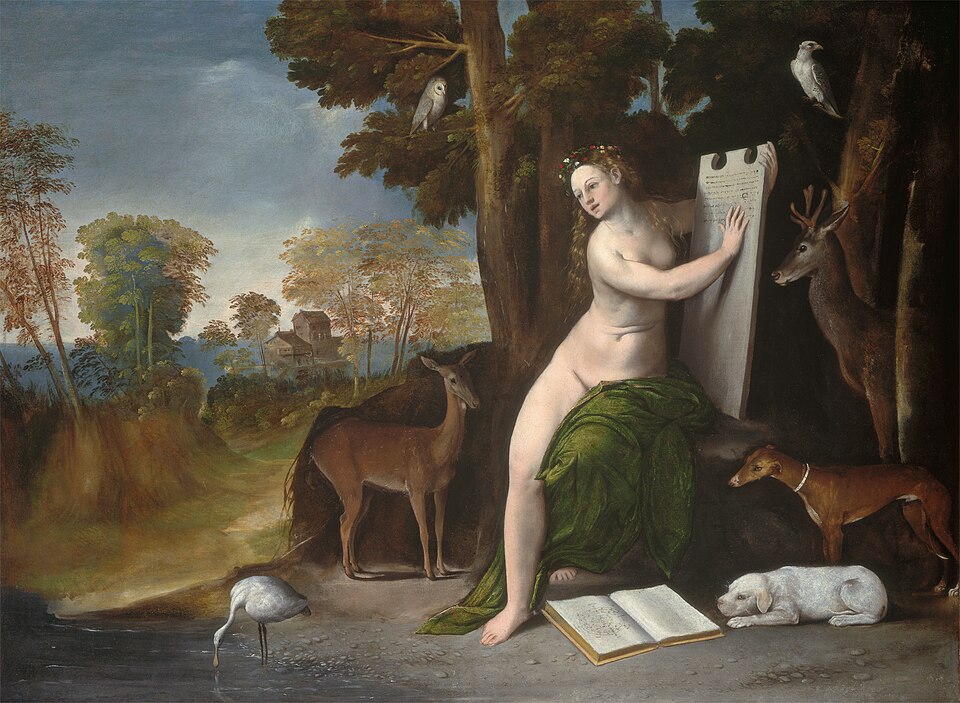
The single surviving ship reaches Aeaea, the island of Circe, a goddess and an enchantress. A scouting party finds her stone house in a clearing, guarded by wolves and mountain lions that fawn like dogs — men she has already transformed. She invites the sailors in, feeds them drugged cheese and wine, touches them with a wand, and turns them into pigs: pig bodies, human minds.
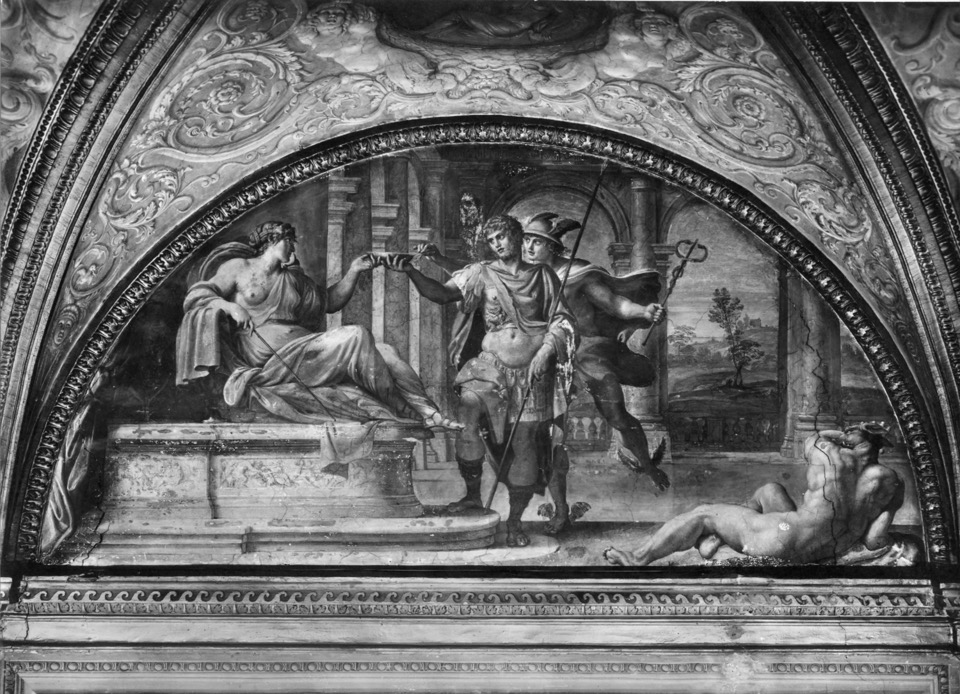
One man escapes to warn Odysseus, who goes back alone. On the way the god Hermes stops him, gives him a protective herb called moly, and tells him exactly what to do. Circe's drug fails; when she raises her wand, Odysseus draws his sword. Recognizing the man a prophecy warned her about, she restores his crew and takes him as her lover.
They stay a year, resting and feasting, until the crew reminds their captain that home still exists. Circe does not try to keep him. But she tells him the road home runs through a place no living man visits: he must sail to the edge of the world and question the dead.
Franz von Stuck (1863–1928) was a founder of the Munich Secession and one of Germany's most celebrated painters of myth and temptation. As a professor he taught, among others, Kandinsky and Klee.