Circe and Her Lovers in a Landscape
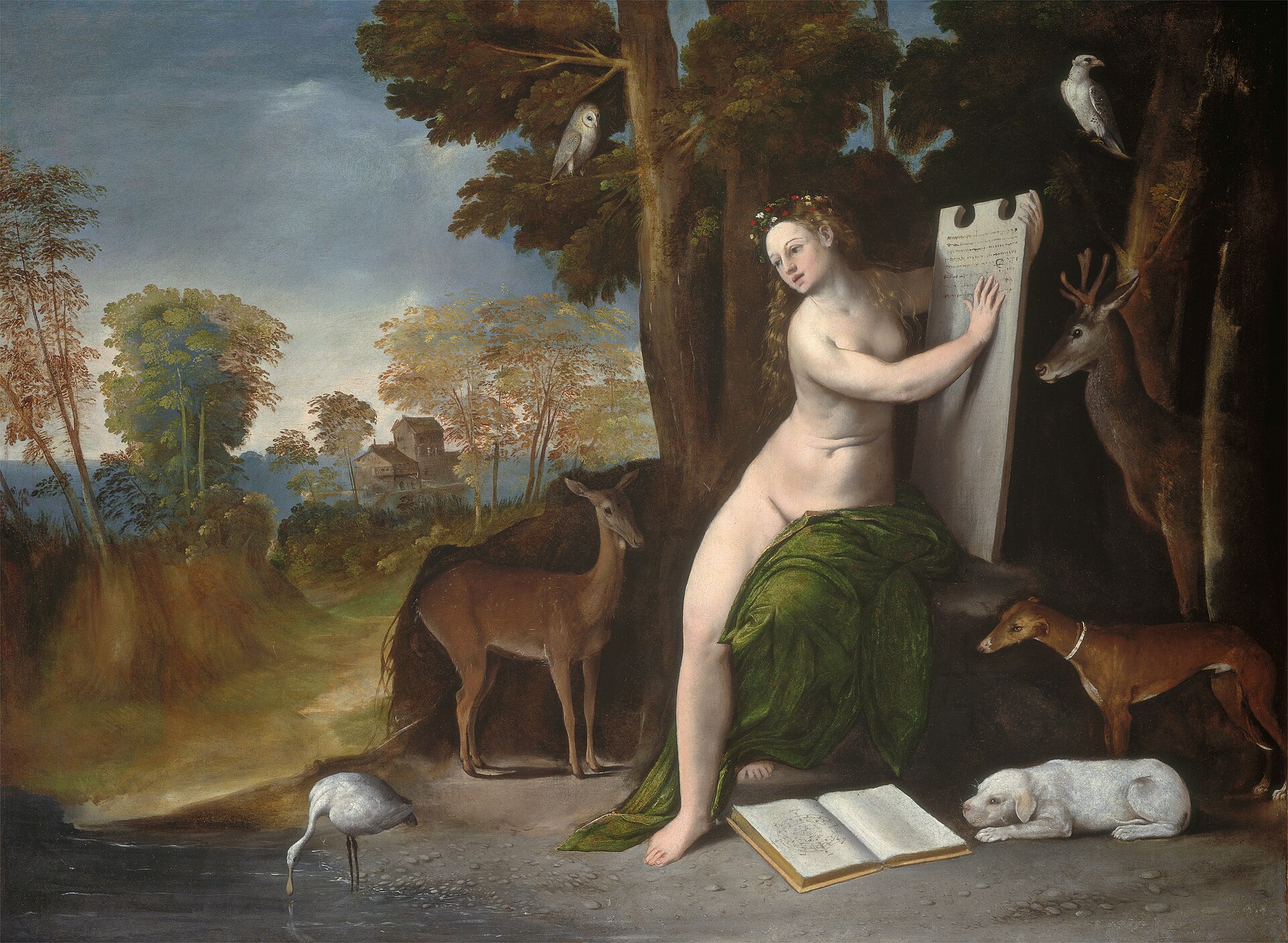
A nude enchantress sits in a glowing landscape, ringed by unusually calm animals — birds, dogs, a lion among them. A stone tablet carved with strange signs and an open book of spells identify her craft. The animals are her lovers, transformed men who now watch her quietly.
Dosso paints magic as something dreamy rather than frightening. The soft light and deep green woods owe much to Venetian painting, and scholars still argue whether this is Homer's Circe or her gentler literary cousin Melissa. Either way, the spell is the landscape itself.
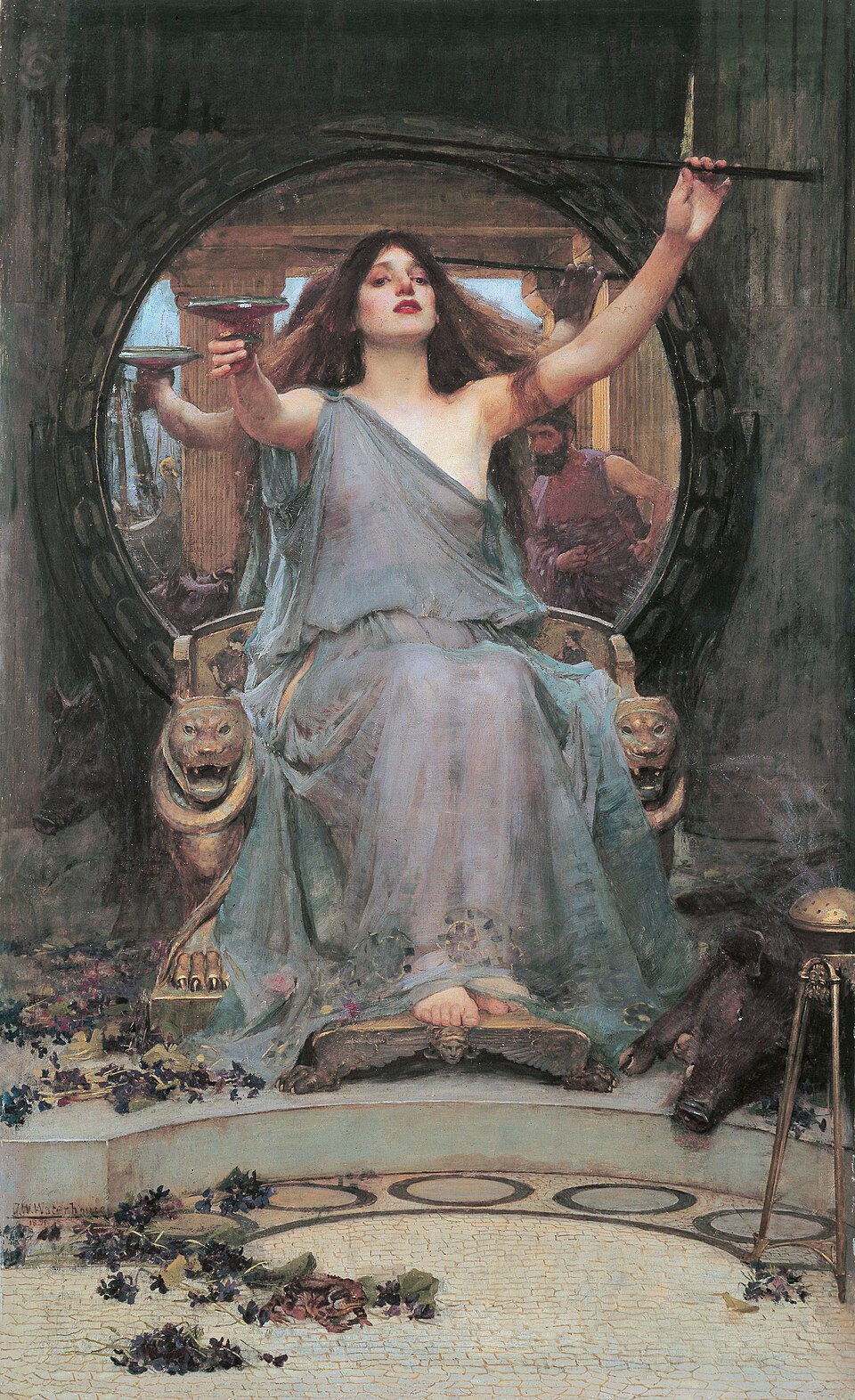
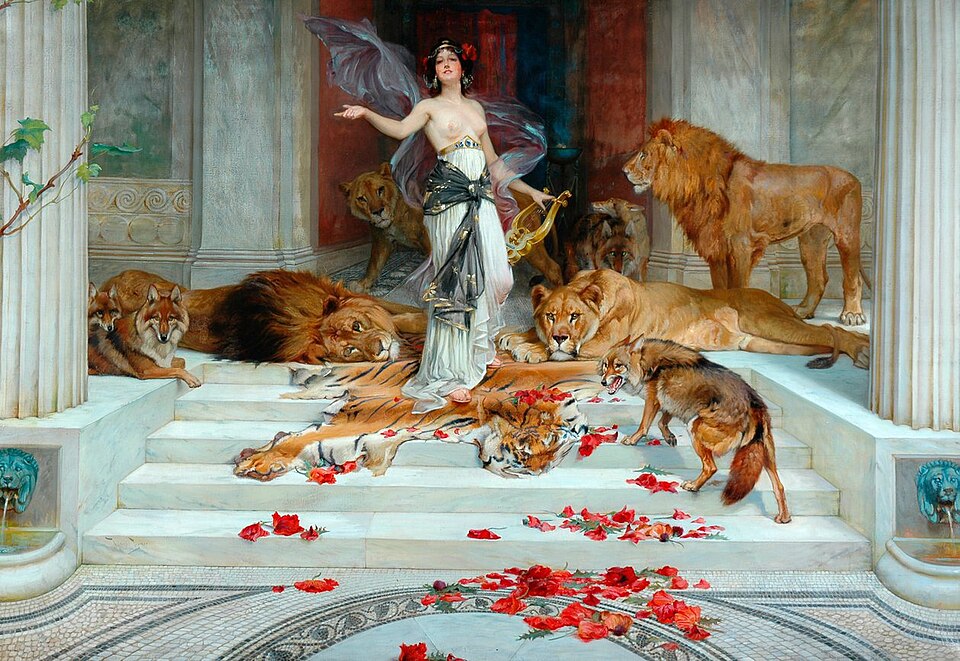
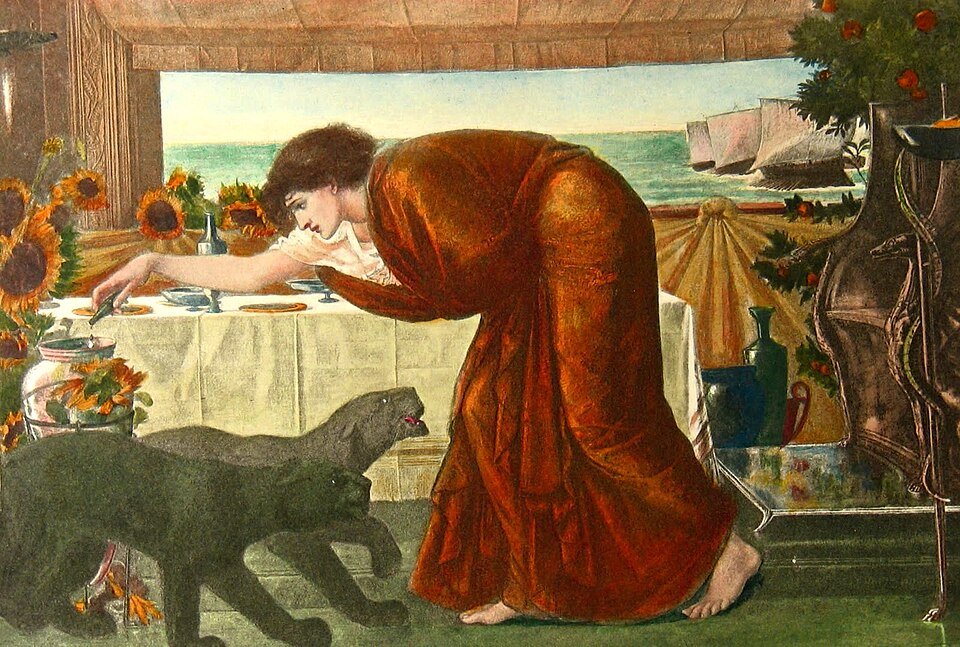
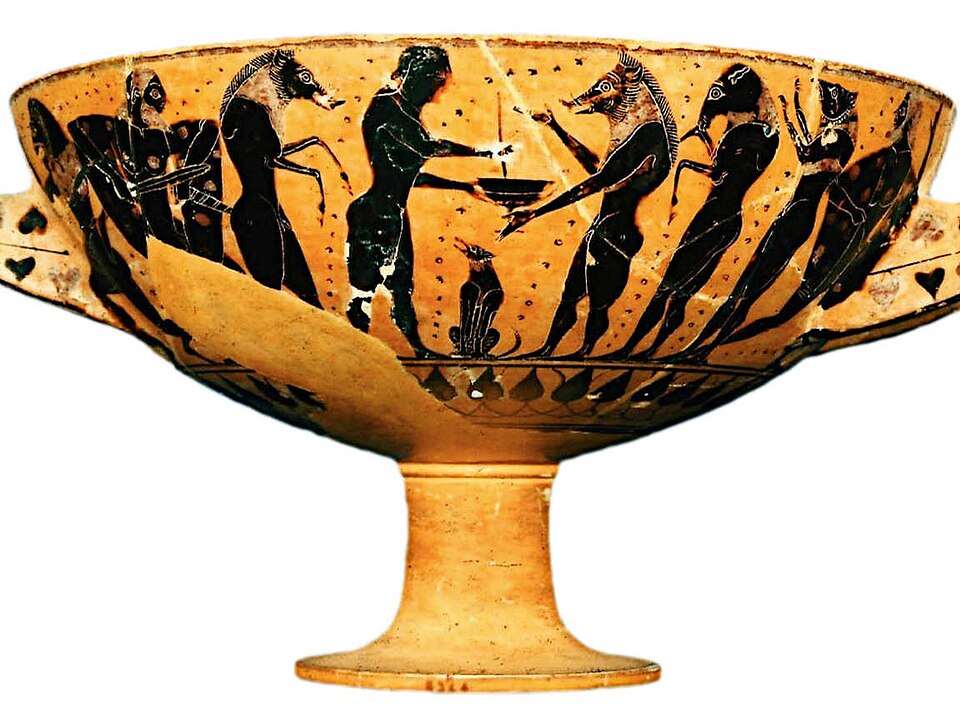
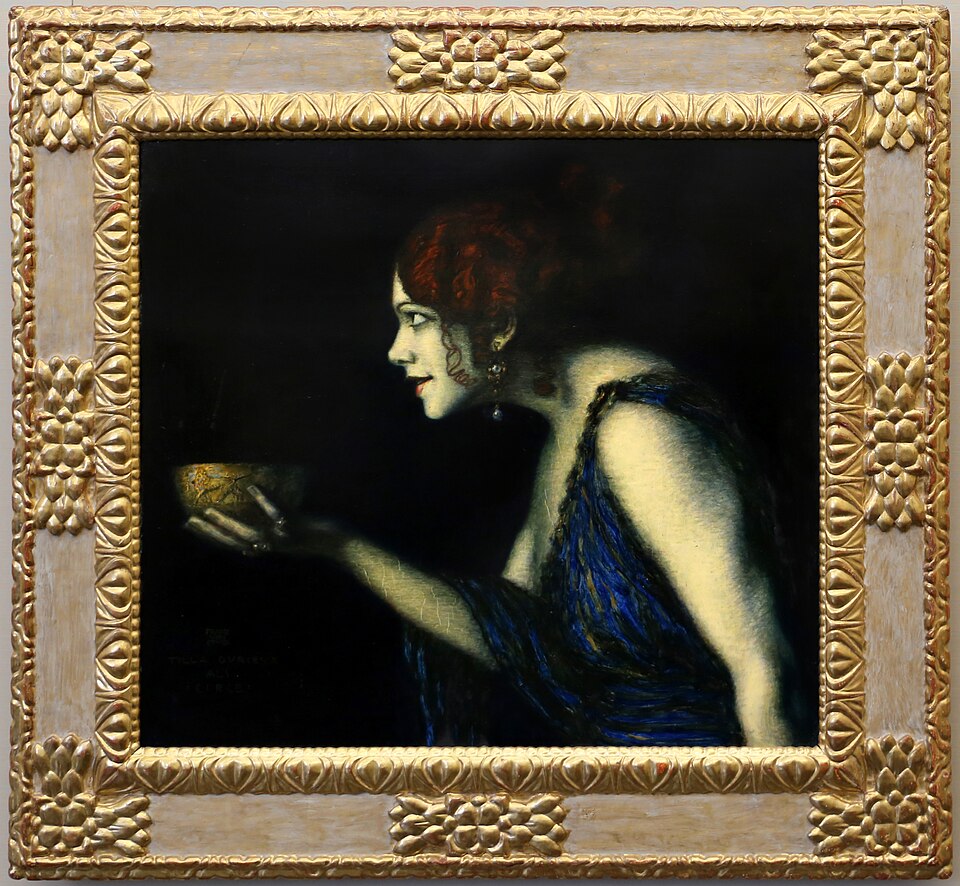
The single surviving ship reaches Aeaea, the island of Circe, a goddess and an enchantress. A scouting party finds her stone house in a clearing, guarded by wolves and mountain lions that fawn like dogs — men she has already transformed. She invites the sailors in, feeds them drugged cheese and wine, touches them with a wand, and turns them into pigs: pig bodies, human minds.
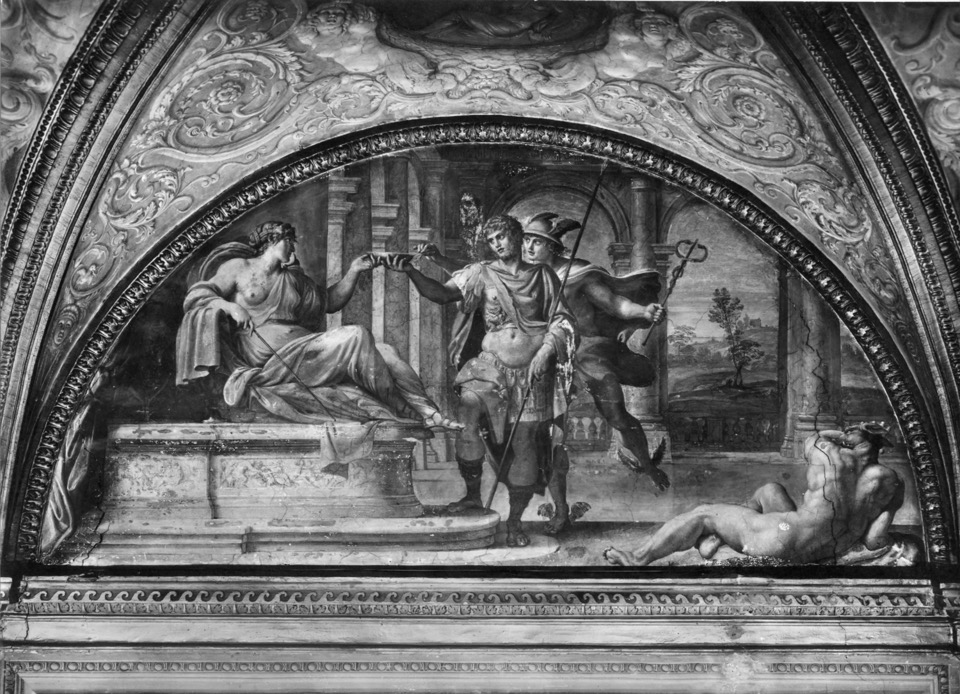
One man escapes to warn Odysseus, who goes back alone. On the way the god Hermes stops him, gives him a protective herb called moly, and tells him exactly what to do. Circe's drug fails; when she raises her wand, Odysseus draws his sword. Recognizing the man a prophecy warned her about, she restores his crew and takes him as her lover.
They stay a year, resting and feasting, until the crew reminds their captain that home still exists. Circe does not try to keep him. But she tells him the road home runs through a place no living man visits: he must sail to the edge of the world and question the dead.
Dosso Dossi (c. 1486–1542) was court painter to the Este dukes of Ferrara, working alongside poets like Ariosto. He was known for rich color in the Venetian manner and for strange, poetic subjects that still resist tidy explanation.