The Wine of Circe

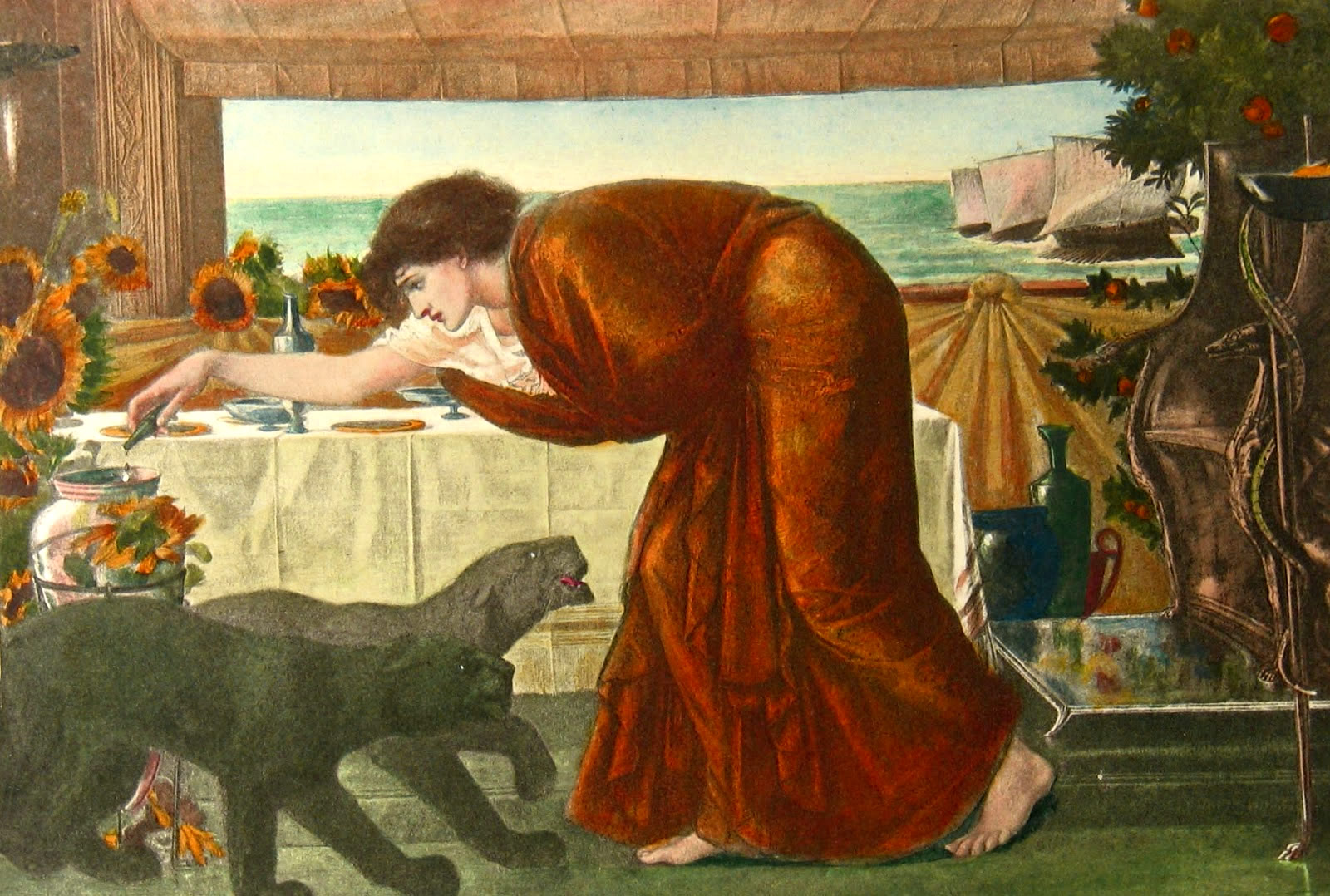
Circe bends low across the picture, tipping poison into a wine jar as she watches the harbor through the window, where the ships are already arriving. Two black panthers — men she transformed long ago — press around her ankles like house cats. Sunflowers lean in at the window.
Everything in the picture is golden, flat, and quiet; the evil is entirely in the small, careful gesture of her hands. Burne-Jones worked on this watercolor for six years, and its honeyed color and coiled stillness made it one of his early masterpieces.
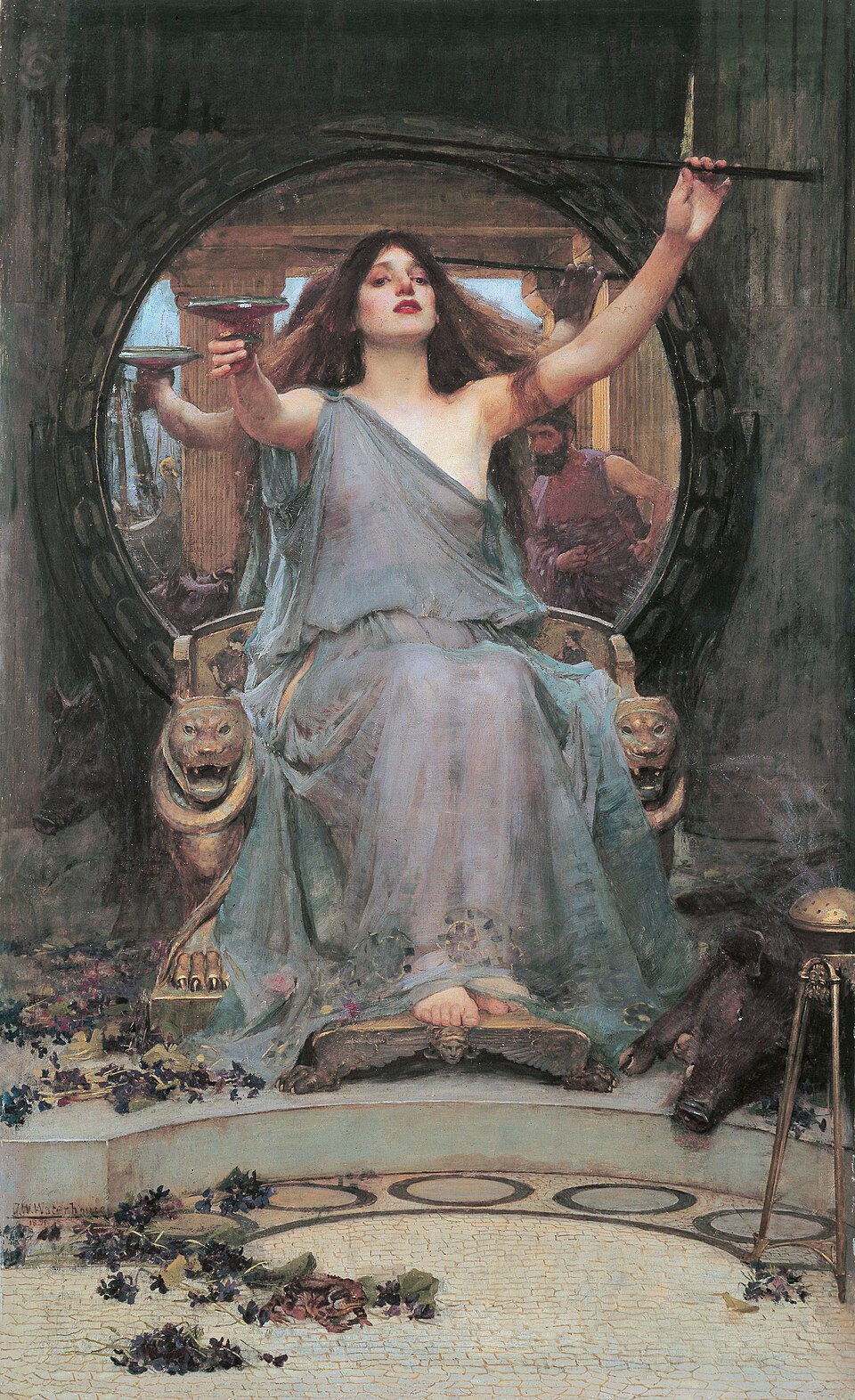
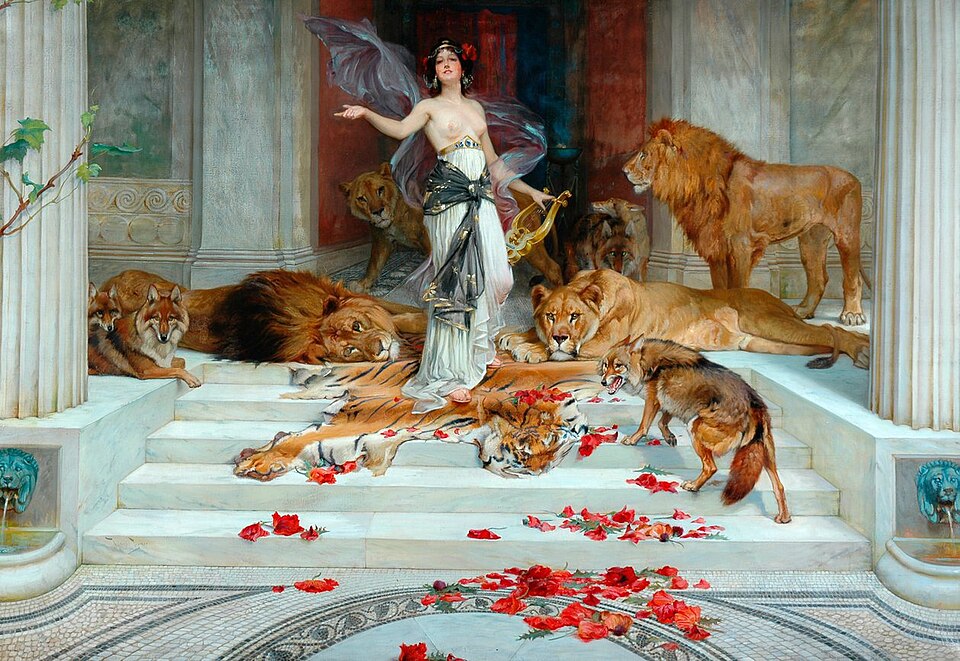
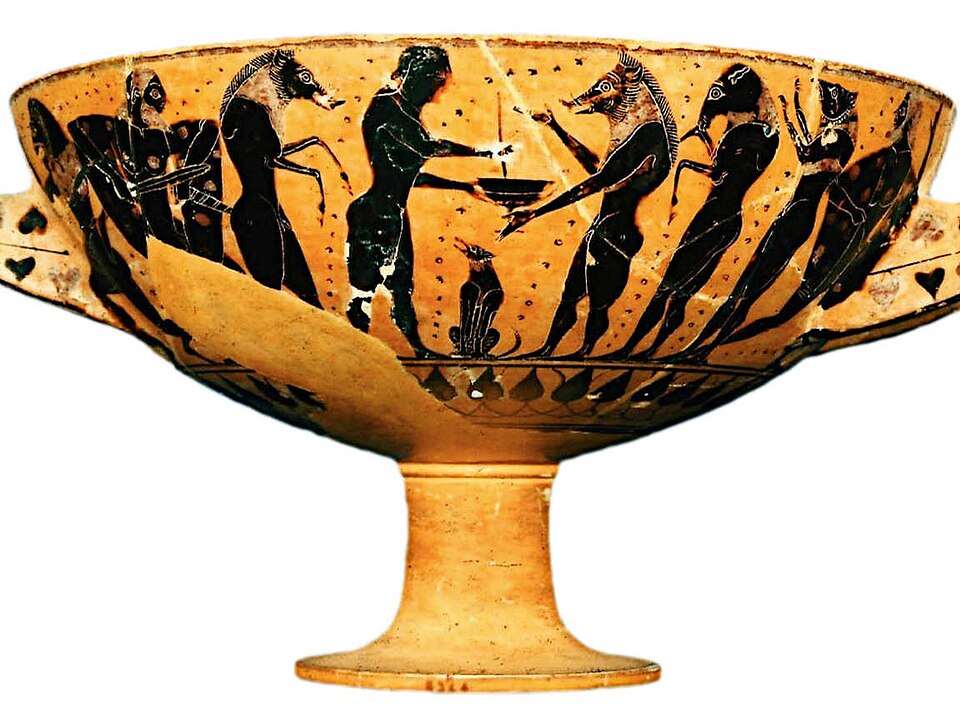
The single surviving ship reaches Aeaea, the island of Circe, a goddess and an enchantress. A scouting party finds her stone house in a clearing, guarded by wolves and mountain lions that fawn like dogs — men she has already transformed. She invites the sailors in, feeds them drugged cheese and wine, touches them with a wand, and turns them into pigs: pig bodies, human minds.
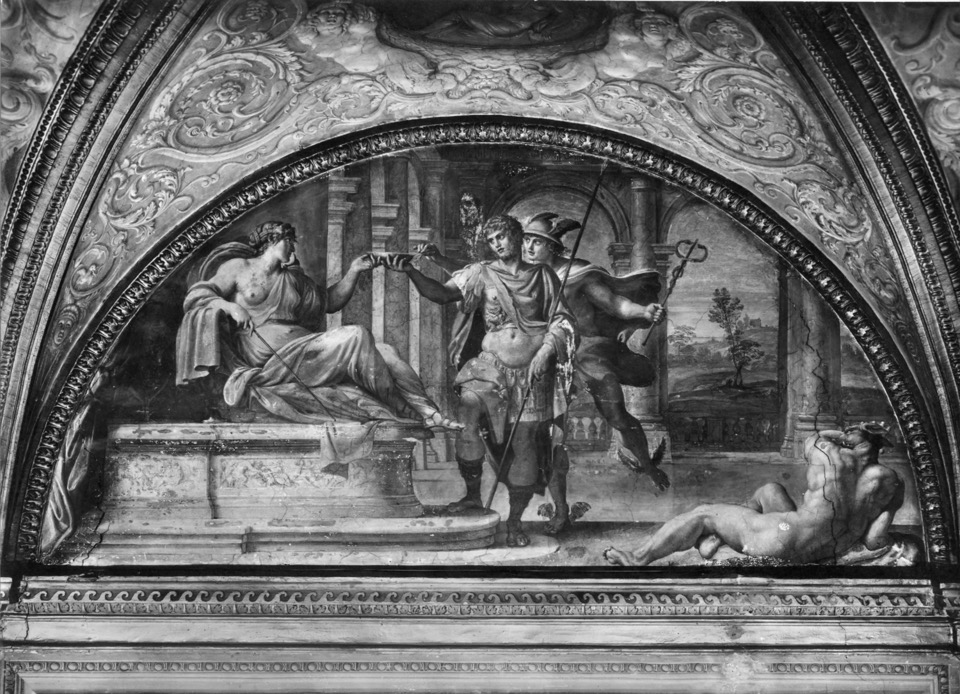
One man escapes to warn Odysseus, who goes back alone. On the way the god Hermes stops him, gives him a protective herb called moly, and tells him exactly what to do. Circe's drug fails; when she raises her wand, Odysseus draws his sword. Recognizing the man a prophecy warned her about, she restores his crew and takes him as her lover.
They stay a year, resting and feasting, until the crew reminds their captain that home still exists. Circe does not try to keep him. But she tells him the road home runs through a place no living man visits: he must sail to the edge of the world and question the dead.
Edward Burne-Jones (1833–1898) was the leading painter of the second Pre-Raphaelite generation and a lifelong collaborator of William Morris. His dreamlike scenes from myth and legend defined the look of the late Victorian imagination.