Aeneas' Flight from Troy
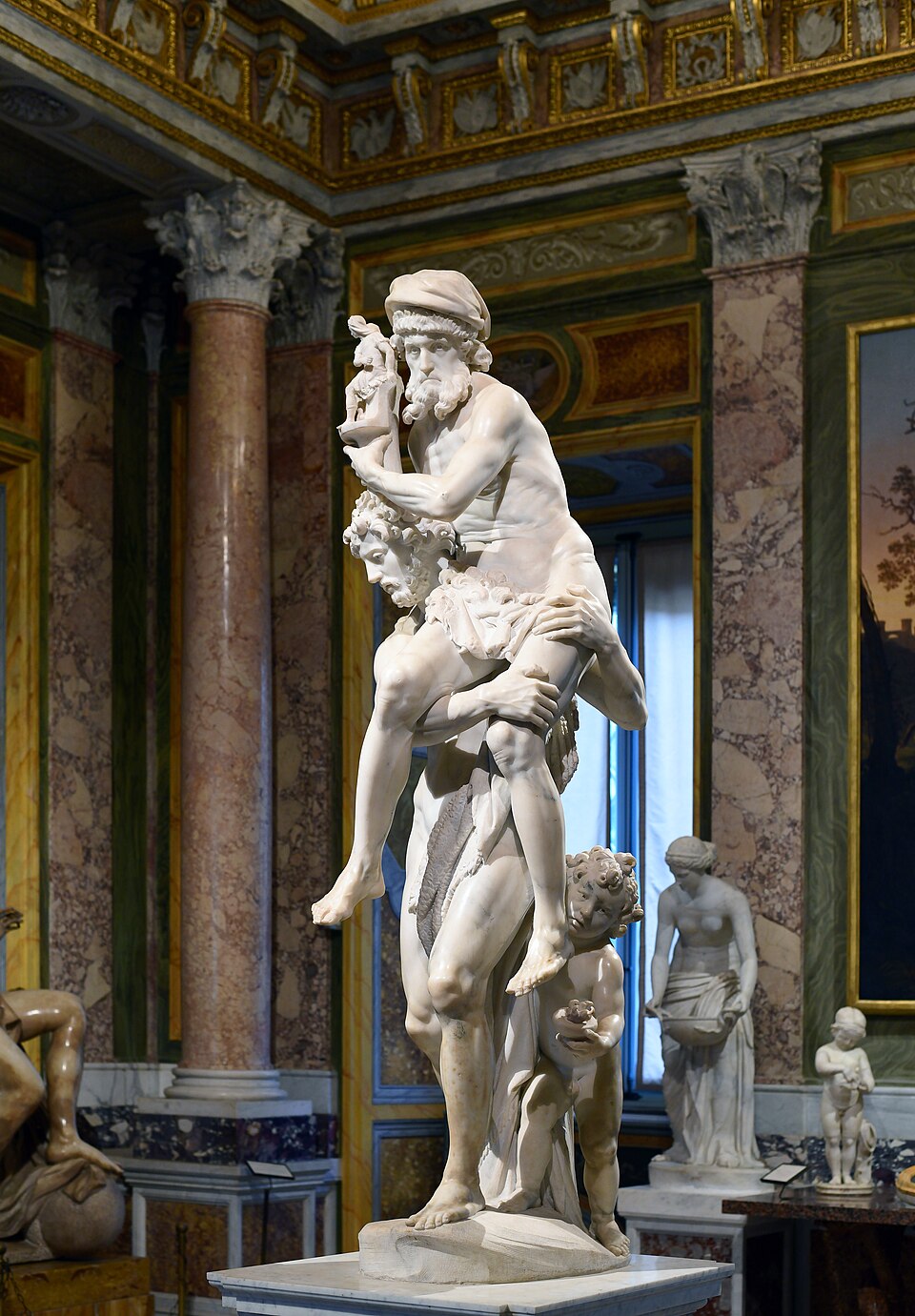
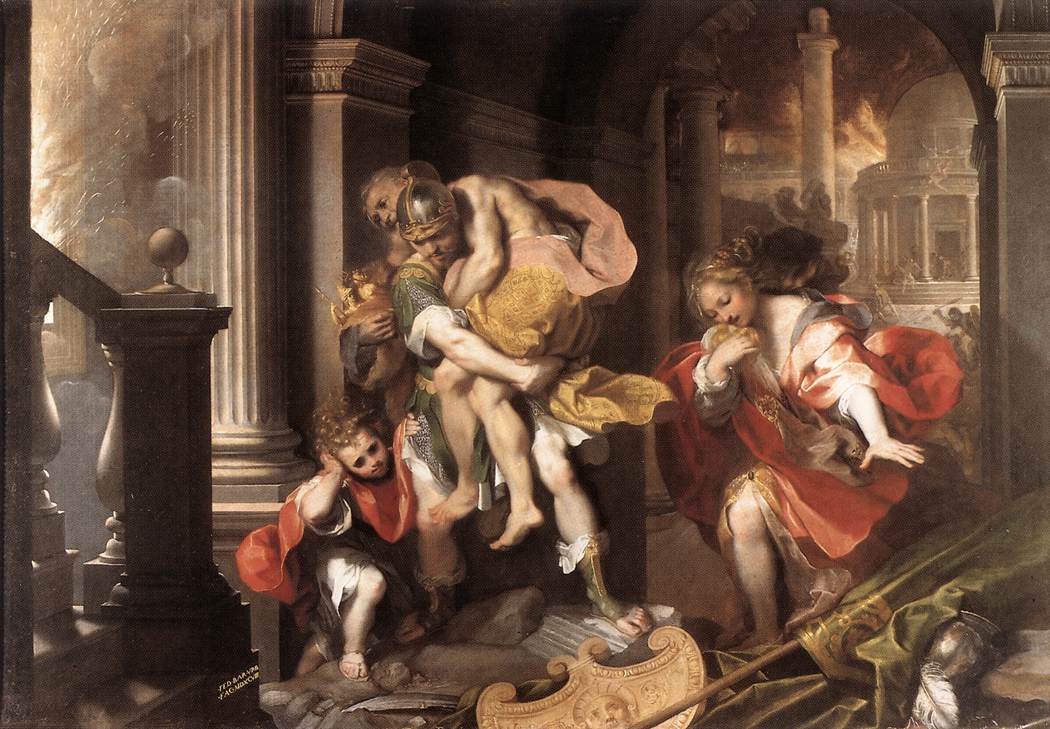
Out of burning Troy comes the future of Rome: Aeneas carries his old father Anchises on his back — the old man clutching the household gods — while his small son Ascanius hurries ahead and his wife Creusa follows behind. In the legend she will be lost in the escape; the picture already separates her from the group.
Barocci stages the flight against glowing architecture and smoke, in the warm, tender color he was famous for. He painted the subject twice; the first version, made for Emperor Rudolf II, is lost, and this 1598 canvas is the survivor.
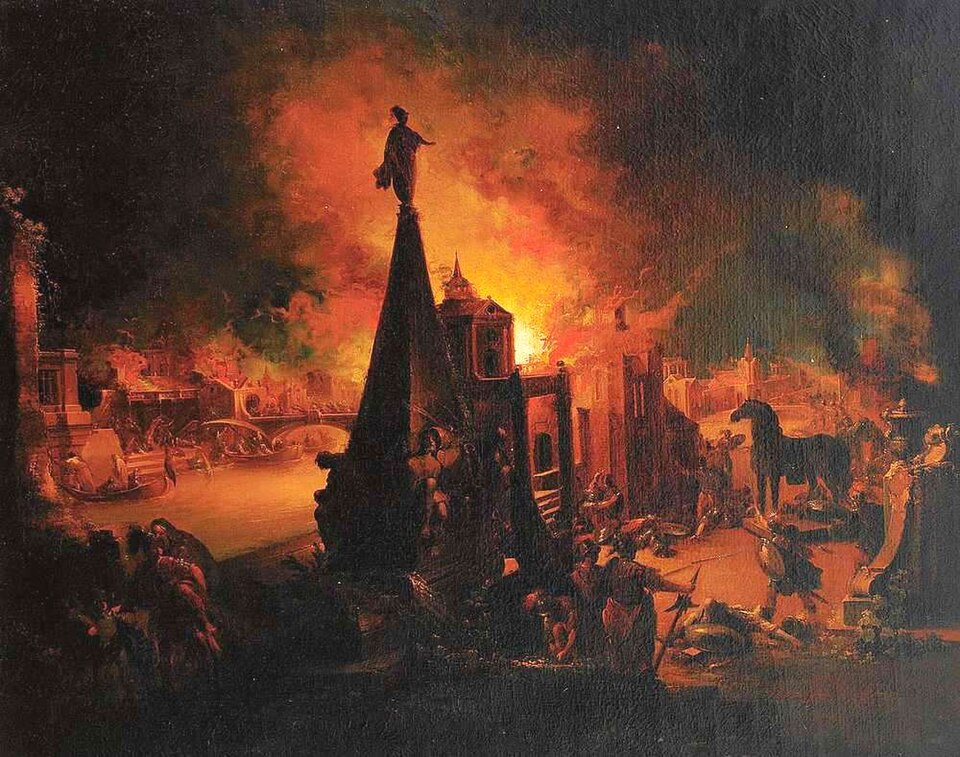
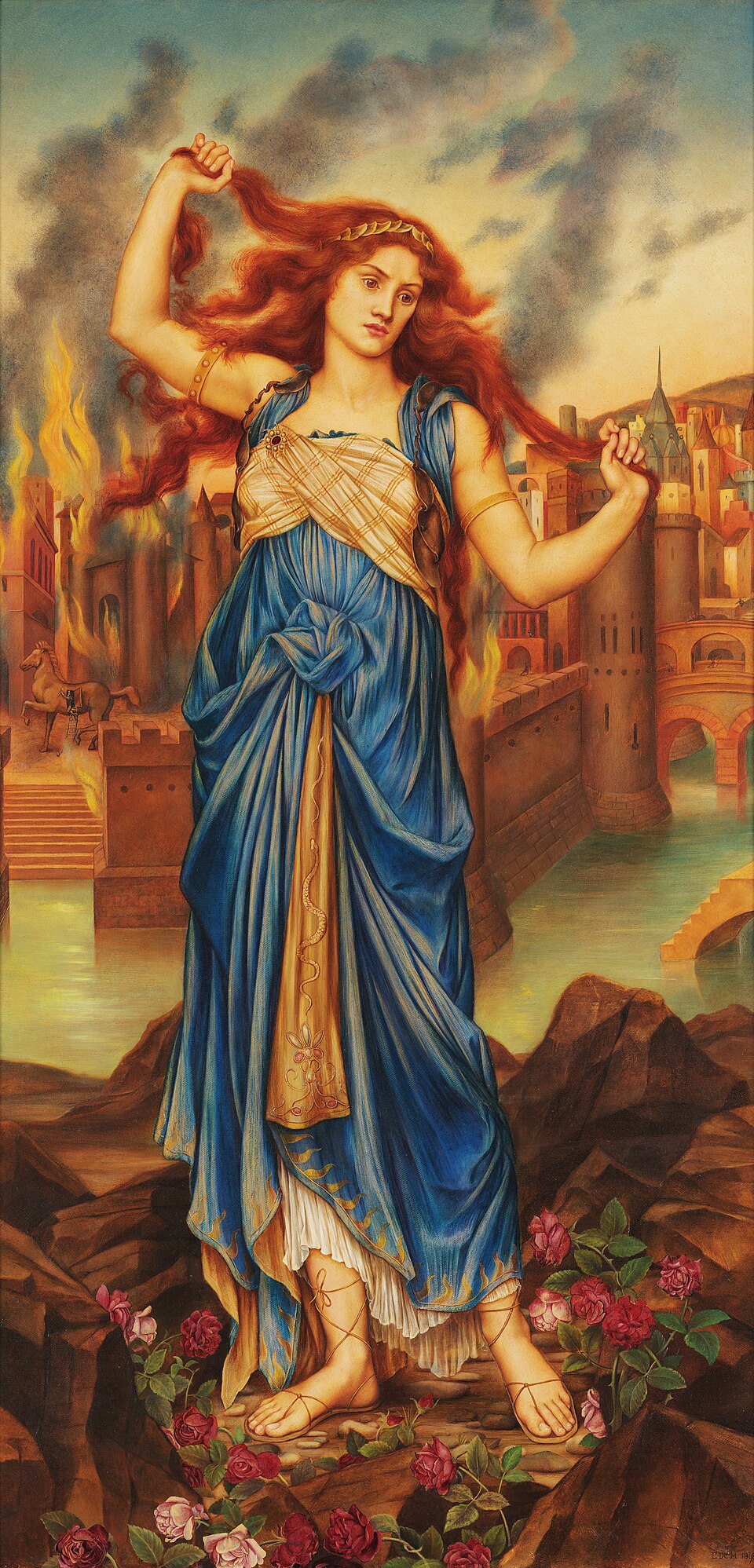
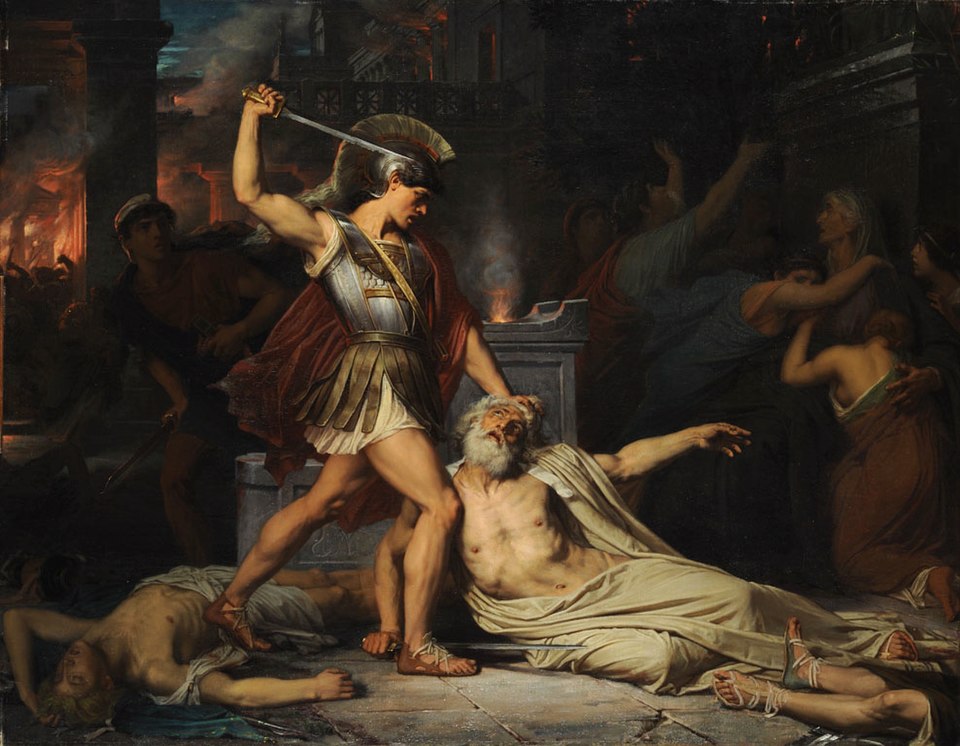
Troy falls in a single night, and it is not a battle — it is a massacre in the dark. The Greeks pour through the opened gates into a sleeping city. Old King Priam is cut down at his own altar by Neoptolemus, Achilles' teenage son. Cassandra, Priam's daughter, who was cursed to prophesy the truth and never be believed, is dragged from Athena's temple.
Hector's small son is thrown from the walls. The women of the royal house — Hecuba the queen, Andromache, Cassandra — are divided among the victors as slaves. Helen, the cause of it all, is taken back by Menelaus, who raises his sword to kill her and drops it at the sight of her face.
A handful escape. Aeneas, a Trojan prince, carries his old father on his back out of the burning city, his young son holding his hand — the remnant that Roman legend says will one day found Rome. The Greeks sail home to their own disasters, and the ten-year war ends the way the gods planned it at a wedding: in fire.
Federico Barocci (c. 1535–1612) worked in the small ducal city of Urbino, away from the main art centers, yet became one of the most admired painters in Italy. His soft color and emotional warmth form a bridge between Raphael and the Baroque of Rubens, who studied him closely.