Aeneas, Anchises and Ascanius
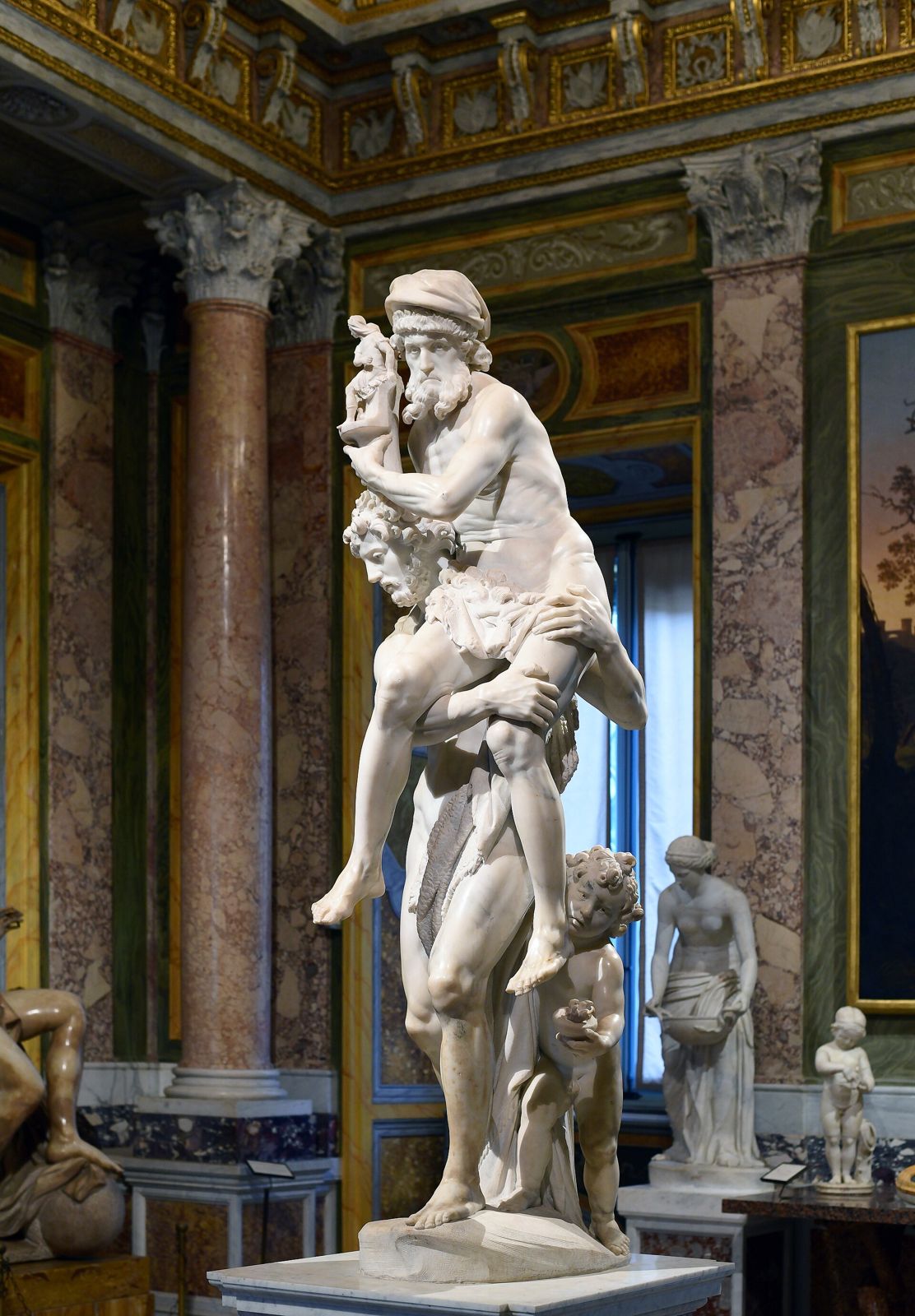
Three generations in one climbing column of marble: young Aeneas carries his father Anchises, who cradles the household gods, while the child Ascanius follows at their feet with the sacred flame. Everything Troy could save is stacked into a single staggering body.
Bernini carved this around 1618–19, barely out of his teens, probably with some help from his sculptor father. Next to his later whirlwind works it feels careful, almost tender — the prodigy studying how old flesh, young muscle, and a child's softness each catch the light differently.
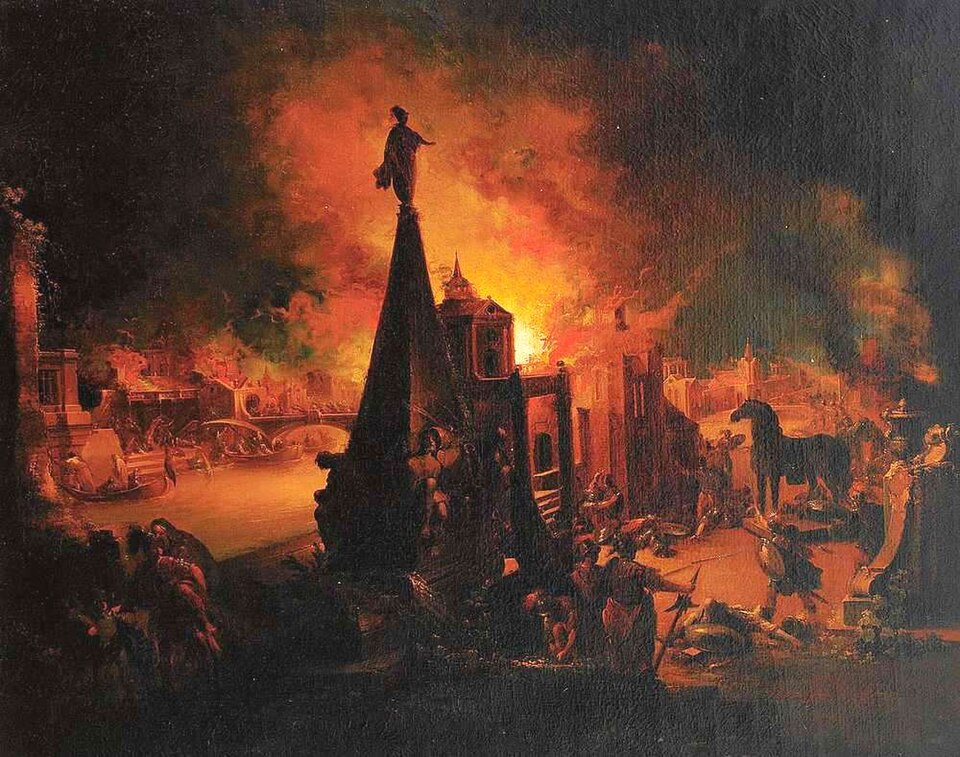
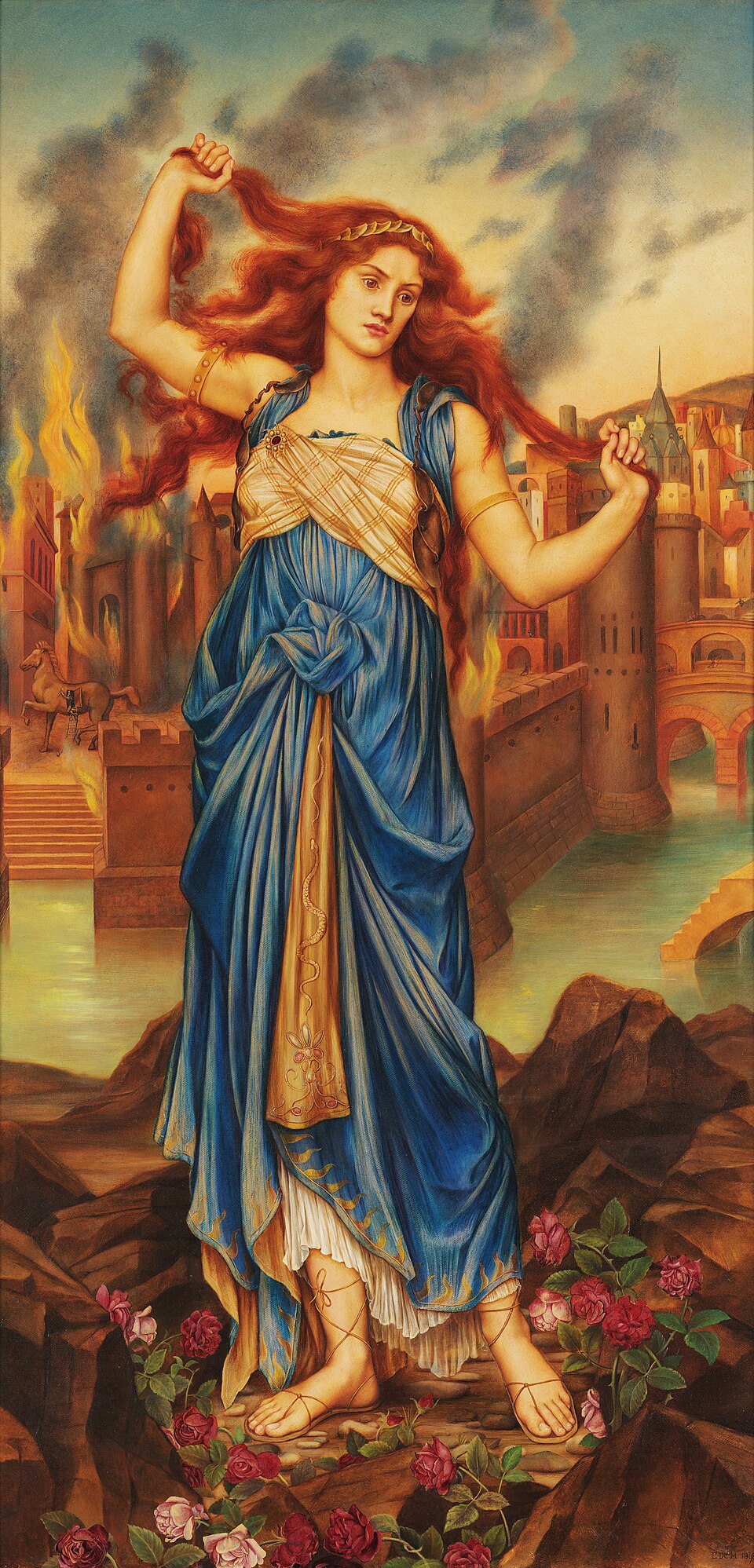
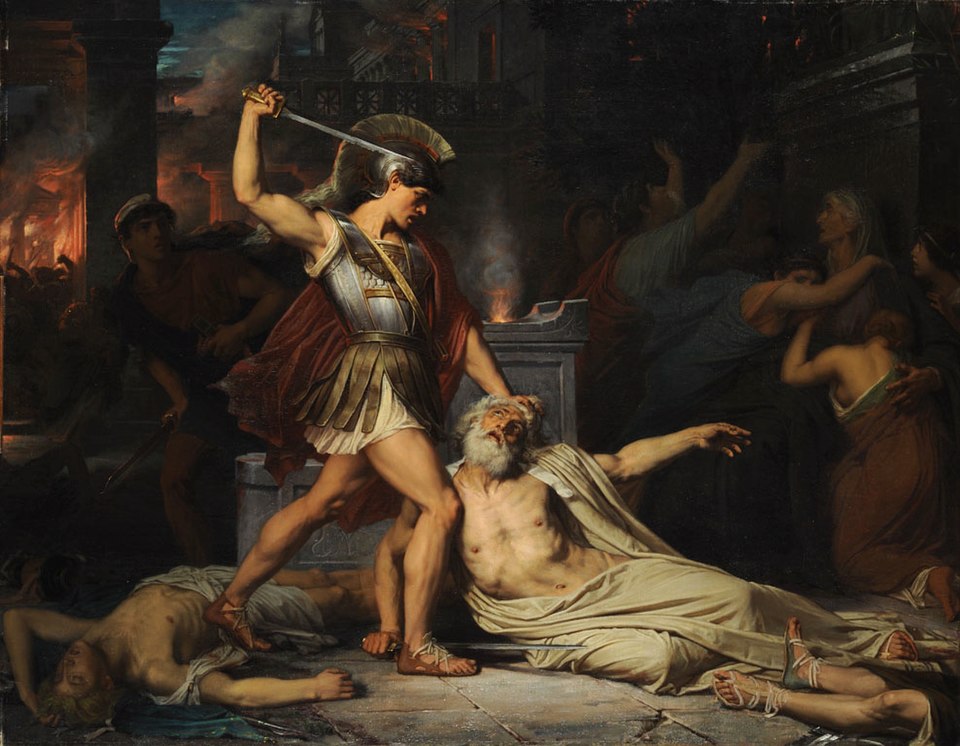
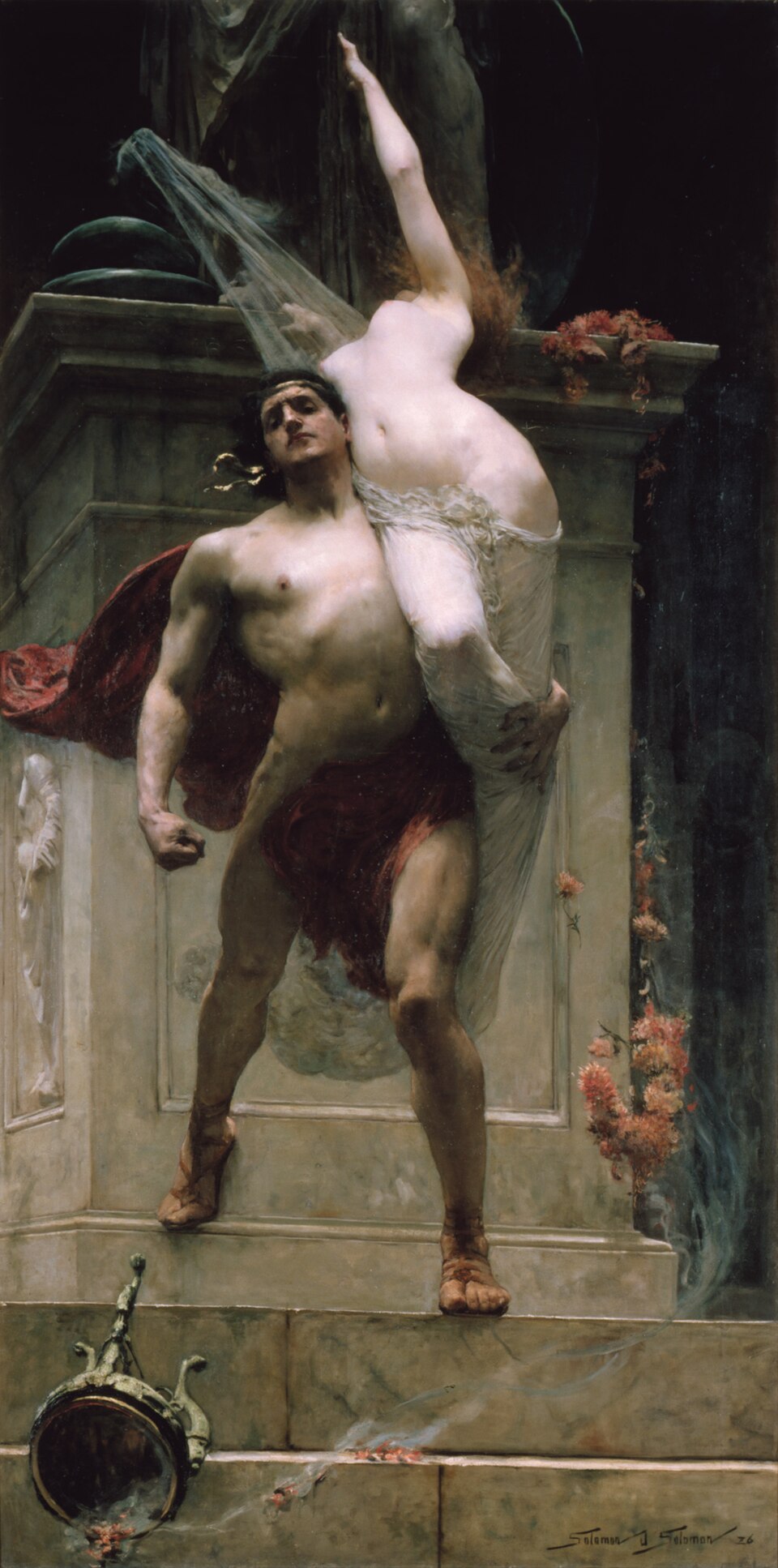
Troy falls in a single night, and it is not a battle — it is a massacre in the dark. The Greeks pour through the opened gates into a sleeping city. Old King Priam is cut down at his own altar by Neoptolemus, Achilles' teenage son. Cassandra, Priam's daughter, who was cursed to prophesy the truth and never be believed, is dragged from Athena's temple.
Hector's small son is thrown from the walls. The women of the royal house — Hecuba the queen, Andromache, Cassandra — are divided among the victors as slaves. Helen, the cause of it all, is taken back by Menelaus, who raises his sword to kill her and drops it at the sight of her face.
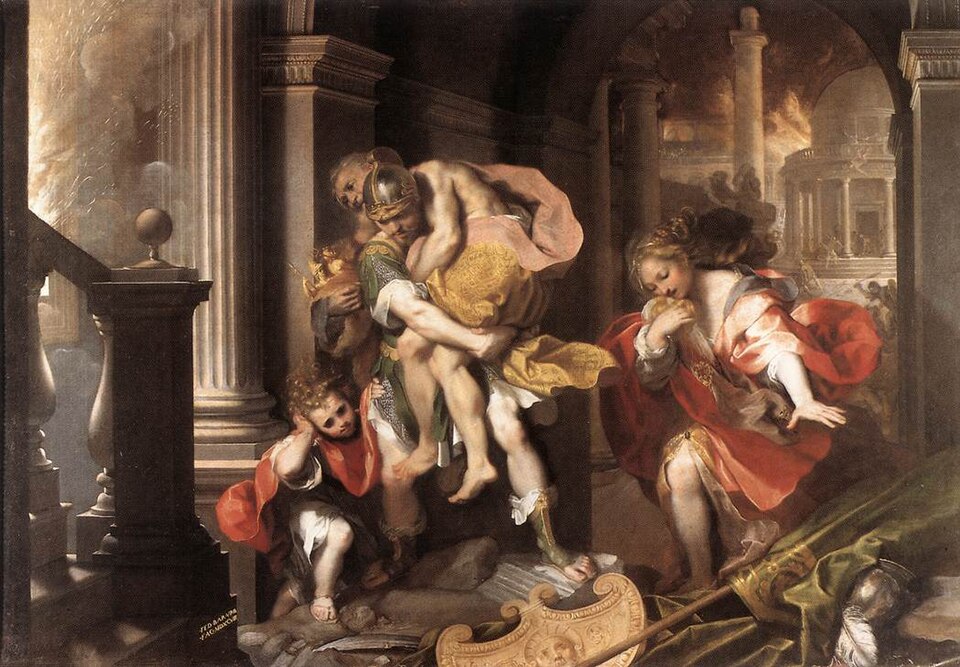
A handful escape. Aeneas, a Trojan prince, carries his old father on his back out of the burning city, his young son holding his hand — the remnant that Roman legend says will one day found Rome. The Greeks sail home to their own disasters, and the ten-year war ends the way the gods planned it at a wedding: in fire.
Gian Lorenzo Bernini (1598–1680) went on to define the Roman Baroque — the colonnade of St. Peter's, the Ecstasy of St. Teresa, the fountains of Rome's piazzas. This early group, made for the Borghese family, marks the start of the most dominant sculptural career in European history.