Cassandra
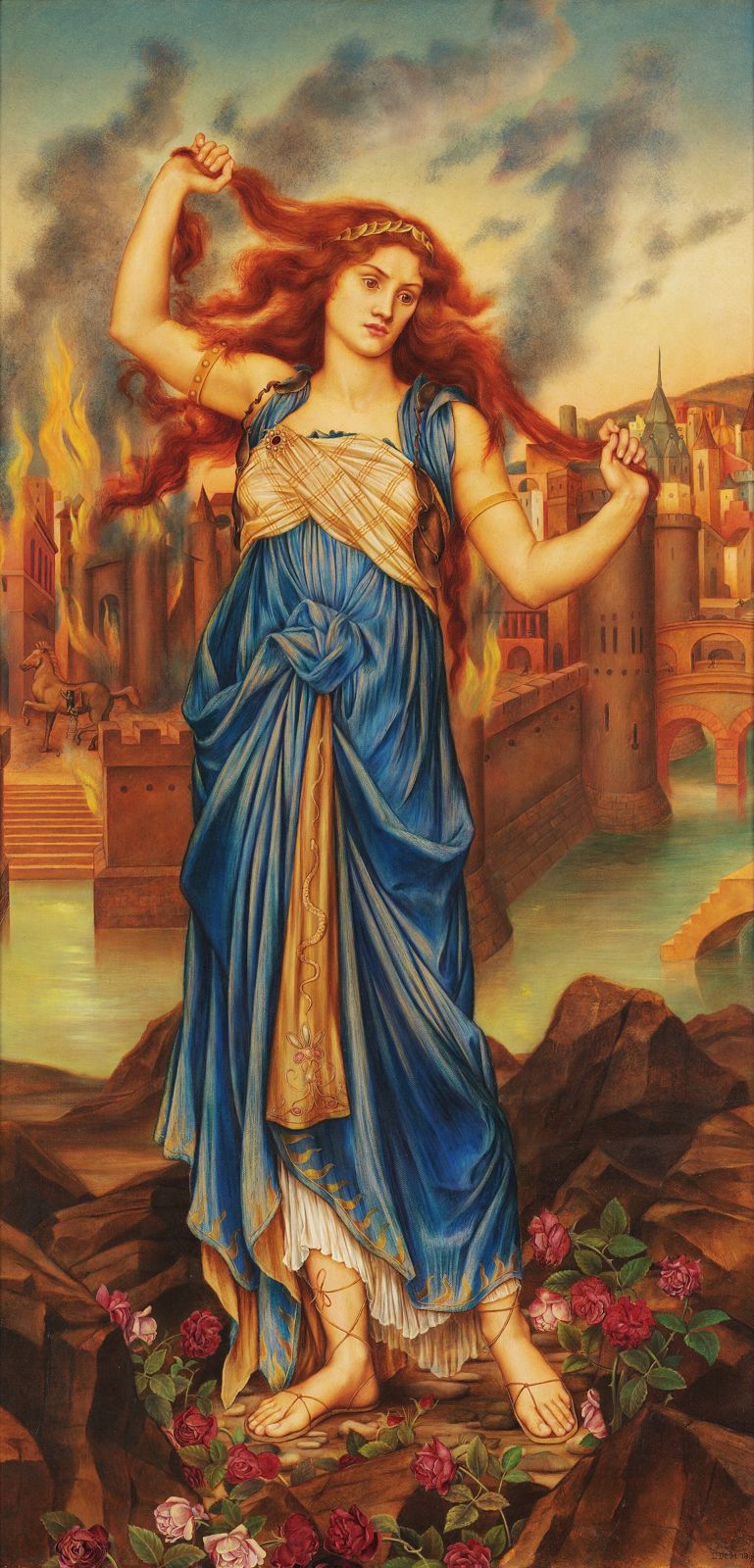
Cassandra stands alone before a burning Troy, tearing at her long red hair. Apollo gave her true prophecy and then cursed her never to be believed — so she has watched every disaster she foretold arrive exactly as she said it would.
De Morgan paints the moment prophecy becomes torment: the city blazing behind her is simply her own words made visible. The swirling hair and saturated color carry the emotion, in the symbolic style De Morgan made her own — classical subjects used to speak about the inner lives of women.
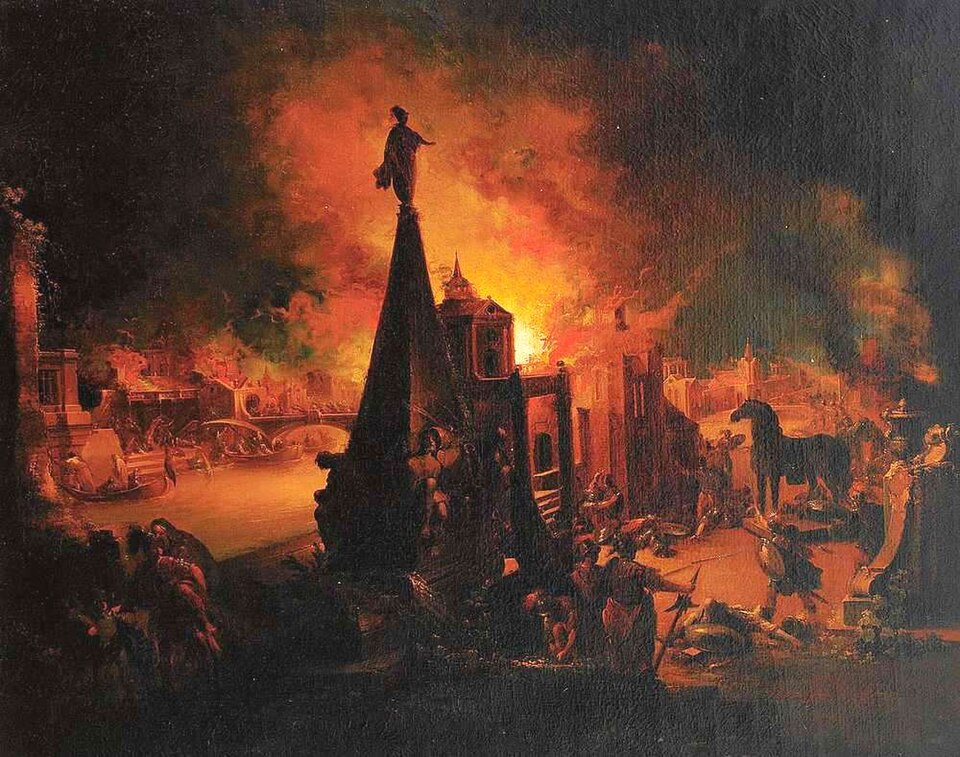
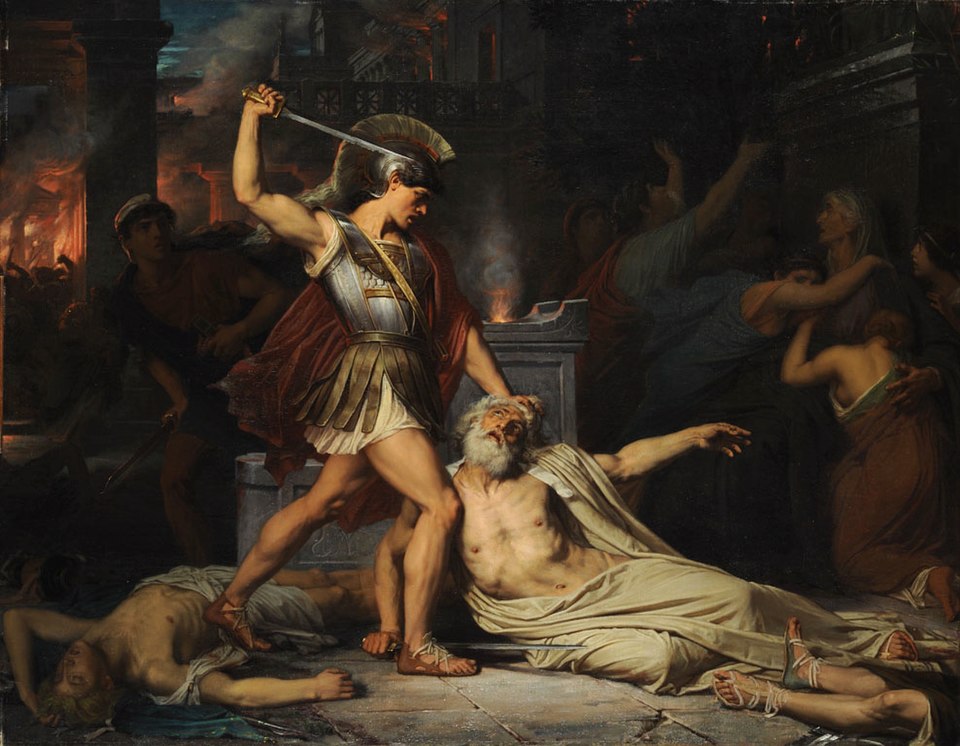
Troy falls in a single night, and it is not a battle — it is a massacre in the dark. The Greeks pour through the opened gates into a sleeping city. Old King Priam is cut down at his own altar by Neoptolemus, Achilles' teenage son. Cassandra, Priam's daughter, who was cursed to prophesy the truth and never be believed, is dragged from Athena's temple.
Hector's small son is thrown from the walls. The women of the royal house — Hecuba the queen, Andromache, Cassandra — are divided among the victors as slaves. Helen, the cause of it all, is taken back by Menelaus, who raises his sword to kill her and drops it at the sight of her face.
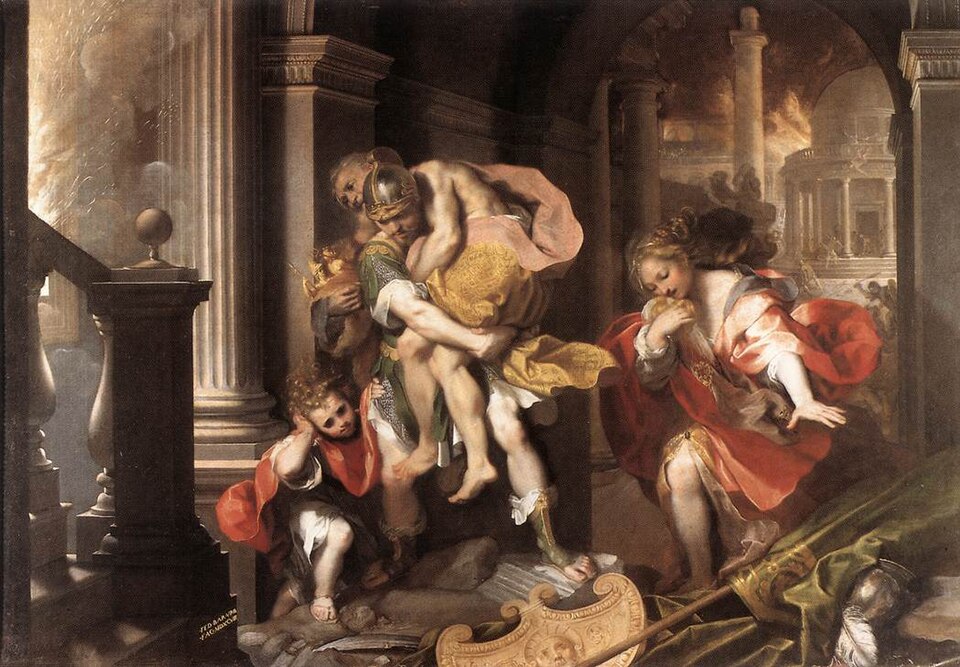
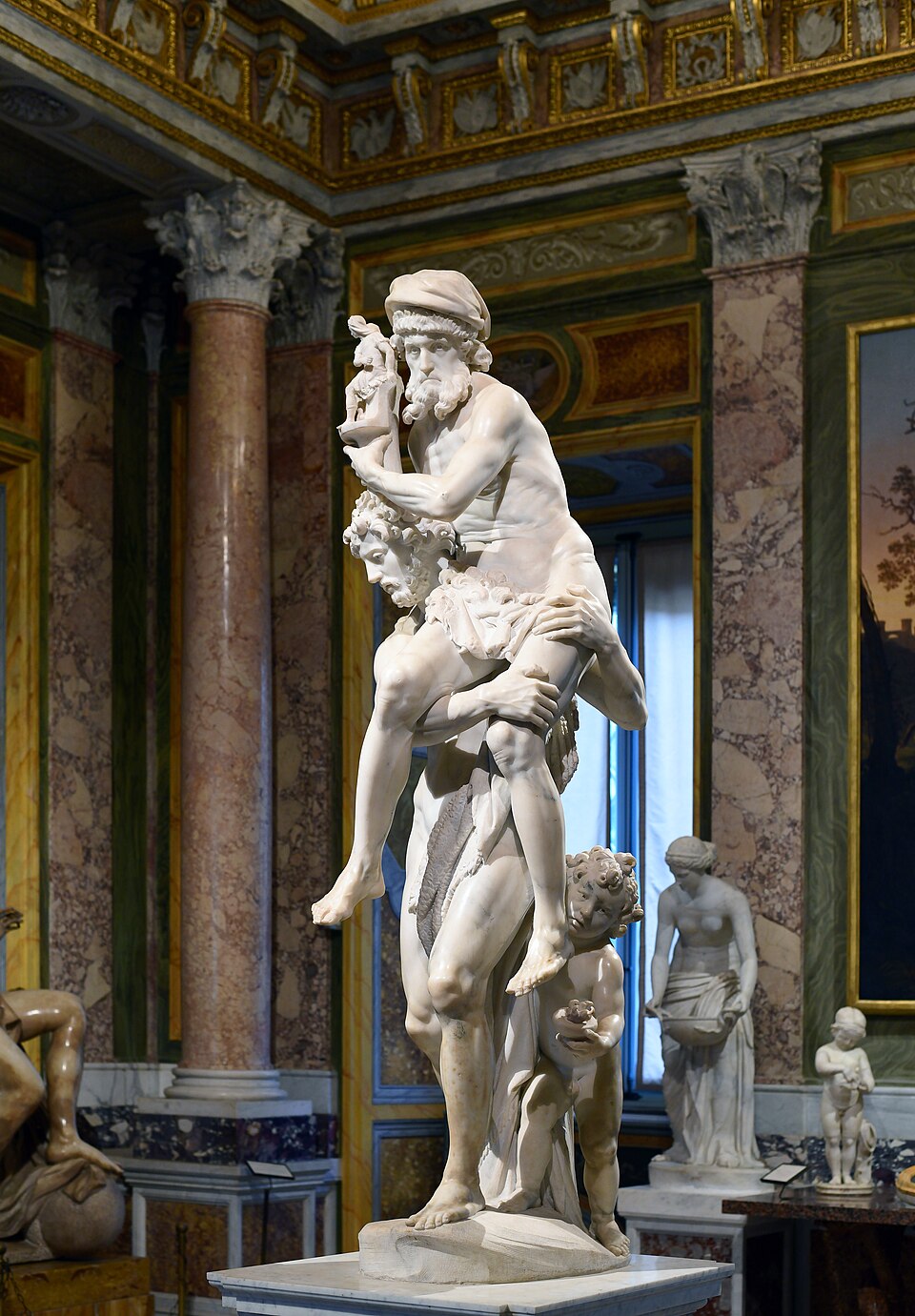
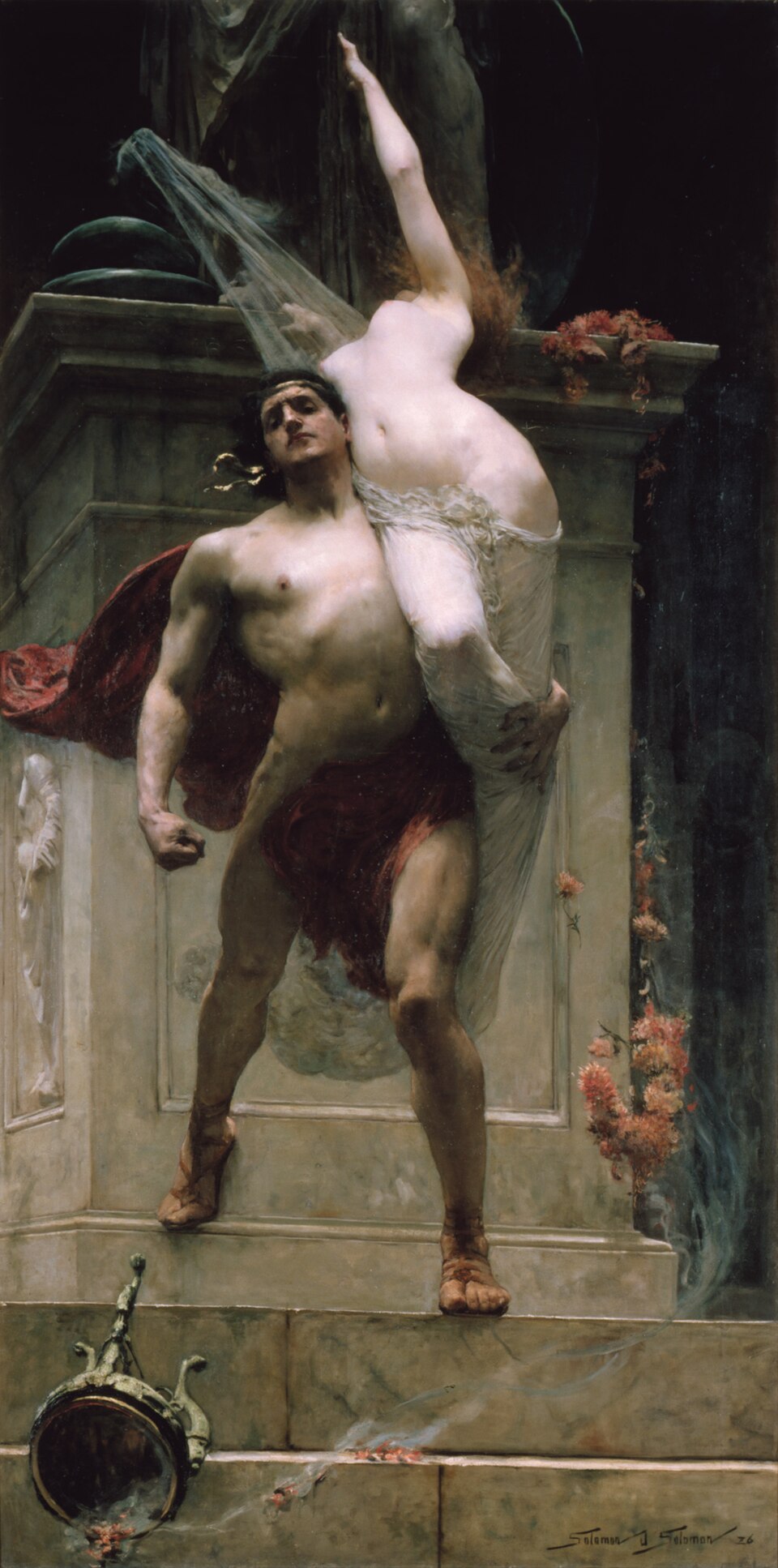
A handful escape. Aeneas, a Trojan prince, carries his old father on his back out of the burning city, his young son holding his hand — the remnant that Roman legend says will one day found Rome. The Greeks sail home to their own disasters, and the ten-year war ends the way the gods planned it at a wedding: in fire.
Evelyn De Morgan (1855–1919) was an English painter influenced by the Pre-Raphaelites, married to the ceramic artist William De Morgan. Her paintings return again and again to strong, suffering, or prophetic women drawn from myth and allegory.