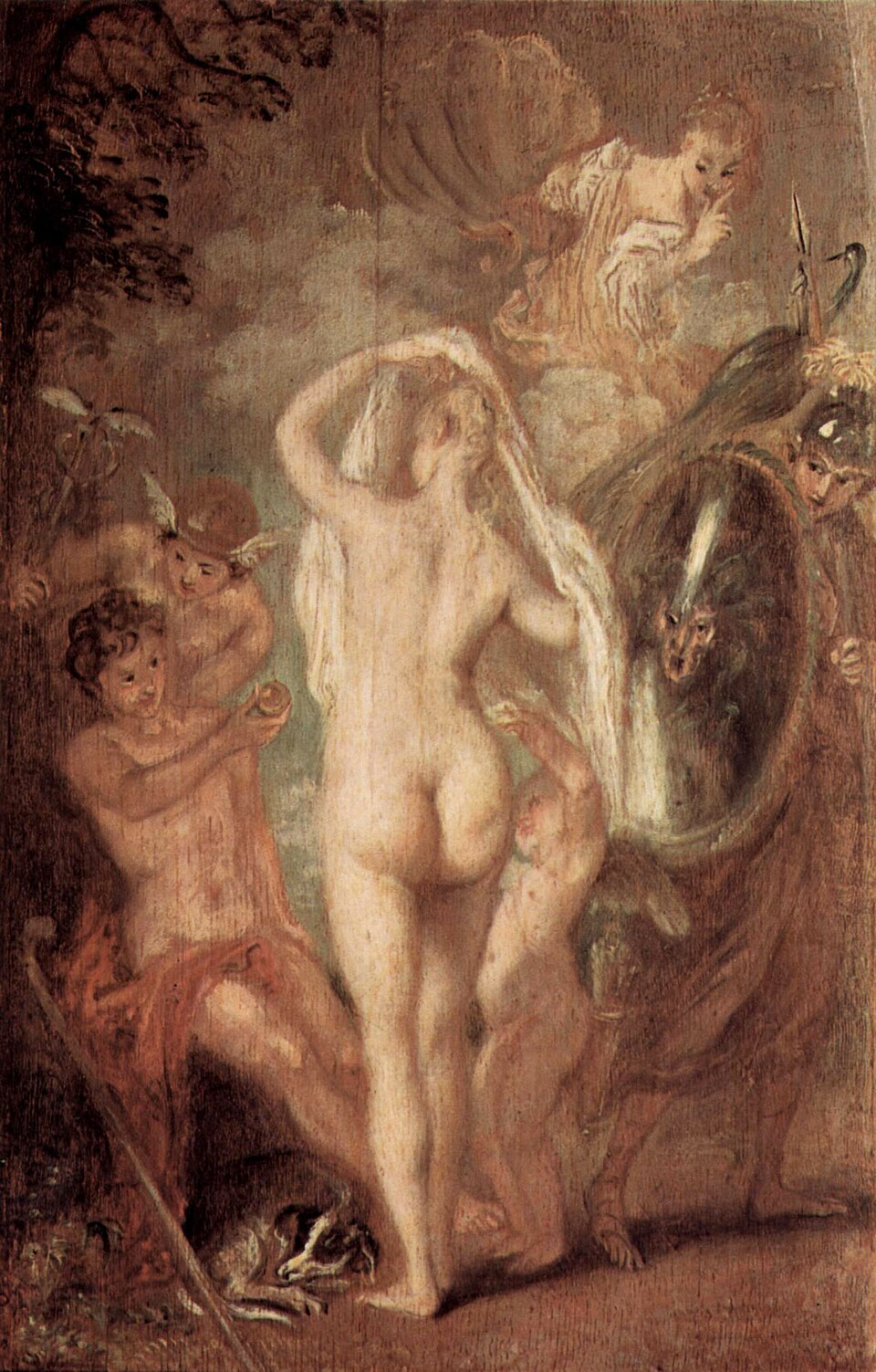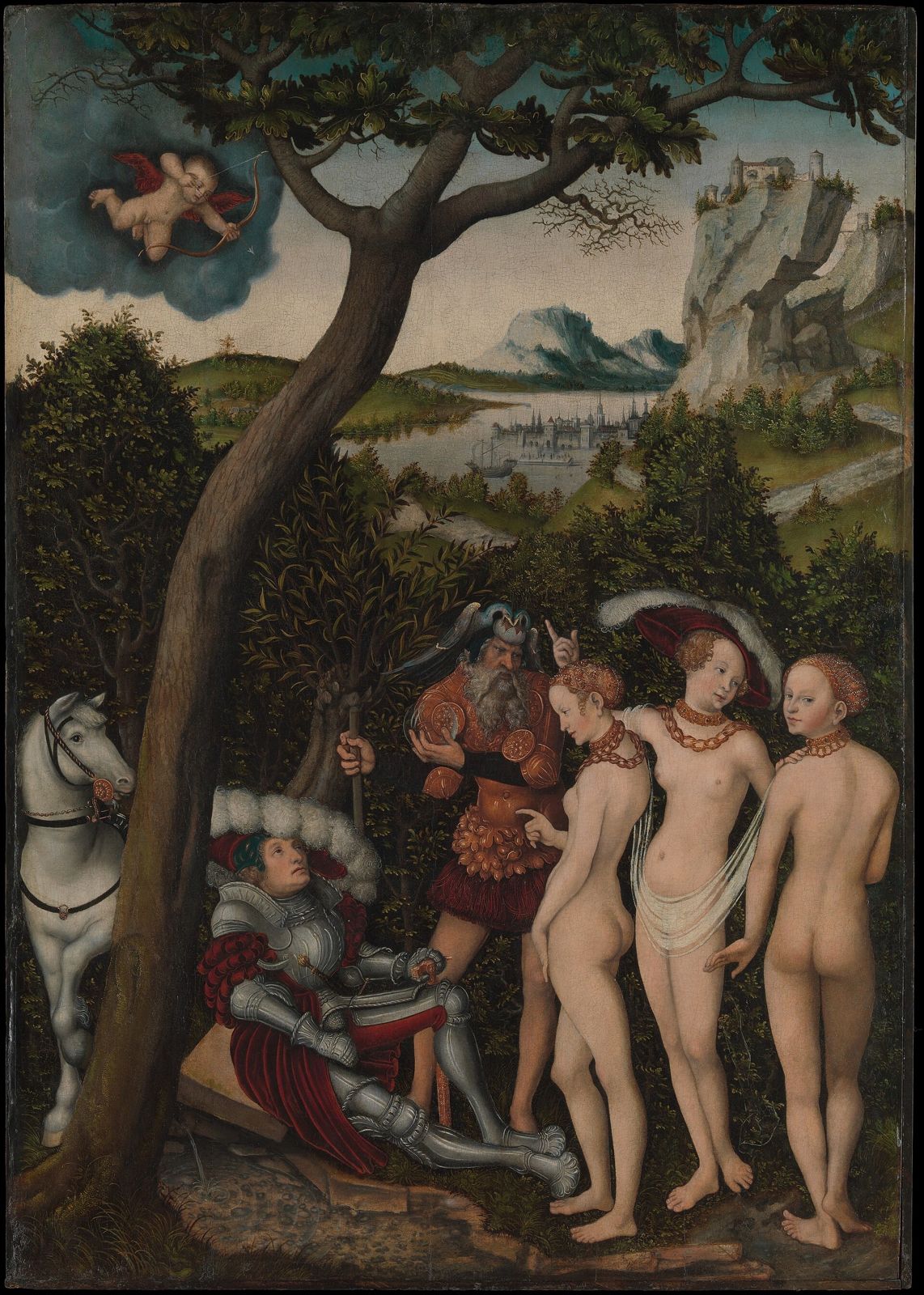
The Judgment of Paris
This is the myth retold as a German fairy tale. Paris is a knight in full armor, sitting dazed under a tree beside his white horse, while Mercury — here an old bearded man — presents the prize. The three goddesses are slender court beauties, nude except for their necklaces and a fashionable hat, and a tiny Cupid takes aim above.
Cranach and his workshop painted this subject many times; it let him combine a moral fable about choice with the elegant nudes his princely clients loved. The medieval costume is the point: he pulls an ancient story into his own world, as if the fatal choice could happen at any court in Saxony.
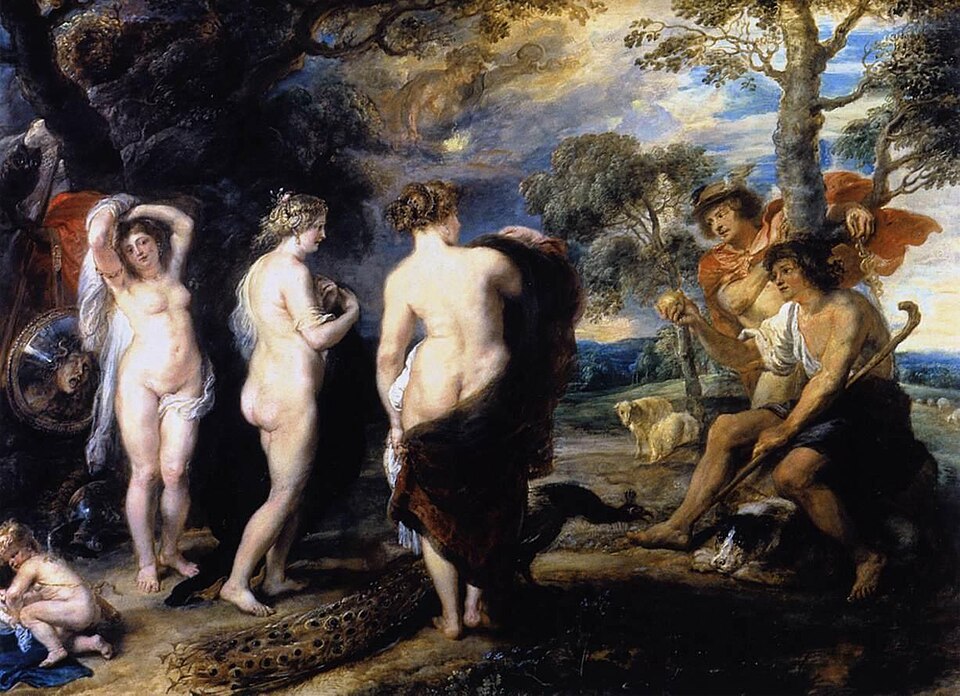
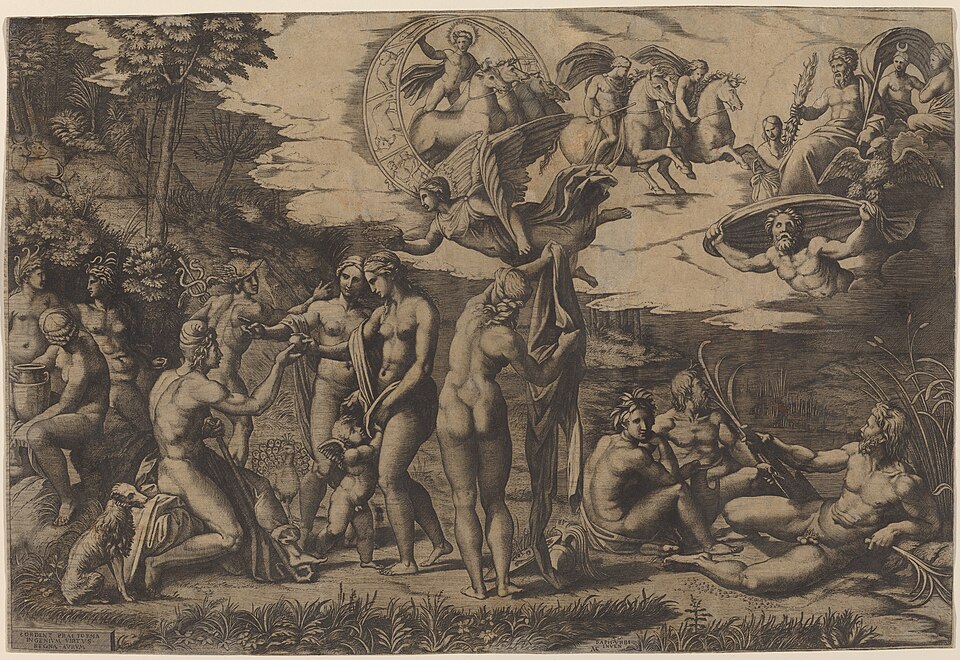
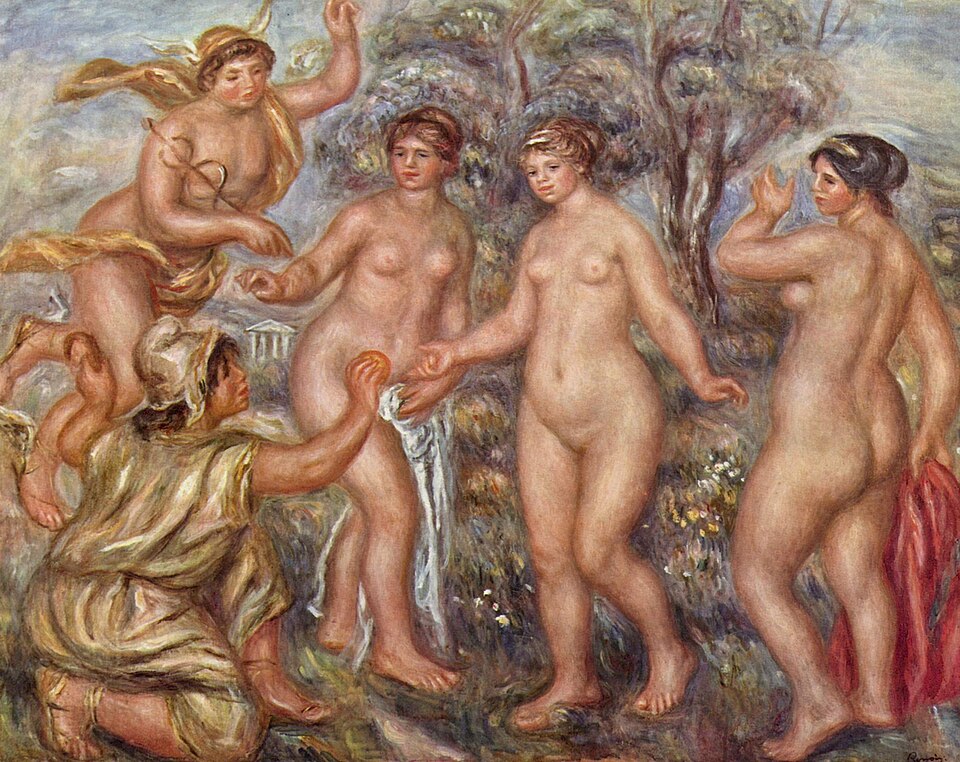
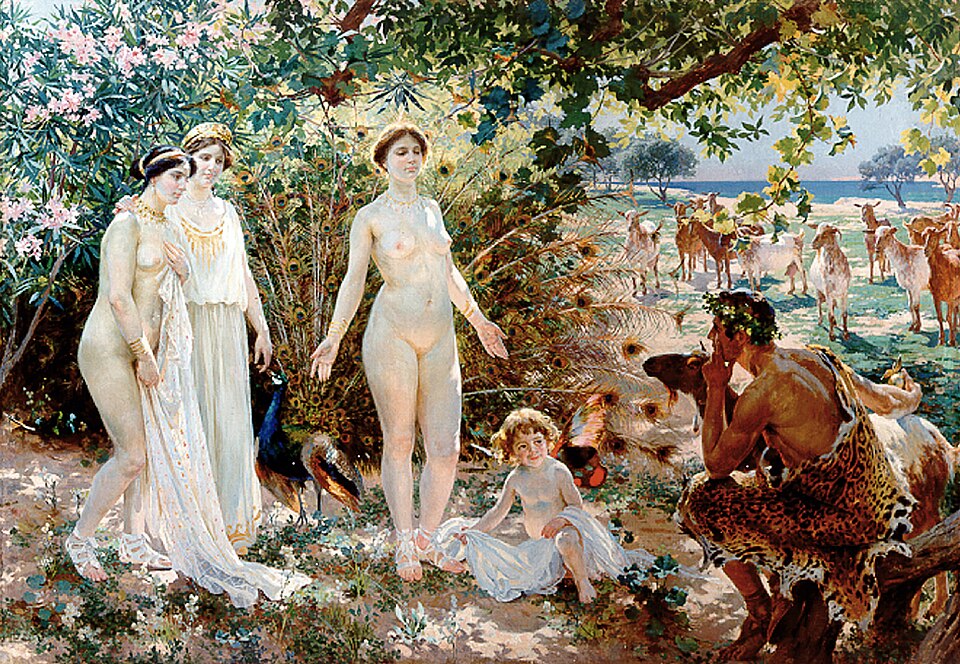
The mortal Zeus picks is Paris, a prince of Troy who is living as a shepherd on Mount Ida. The three goddesses appear before him and each offers a bribe. Hera offers power — rule over all of Asia. Athena offers victory in every battle. Aphrodite offers the most beautiful woman in the world.
Paris gives the apple to Aphrodite. It is the worst decision in Greek mythology. The woman Aphrodite has promised him is Helen, queen of Sparta — and she is already married. Worse, Paris has just made permanent enemies of Hera and Athena, who will spend the coming war working for Troy's destruction.
Lucas Cranach the Elder (1472–1553) was court painter to the Electors of Saxony in Wittenberg and a close friend of Martin Luther. His workshop produced portraits, altarpieces and mythological scenes featuring his instantly recognizable slender nudes.