The Judgment of Paris
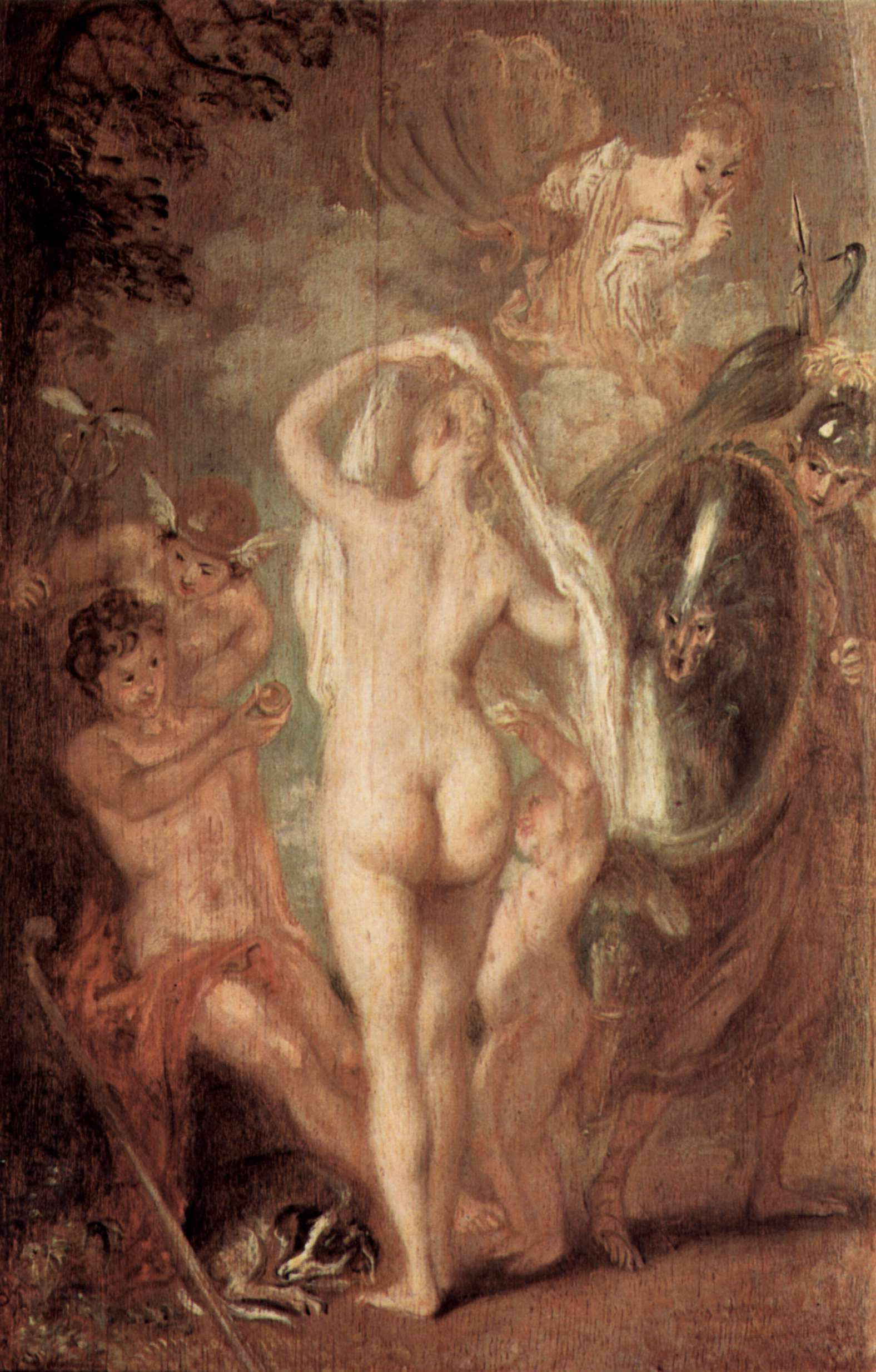
Watteau strips the contest down to its ending. Paris, in shepherd's dress, reaches up to hand the apple to Venus, who is already letting her drapery fall; a cupid attends her, and armored Minerva turns away in defeat. The rivals barely matter — the picture belongs to the winner.
It is a small panel, painted fast and loose, with the feathery touch Watteau normally spent on scenes of parties and flirtation. Treated this way, the judgement is not a solemn turning point of history but a moment of theatre — graceful, fleeting, and a little mischievous.
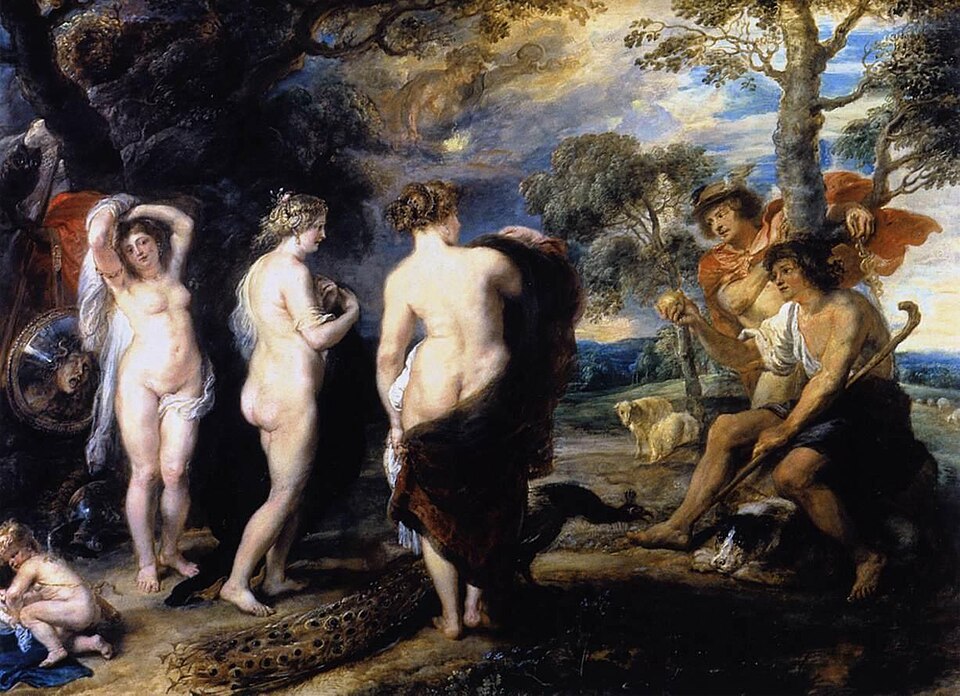
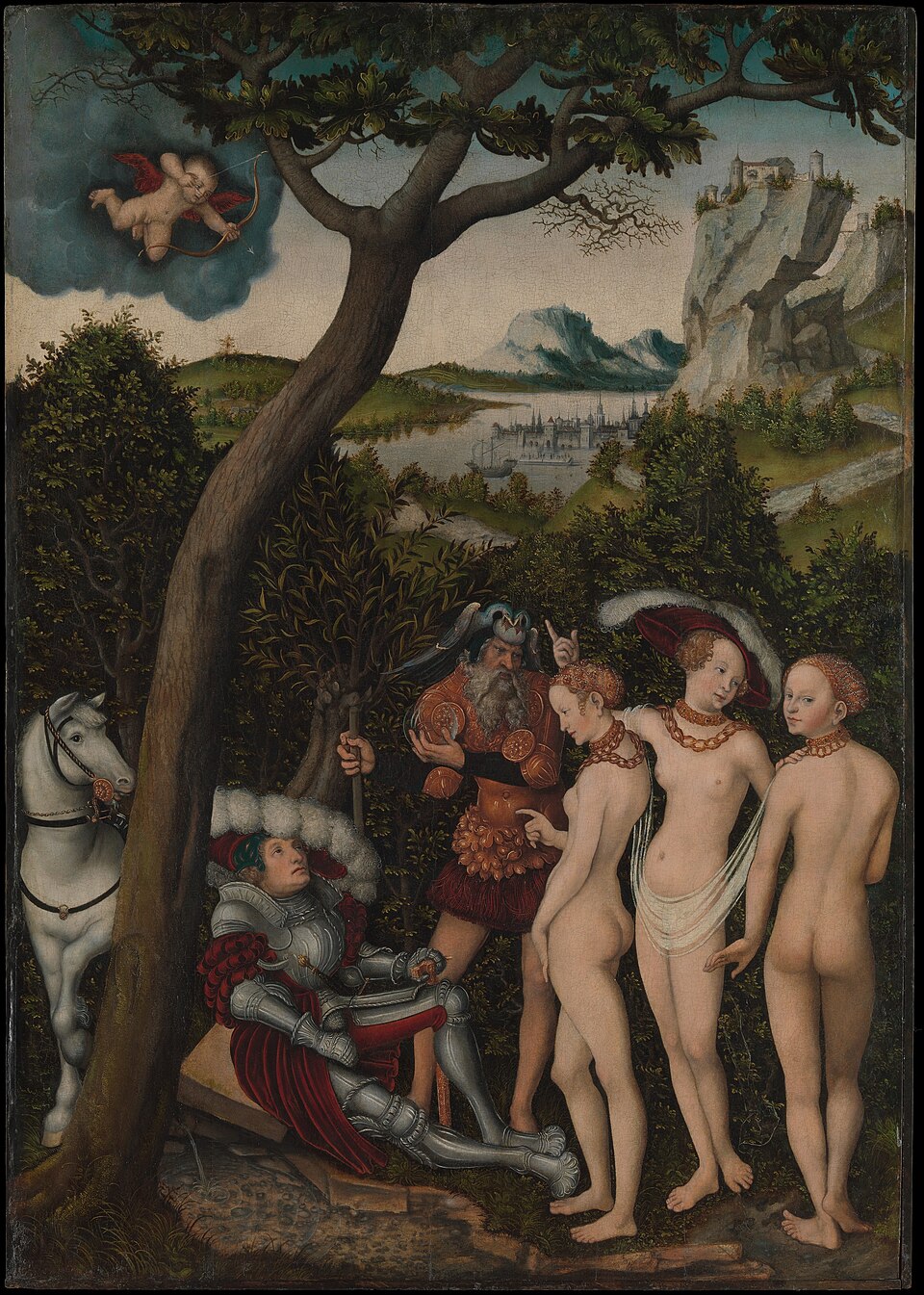
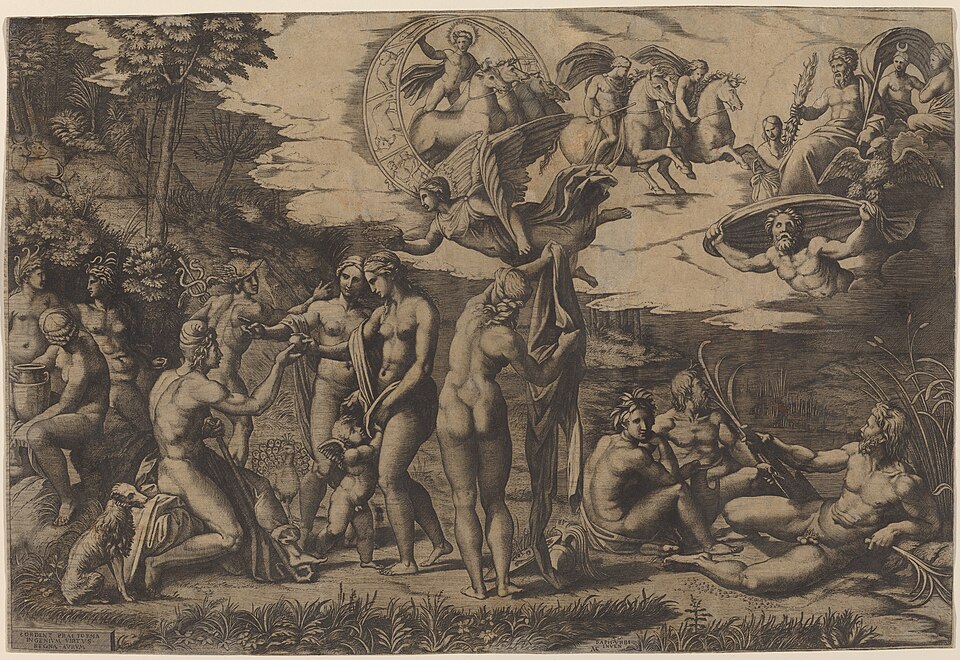
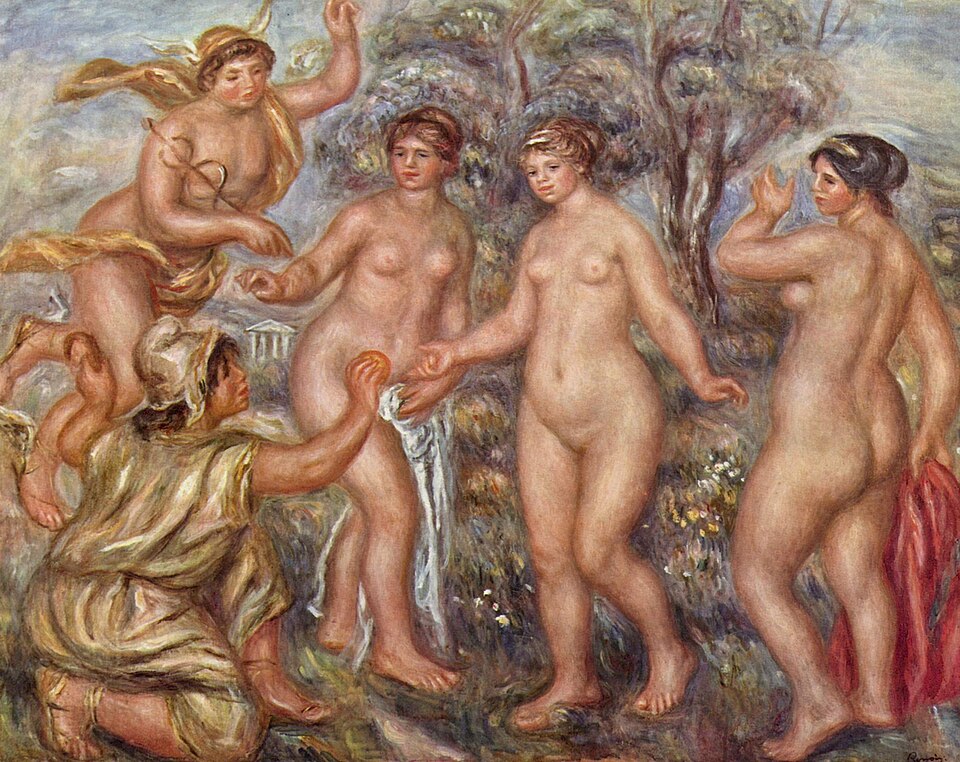
The mortal Zeus picks is Paris, a prince of Troy who is living as a shepherd on Mount Ida. The three goddesses appear before him and each offers a bribe. Hera offers power — rule over all of Asia. Athena offers victory in every battle. Aphrodite offers the most beautiful woman in the world.
Paris gives the apple to Aphrodite. It is the worst decision in Greek mythology. The woman Aphrodite has promised him is Helen, queen of Sparta — and she is already married. Worse, Paris has just made permanent enemies of Hera and Athena, who will spend the coming war working for Troy's destruction.
Antoine Watteau (1684–1721) invented the fête galante — dreamlike scenes of elegant people at leisure — and became one of the founders of French Rococo painting. He died of tuberculosis at thirty-six.