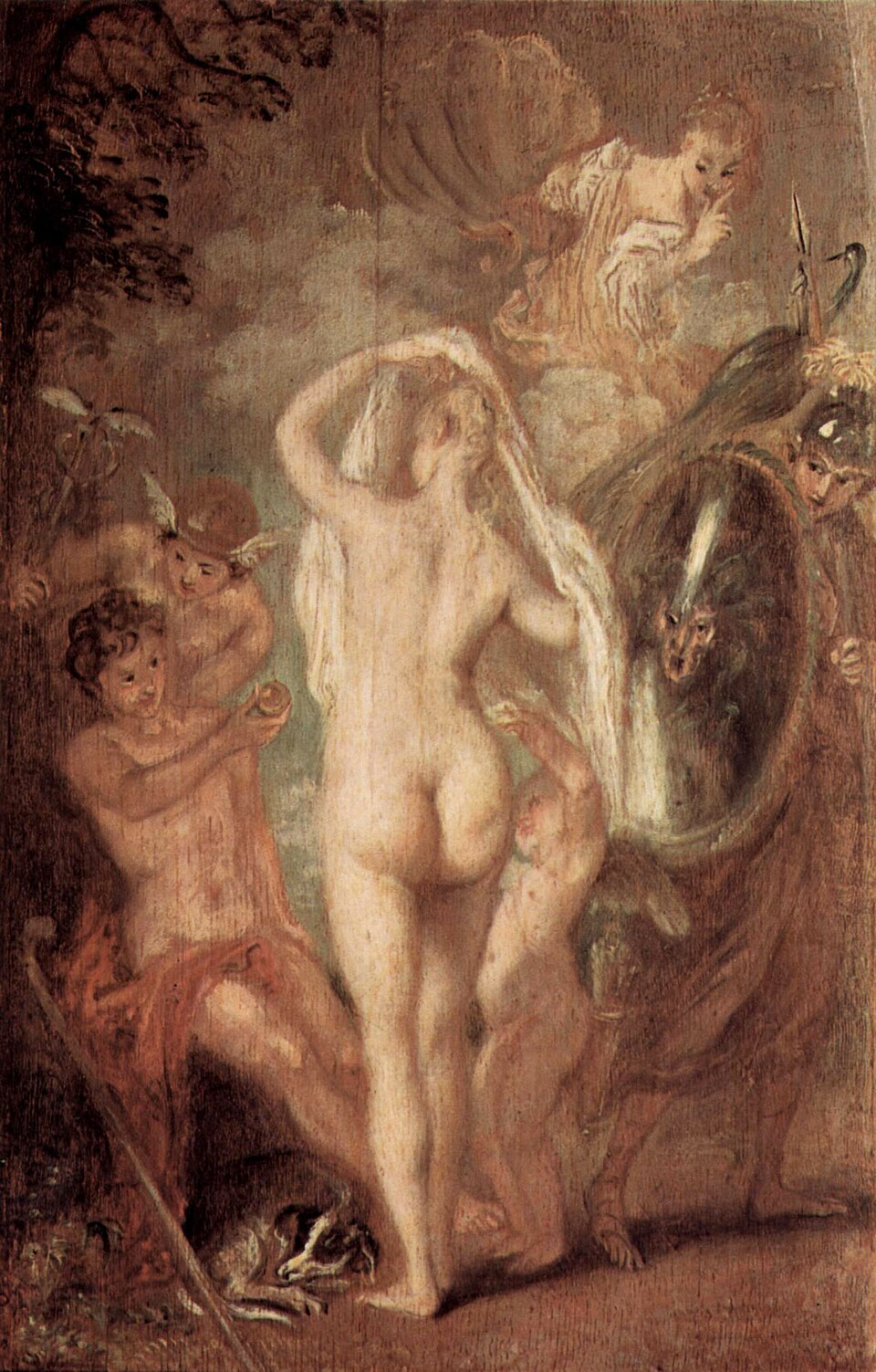
The Judgement of Paris
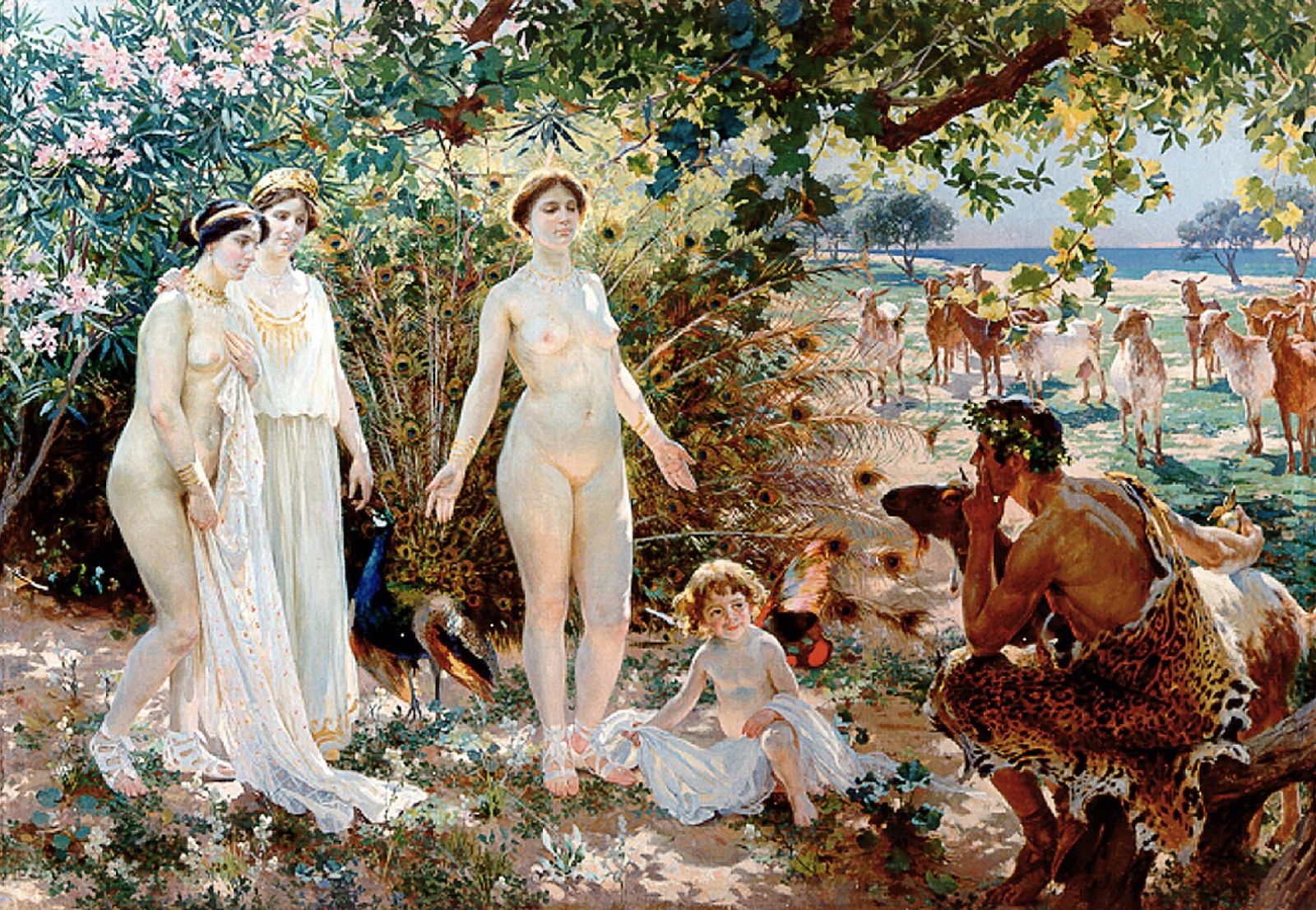
Simonet moves the contest into bright Mediterranean daylight. The young shepherd Paris weighs his decision while the three goddesses stand before him on the open hillside, their bodies lit by real sun rather than studio lamps. There are no clouds full of gods — just a man, a choice, and the light of southern Spain standing in for ancient Ida.
Painted in 1904, the picture belongs to the last generation of academic mythology painting, but its fresh, outdoor light comes from the plein-air habits of Simonet's time. The result reads almost like a photograph of the myth — which makes the impossible choice feel oddly real.
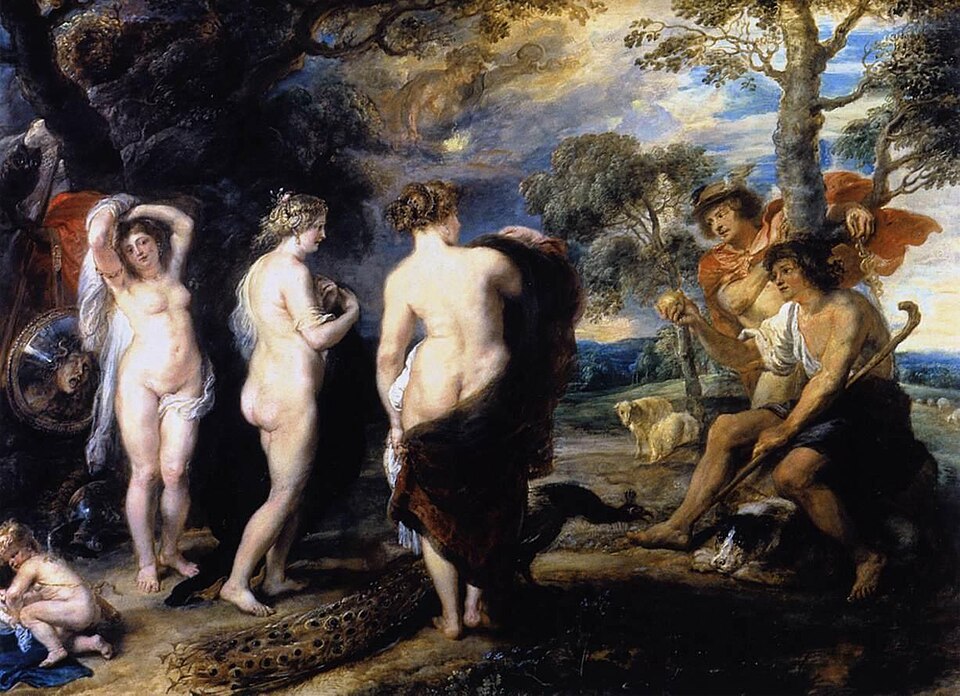
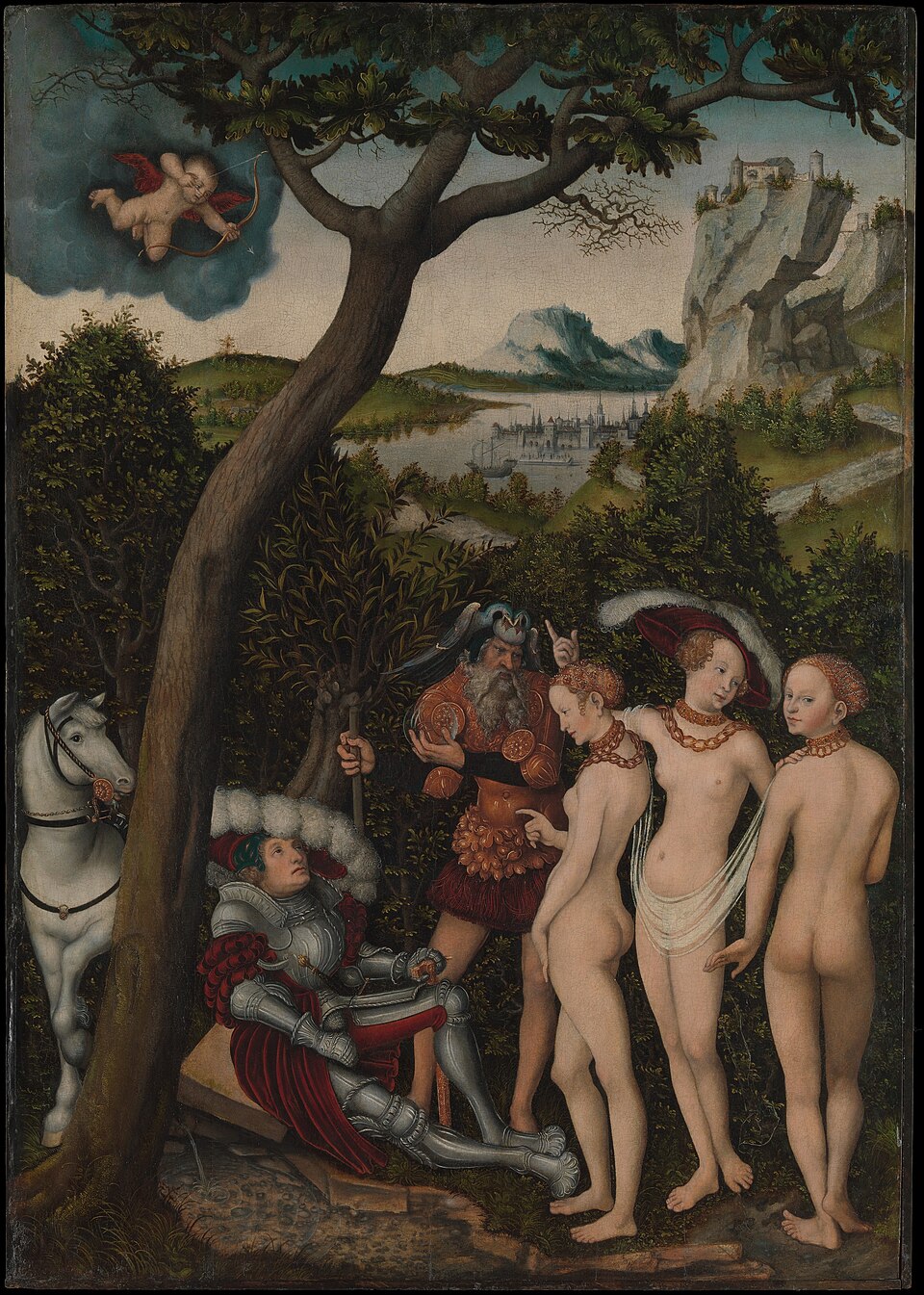
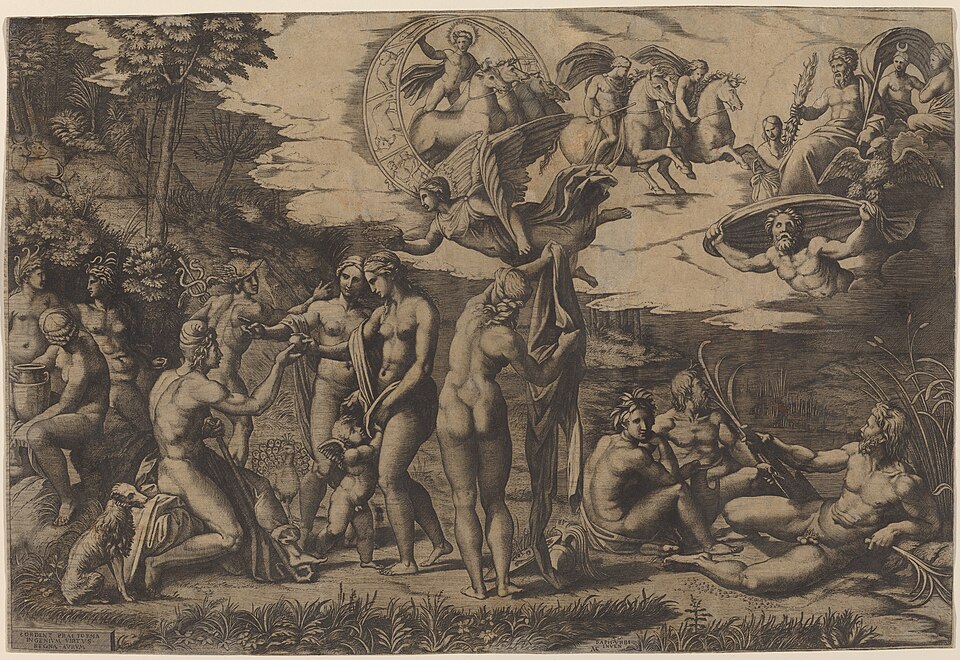
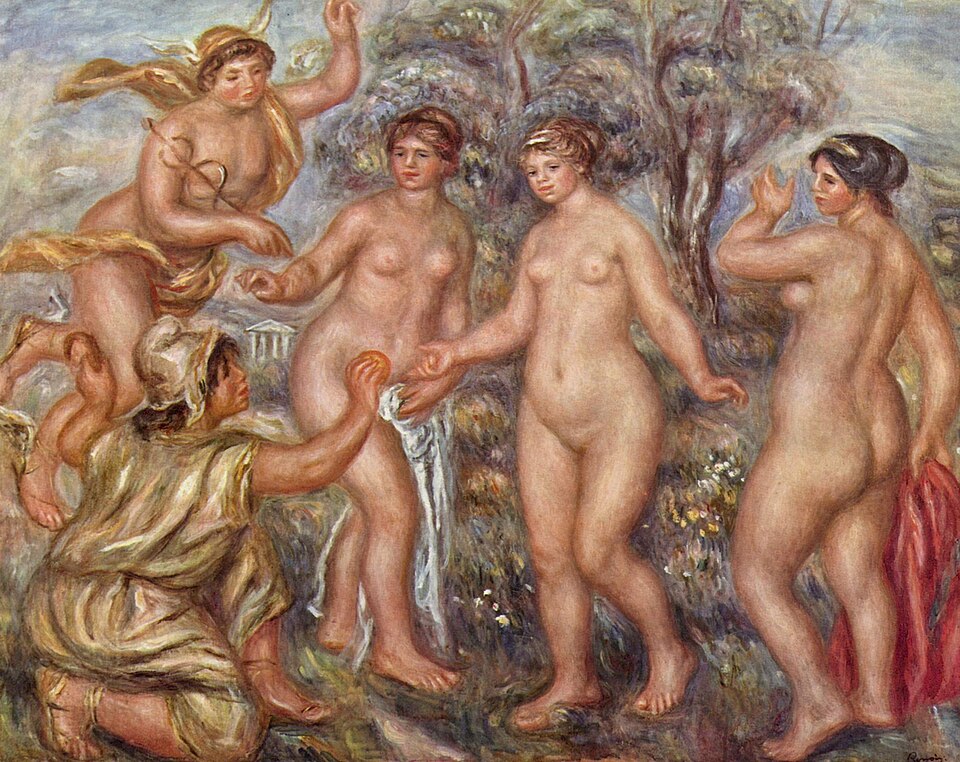
The mortal Zeus picks is Paris, a prince of Troy who is living as a shepherd on Mount Ida. The three goddesses appear before him and each offers a bribe. Hera offers power — rule over all of Asia. Athena offers victory in every battle. Aphrodite offers the most beautiful woman in the world.
Paris gives the apple to Aphrodite. It is the worst decision in Greek mythology. The woman Aphrodite has promised him is Helen, queen of Sparta — and she is already married. Worse, Paris has just made permanent enemies of Hera and Athena, who will spend the coming war working for Troy's destruction.
Enrique Simonet (1866–1927) was a Spanish painter from Valencia who traveled widely through the Mediterranean and later taught in Madrid. He is best remembered for large, luminous scenes that combine academic drawing with open-air light.