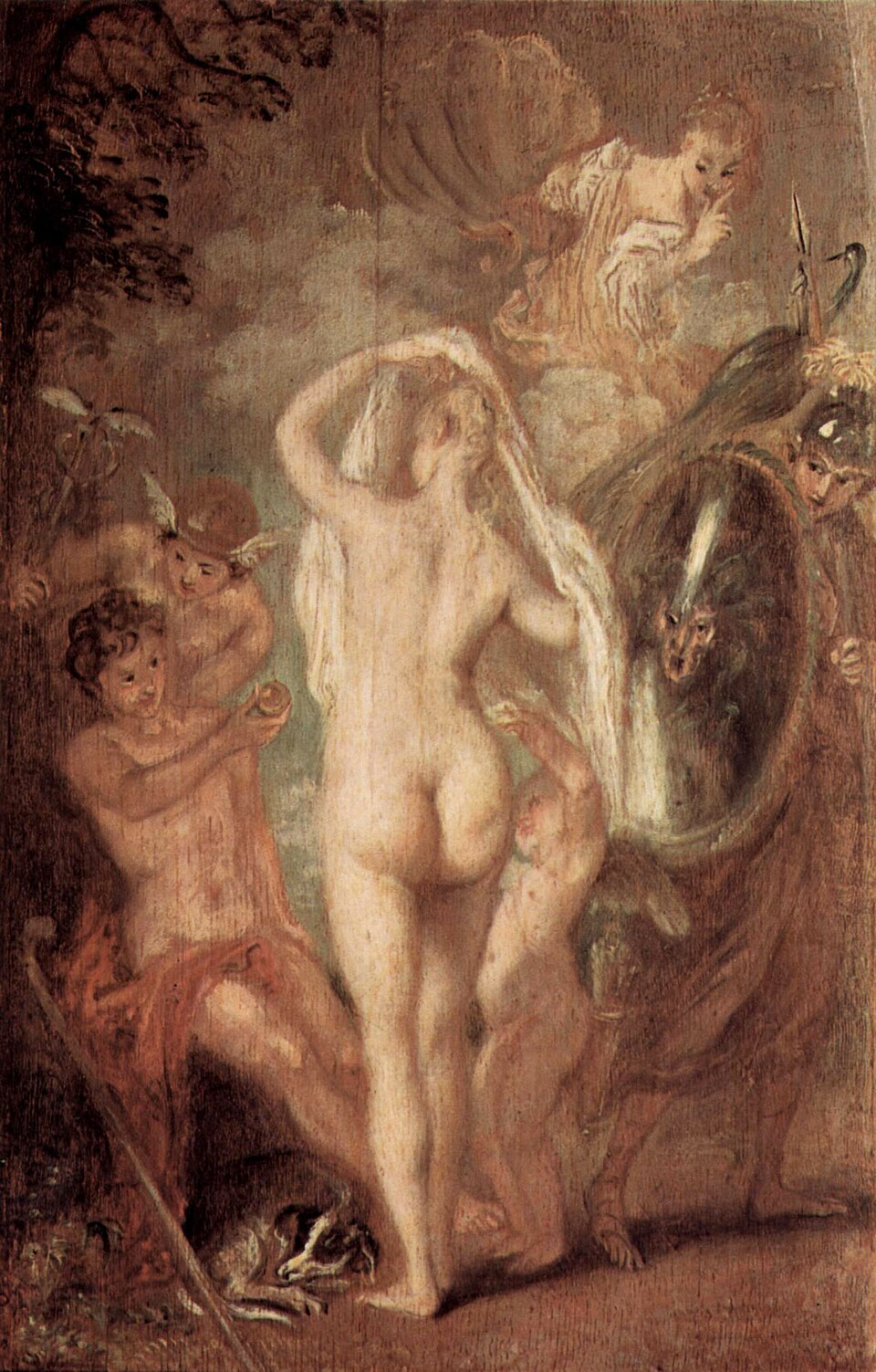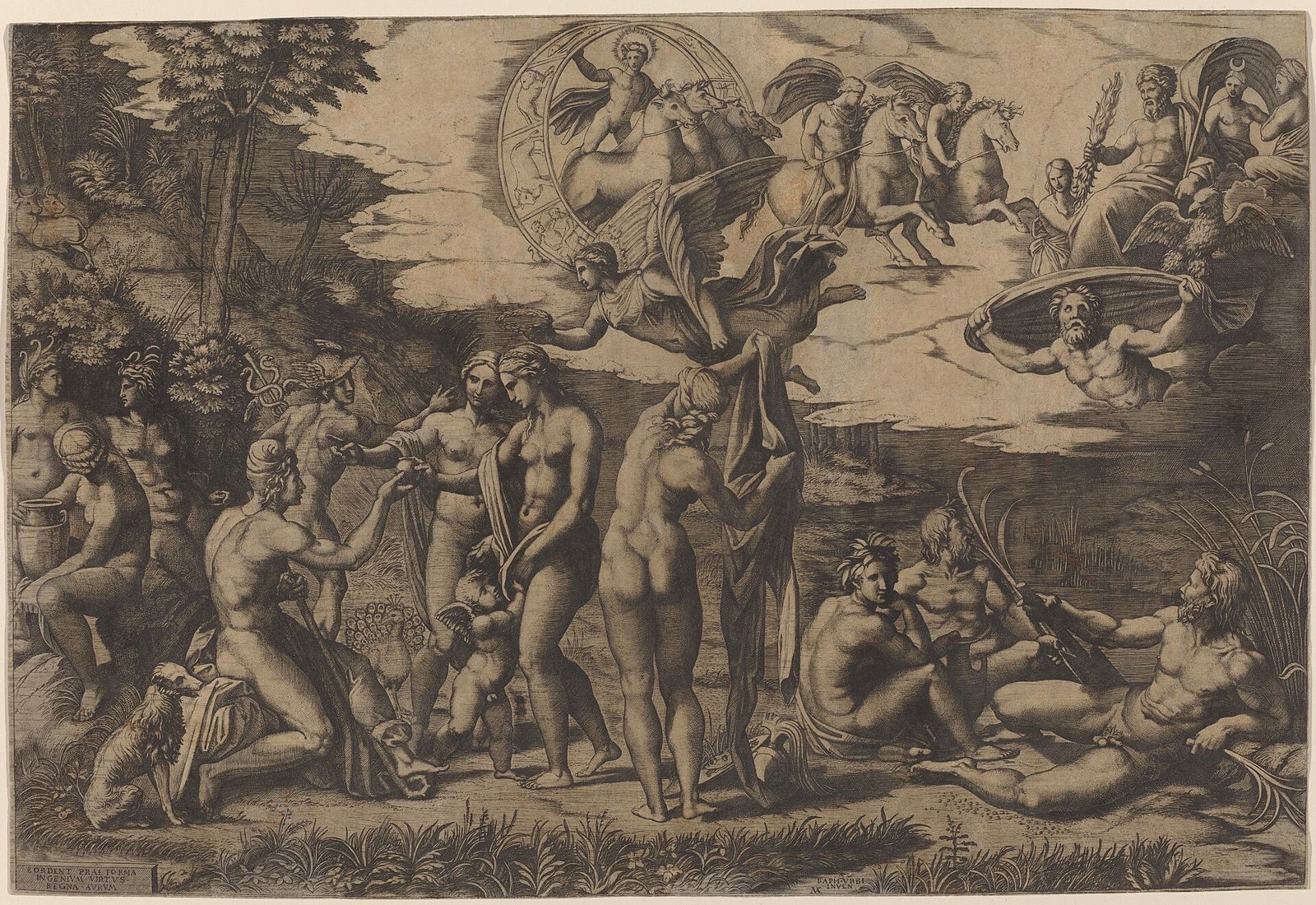
The Judgment of Paris (after Raphael)
This engraving preserves a composition designed by Raphael that was never painted. Paris judges the three goddesses at the left while gods watch from the sky; at the lower right, a group of reclining river gods and a nymph look on. Every figure is modeled with the fine parallel lines that made Raimondi famous.
That corner group had a second life: three centuries later Édouard Manet borrowed its poses for his scandalous Déjeuner sur l'herbe. Prints like this one traveled across Europe and taught artists Raphael's designs long after the originals were gone — this may be the most influential image in the whole gallery.
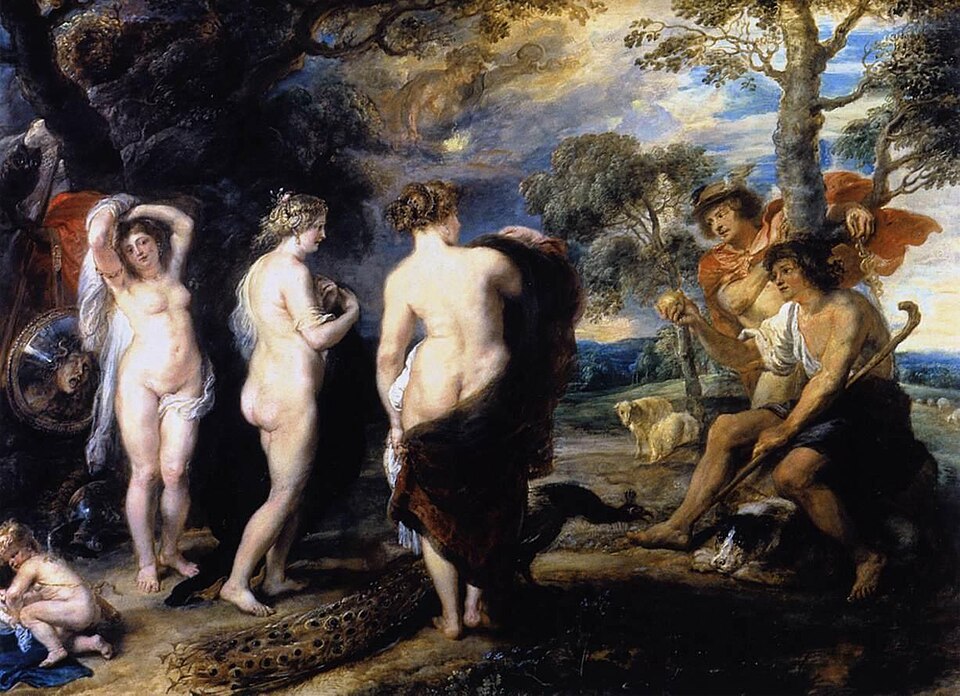
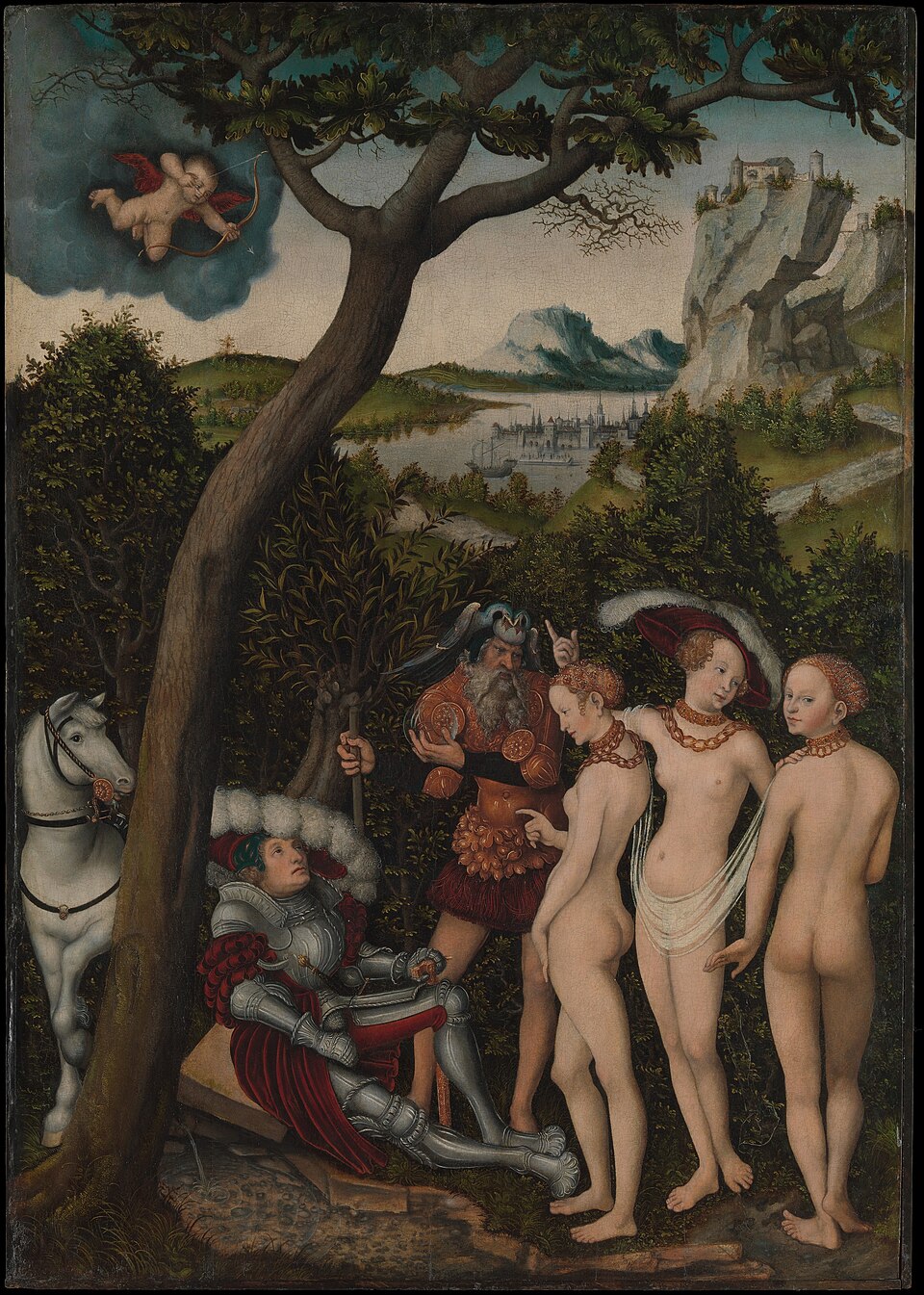
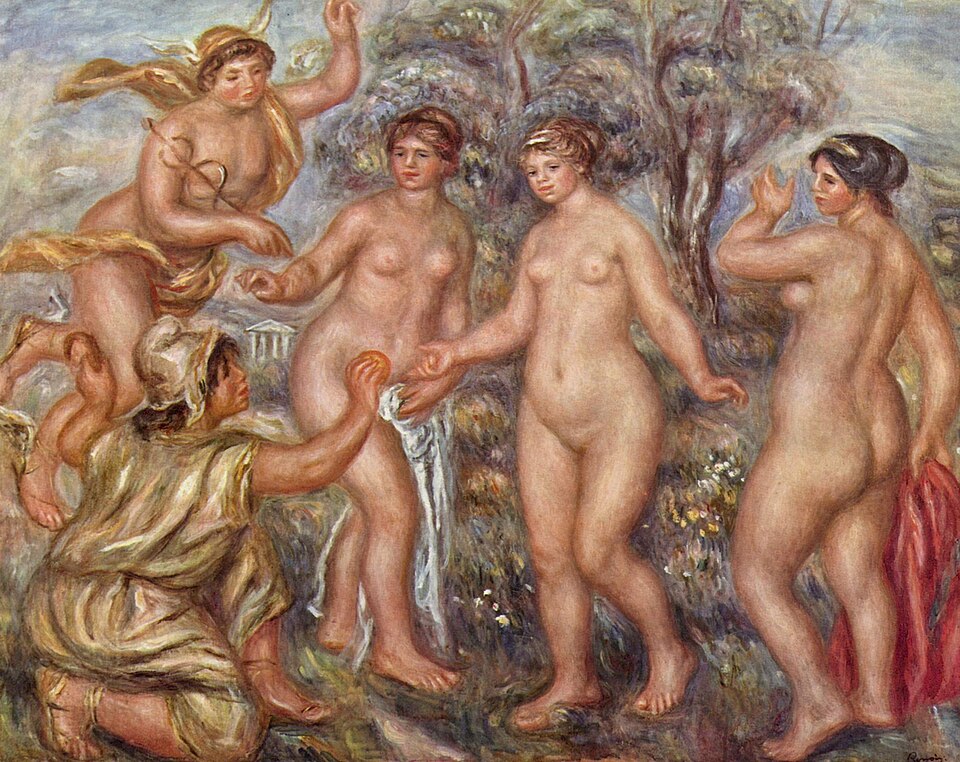
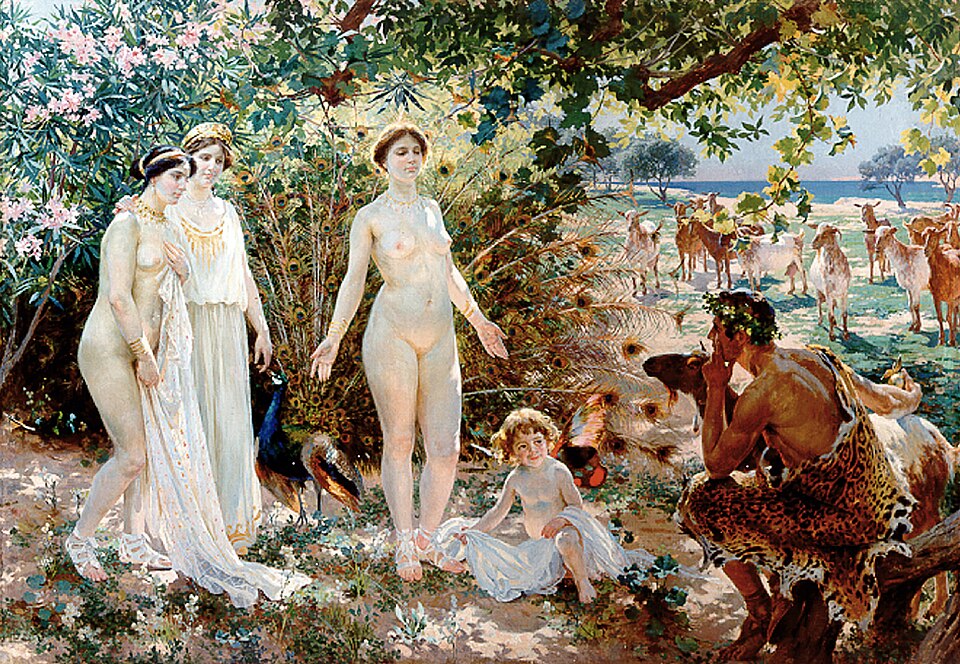
The mortal Zeus picks is Paris, a prince of Troy who is living as a shepherd on Mount Ida. The three goddesses appear before him and each offers a bribe. Hera offers power — rule over all of Asia. Athena offers victory in every battle. Aphrodite offers the most beautiful woman in the world.
Paris gives the apple to Aphrodite. It is the worst decision in Greek mythology. The woman Aphrodite has promised him is Helen, queen of Sparta — and she is already married. Worse, Paris has just made permanent enemies of Hera and Athena, who will spend the coming war working for Troy's destruction.
Marcantonio Raimondi (c. 1480–c. 1534) was an Italian engraver who worked closely with Raphael, turning his designs into prints. He effectively founded the business of reproductive printmaking, spreading the look of the High Renaissance across Europe.