Helen of Troy

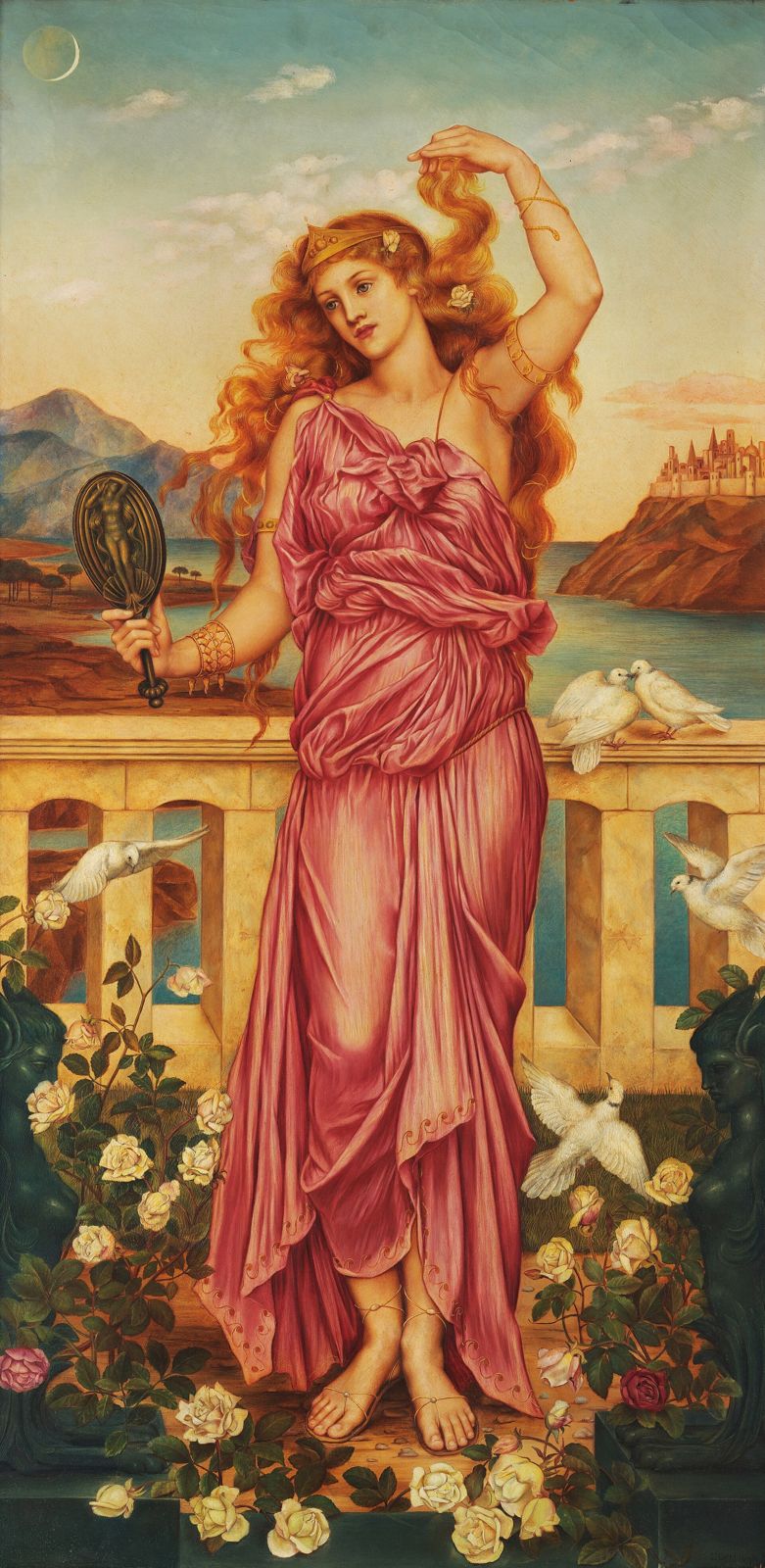
Helen stands wrapped in rose-colored drapery, gazing into a hand mirror decorated with doves — the birds of Venus. Roses bloom around her; behind her rise the towers of Troy. She sees only herself.
De Morgan makes the mirror the whole story: Helen absorbed in her own beauty while the city that will burn for it stands at her back. It is a Symbolist judgement delivered without cruelty — vanity painted so sumptuously that you understand its power.
Helen is the most beautiful woman alive, a daughter of Zeus himself. Her marriage was a diplomatic problem: every king in Greece wanted her. Before her husband was chosen, all her suitors swore an oath — whoever won her, the rest would defend the marriage. She married Menelaus, king of Sparta.
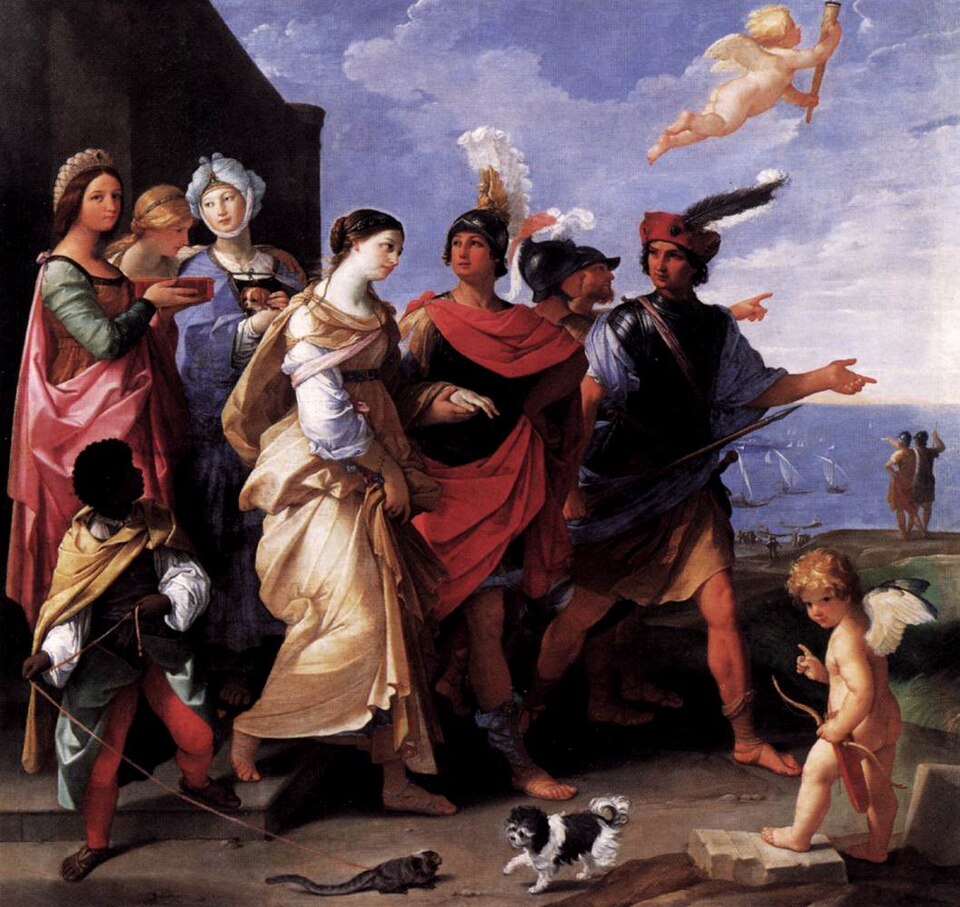
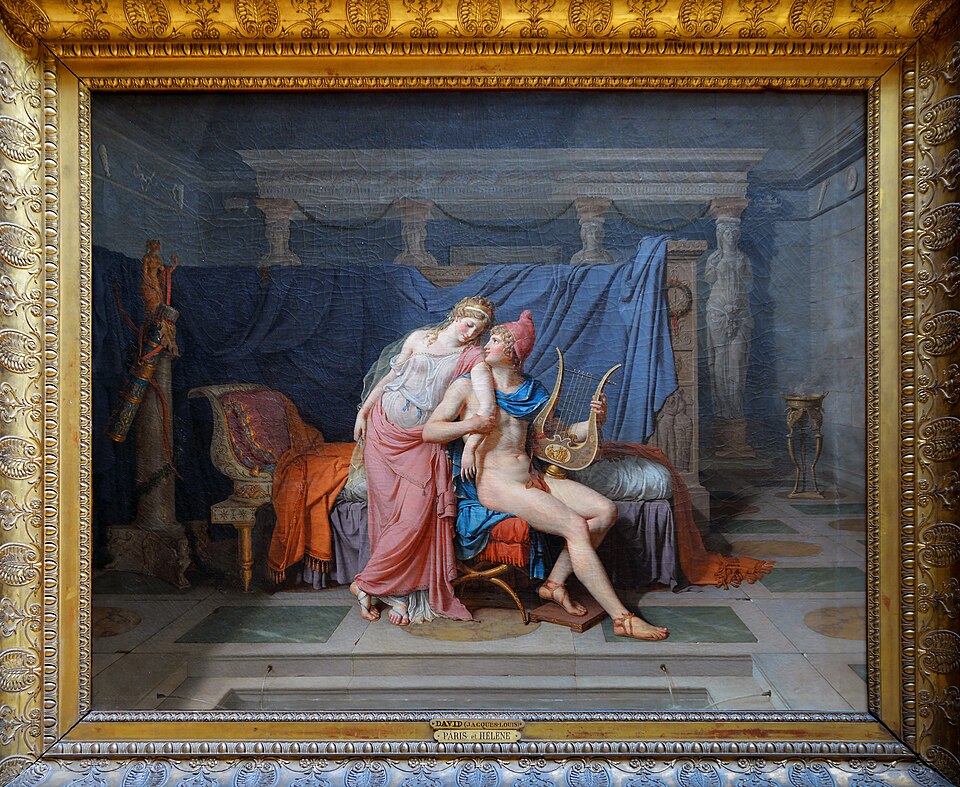
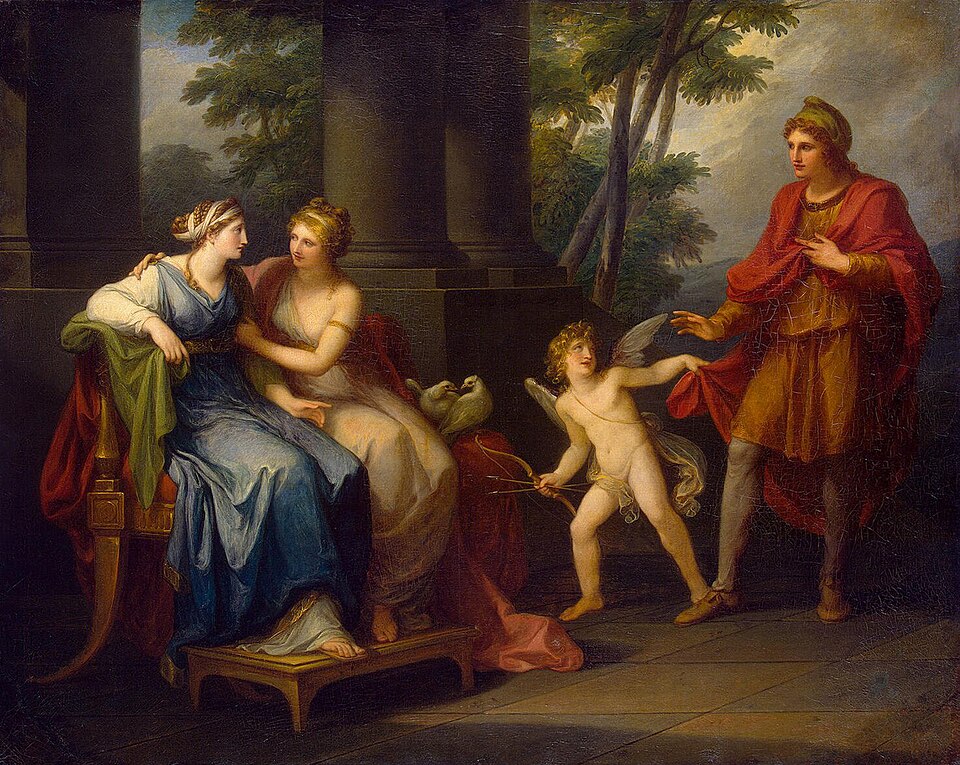
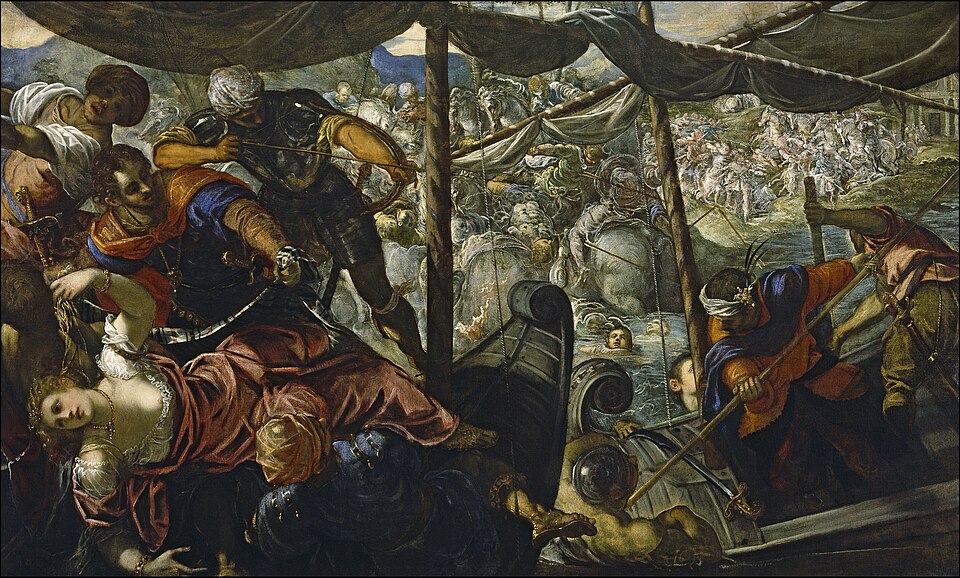
Paris arrives in Sparta as a guest. When Menelaus leaves town, Paris sails home with Helen — with Aphrodite's help. Whether Helen went willingly or was taken by force is a question the Greeks themselves argued about, and painters have taken both sides ever since.
The oath now comes due. Menelaus's brother Agamemnon, the most powerful king in Greece, summons every ruler bound by it. A thousand ships gather to bring Helen back and burn Troy to the ground.
Evelyn De Morgan (1855–1919) was an English painter influenced by Burne-Jones, married to the ceramic artist William De Morgan. Her paintings use myth and allegory, often centered on women, to carry moral and spiritual ideas.