Venus Induces Helen to Love Paris

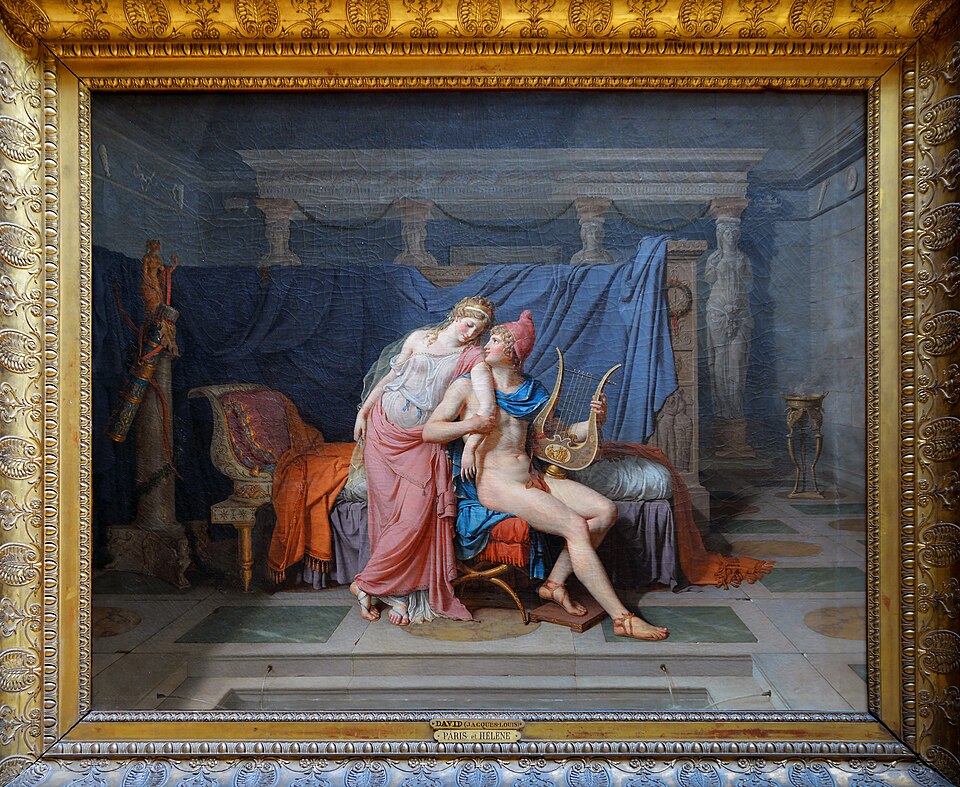
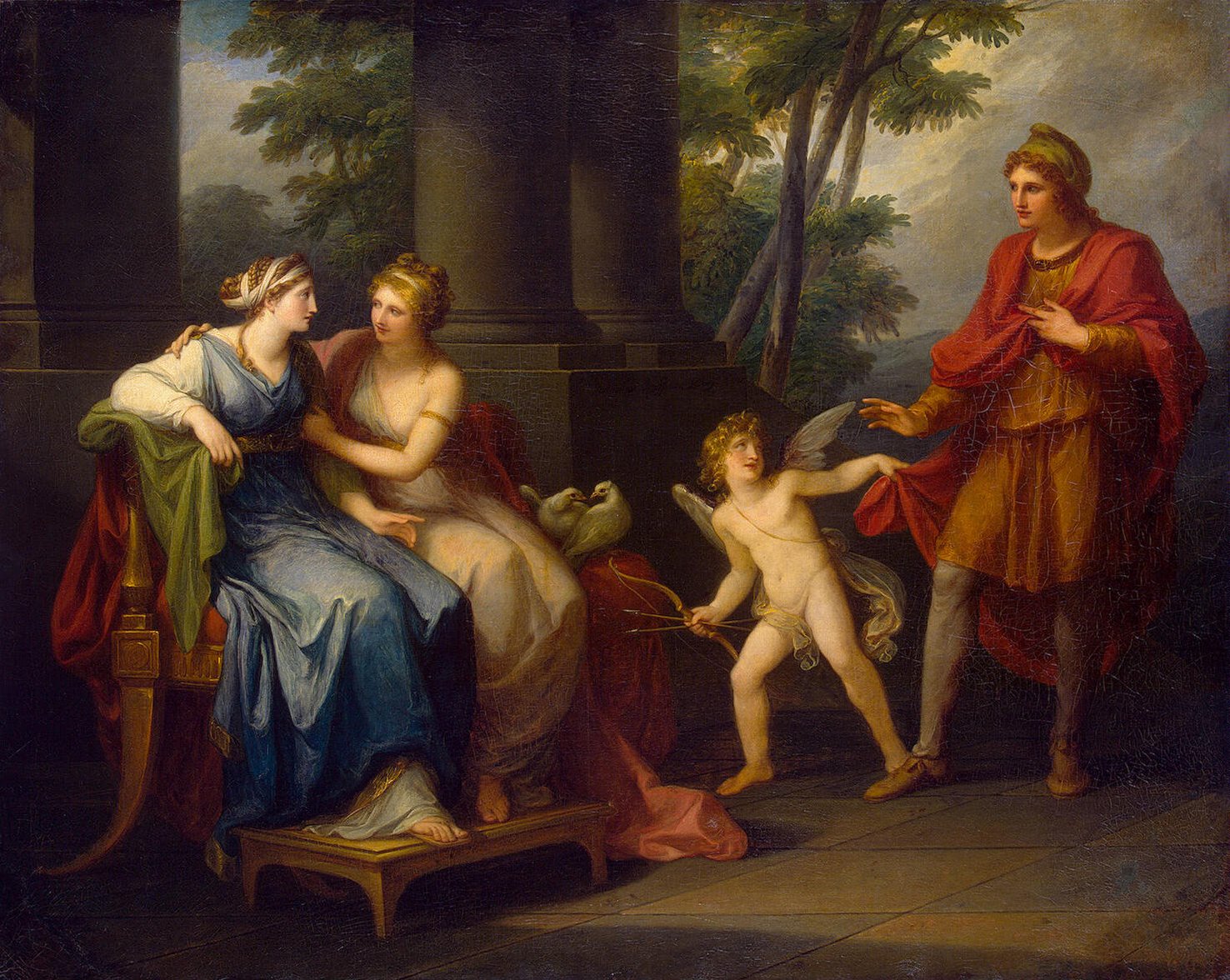
This is the payment of Venus's bribe. Having won the golden apple, the goddess leans close to Helen and talks her toward love, while Cupid presses the case and Paris waits nearby in his Phrygian cap. Helen listens with her eyes down — the decision is being made for her, gently and irresistibly.
Kauffman gives the scene the calm, polished grace of Neoclassicism, but the subject is quietly pointed: persuasion as power. A woman painter at the top of a male profession, she chose the moment where Helen's own will is the battlefield.
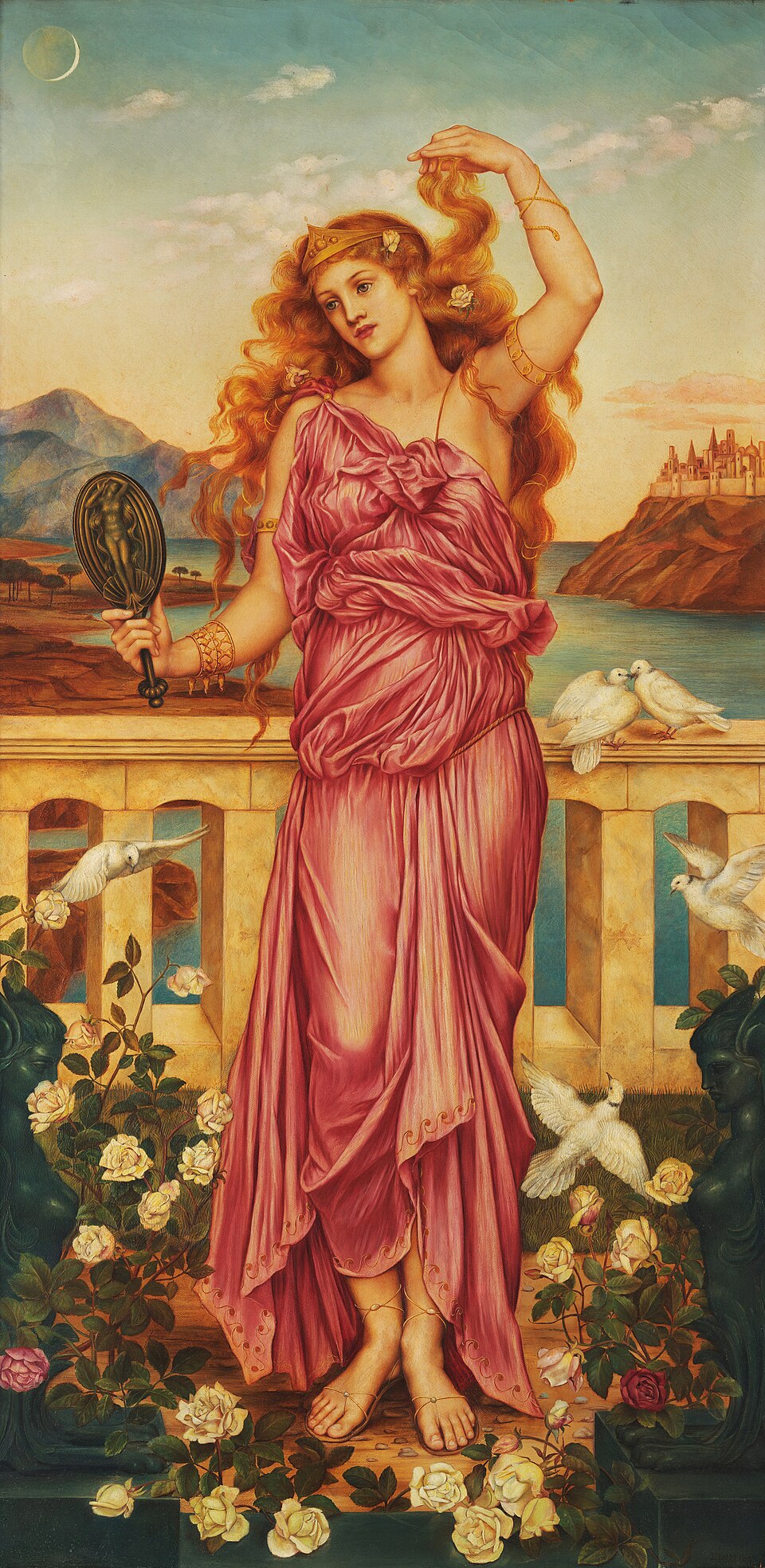
Helen is the most beautiful woman alive, a daughter of Zeus himself. Her marriage was a diplomatic problem: every king in Greece wanted her. Before her husband was chosen, all her suitors swore an oath — whoever won her, the rest would defend the marriage. She married Menelaus, king of Sparta.
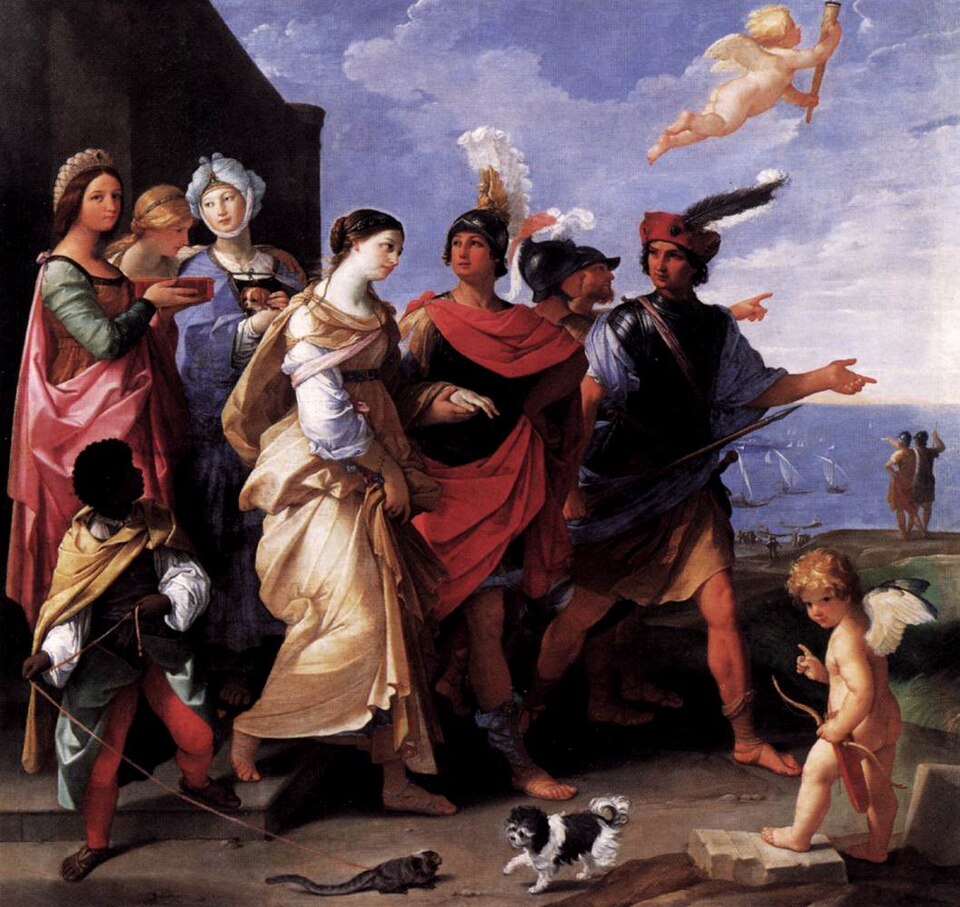
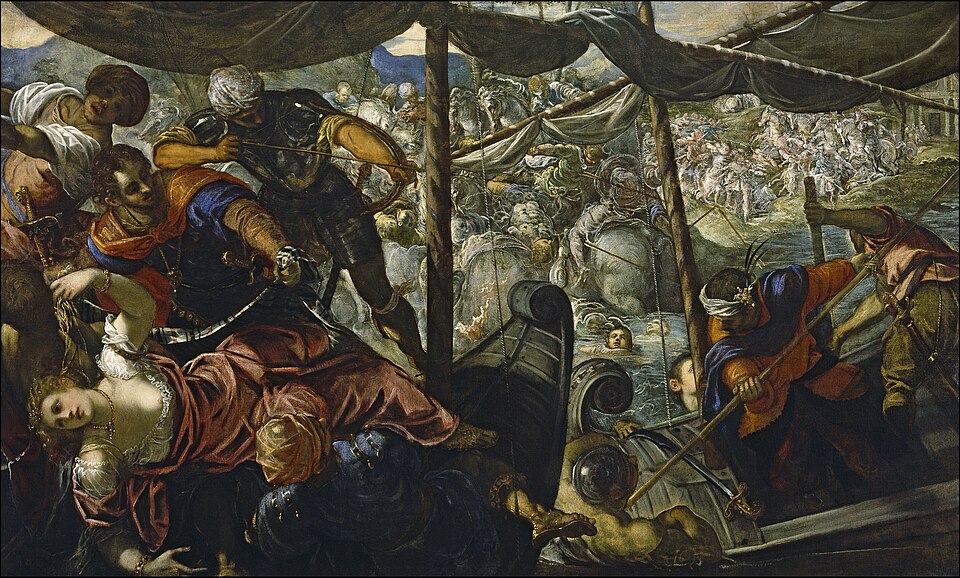
Paris arrives in Sparta as a guest. When Menelaus leaves town, Paris sails home with Helen — with Aphrodite's help. Whether Helen went willingly or was taken by force is a question the Greeks themselves argued about, and painters have taken both sides ever since.
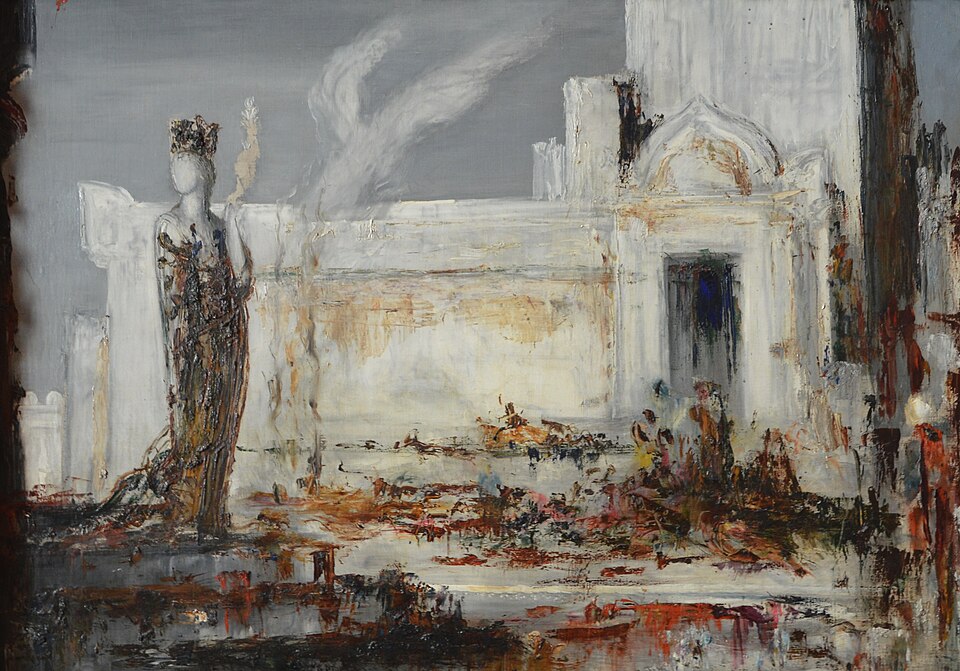
The oath now comes due. Menelaus's brother Agamemnon, the most powerful king in Greece, summons every ruler bound by it. A thousand ships gather to bring Helen back and burn Troy to the ground.
Angelica Kauffman (1741–1807) was a Swiss-born painter who became one of only two women among the founders of London's Royal Academy in 1768. She built an international career on history painting — a field then considered beyond women — and portraits.