Helen of Troy

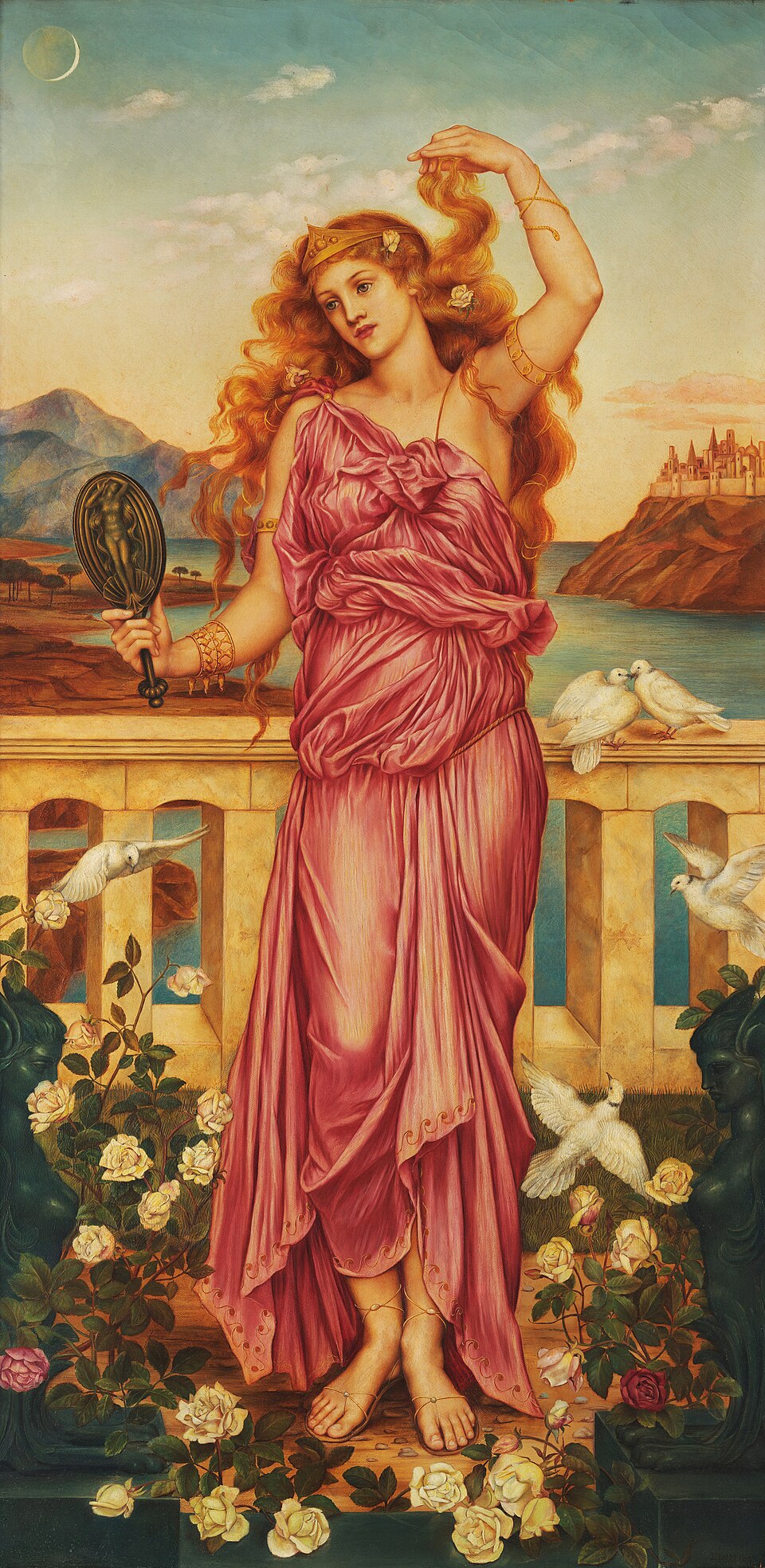
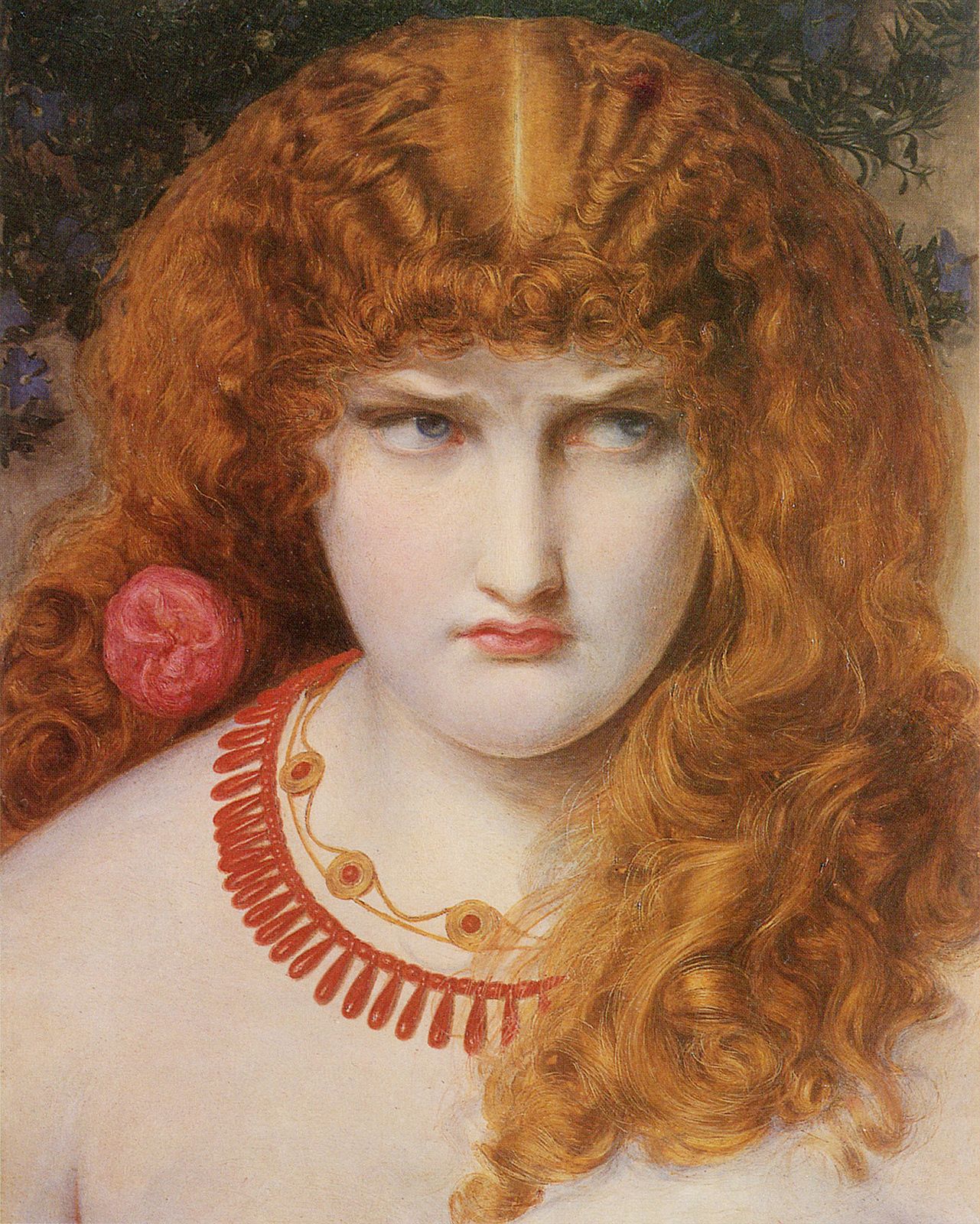
Sandys paints Helen as a very young woman, head and shoulders, with a mass of red-gold hair and a sulky, petulant mouth. She looks less like a queen than a spoiled girl — bored, lovely, and dangerous without knowing it.
The technique is astonishingly precise: every strand of hair and thread of embroidery is sharp. That jewel-hard finish, set against the moody expression, is what makes the picture unsettling. This is the face of Troy's destruction painted like a keepsake.
Helen is the most beautiful woman alive, a daughter of Zeus himself. Her marriage was a diplomatic problem: every king in Greece wanted her. Before her husband was chosen, all her suitors swore an oath — whoever won her, the rest would defend the marriage. She married Menelaus, king of Sparta.
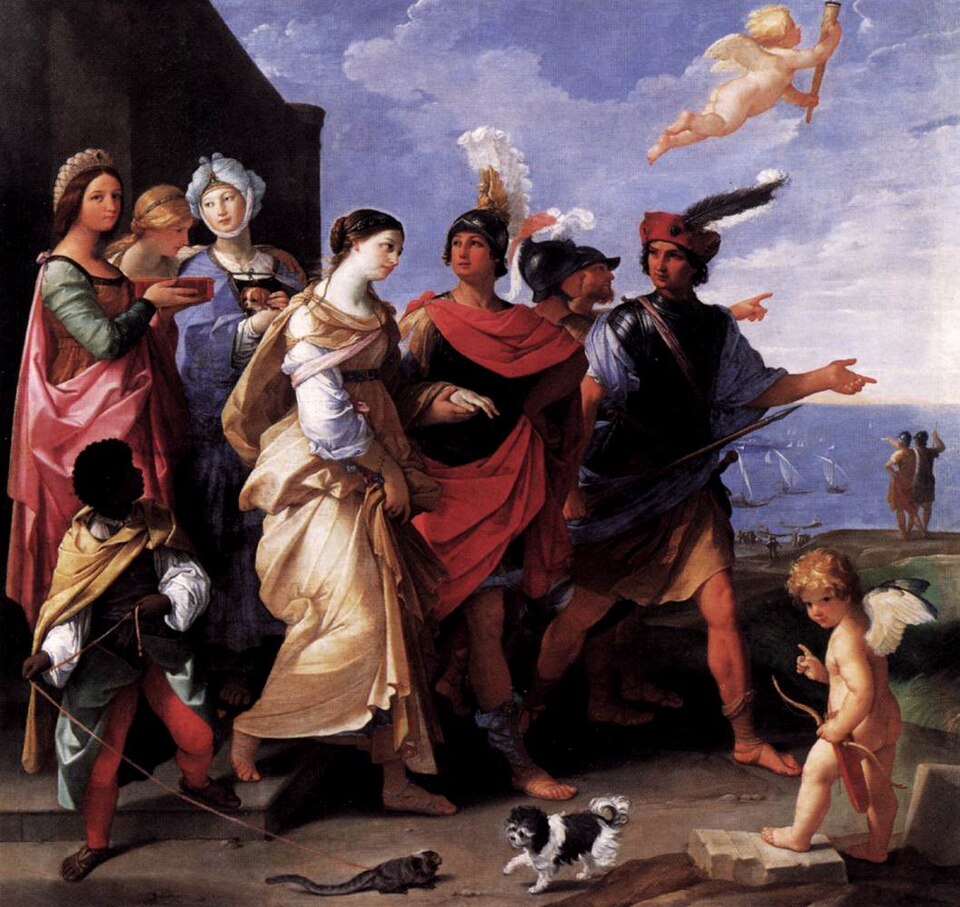
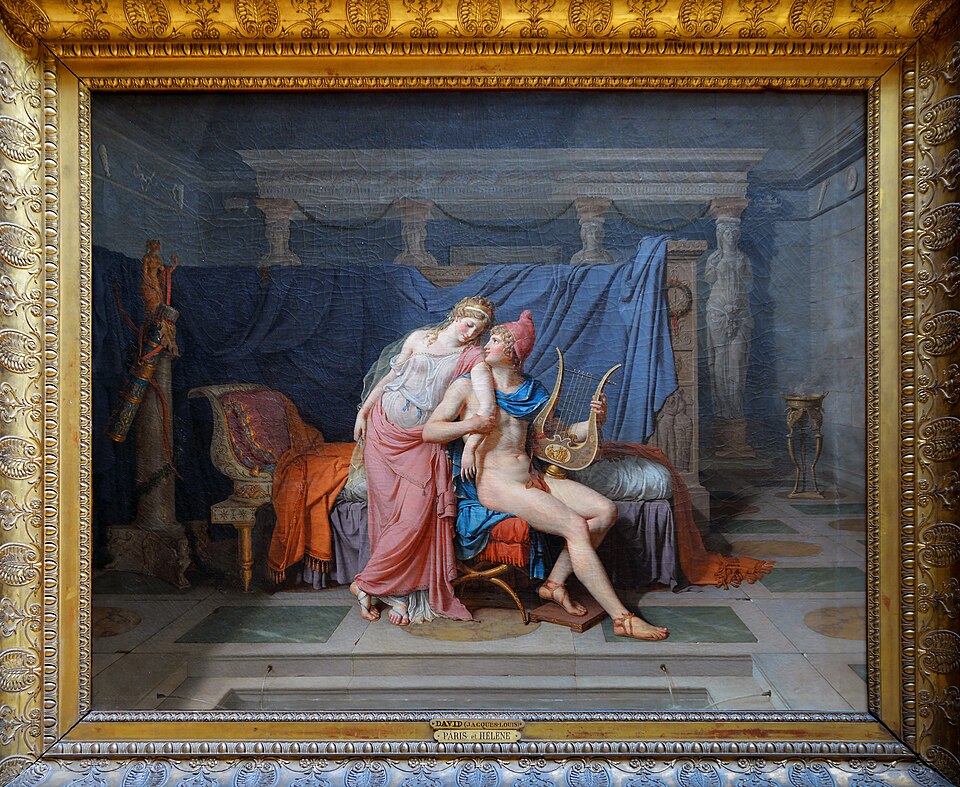
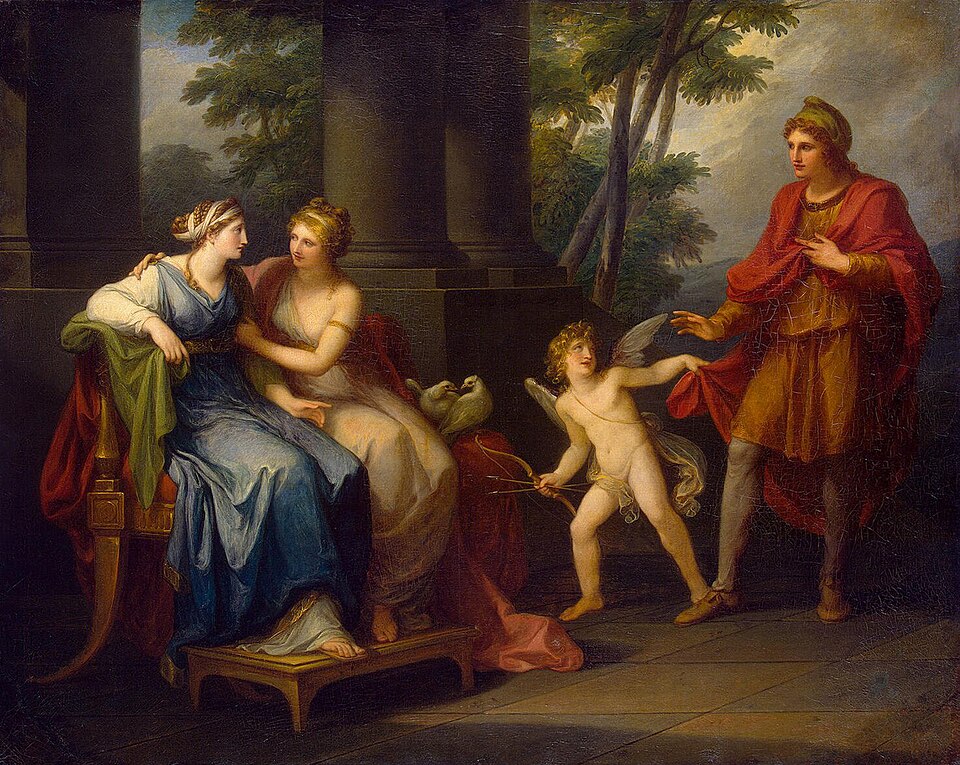
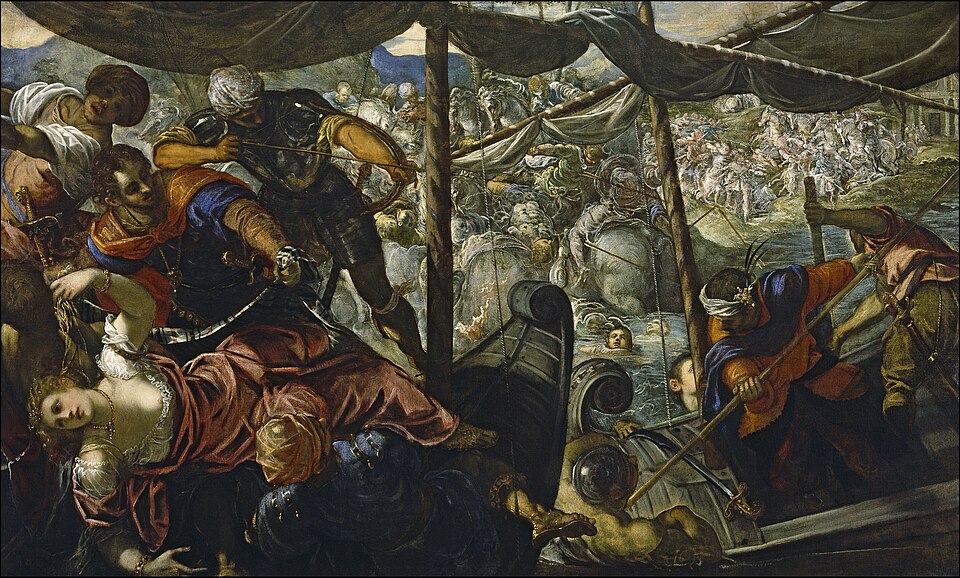
Paris arrives in Sparta as a guest. When Menelaus leaves town, Paris sails home with Helen — with Aphrodite's help. Whether Helen went willingly or was taken by force is a question the Greeks themselves argued about, and painters have taken both sides ever since.
The oath now comes due. Menelaus's brother Agamemnon, the most powerful king in Greece, summons every ruler bound by it. A thousand ships gather to bring Helen back and burn Troy to the ground.
Frederick Sandys (1829–1904) was an English painter and illustrator from Norwich, closely associated with the Pre-Raphaelites. He specialized in meticulously finished heads of beautiful, often dangerous women.